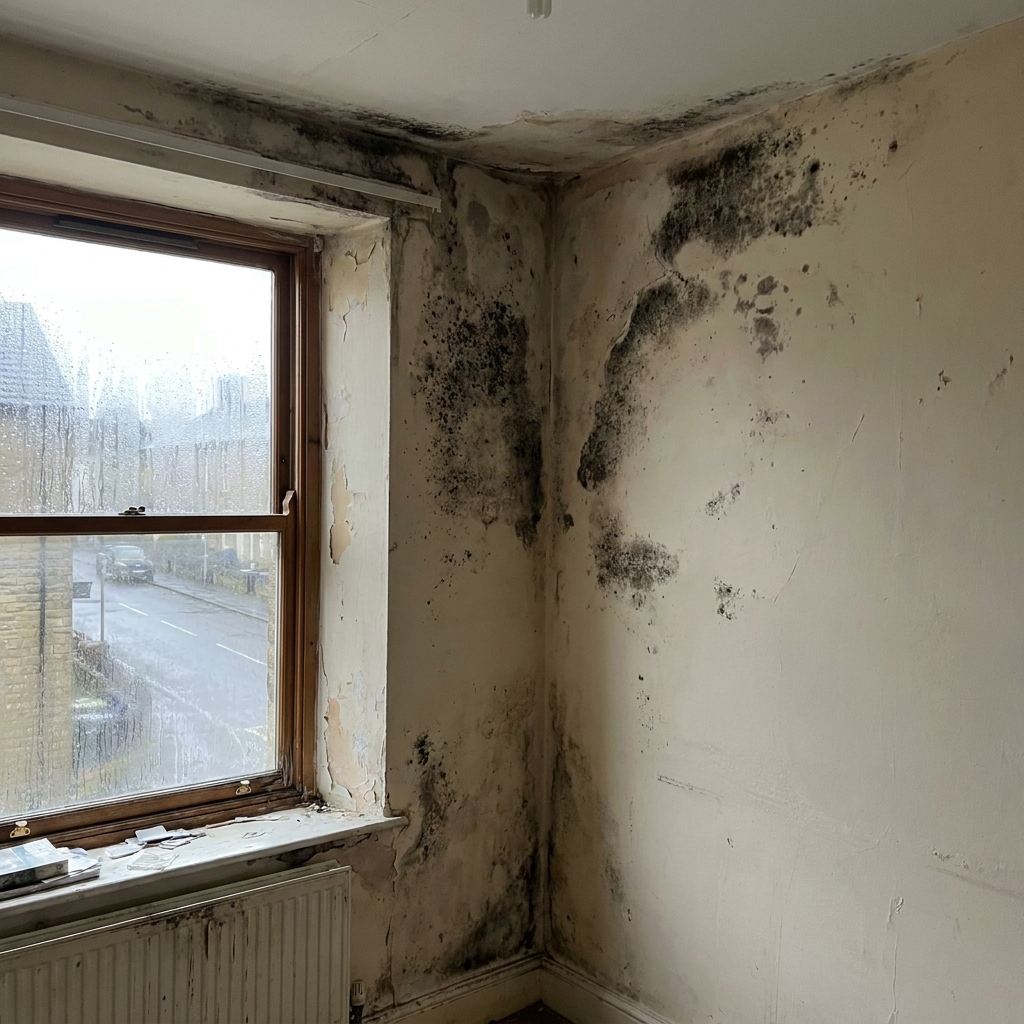
The short answer
A housing disrepair claim asks the county court to order your landlord to repair damp and mould and to award compensation for the harm and inconvenience caused. It relies mainly on section 11 of the Landlord and Tenant Act 1985 and the Homes (Fitness for Human Habitation) Act 2018. You must show the landlord was responsible, had notice, and failed to repair in a reasonable time. Claims usually follow a pre-action protocol — take advice from a housing solicitor before starting.
When a landlord repeatedly fails to fix damp and mould, a housing disrepair claim can force repairs and recover compensation. But these are formal legal claims with rules to follow, and they are not the first step. This guide explains the legal basis, what evidence you need, the process, and what a court can award. It is general information, not legal advice; speak to a housing solicitor, Shelter or Citizens Advice about your case.
Disrepair claims at a glance
- Legal basis s.11 LTA 1985 + Fitness Act 2018
- Court County court
- Must prove Landlord responsible, had notice, failed to act
- Key evidence Independent damp survey + written reports
- Remedies Repairs ordered + compensation + costs
- Process Pre-action protocol for housing disrepair
The legal basis of a claim
A damp and mould disrepair claim usually rests on two legal duties. Section 11 of the Landlord and Tenant Act 1985 obliges the landlord to keep the structure, exterior and key installations in repair; if a leak, failed damp-proofing or broken guttering has been left unrepaired and caused damp, that is a breach. The Homes (Fitness for Human Habitation) Act 2018 adds a duty to keep the home fit to live in. A claim can rely on either or both. The court can order the landlord to carry out the repairs and pay compensation — see compensation for damp and mould.
What you must prove
- Responsibility — the damp results from a defect the landlord must repair, not solely your own behaviour.
- Notice — you told the landlord (in writing is best) and they knew about the problem.
- Failure to repair — they did not put it right within a reasonable time.
- Loss — damage to belongings, ill health, or loss of use and enjoyment of the home.
An independent damp survey is usually central: it establishes the cause objectively and counters any “lifestyle” defence. See getting a damp survey and damp survey cost.
The process
| Stage | What happens |
|---|---|
| Letter of claim | Sent under the pre-action protocol, with evidence |
| Landlord’s response | Time to inspect, disclose records and respond |
| Negotiation | Many claims settle — repairs done plus compensation |
| Court proceedings | If unresolved, the county court decides |
Most damp and mould claims follow the Pre-Action Protocol for Housing Conditions Claims (England), which sets out the steps before going to court and encourages early settlement. Many cases settle without a hearing once an independent survey is produced.
What a court can award
A court can order the landlord to carry out the outstanding repairs and pay damages. Compensation typically reflects the reduction in the value of living in the home while it was in disrepair, damage to possessions, and any proven ill health, plus legal costs in many cases. The amount depends heavily on severity and duration — there is no fixed figure. For social tenants, the Housing Ombudsman route can also lead to compensation without court.
Time limits and practical points
Disrepair claims are subject to legal time limits, and the rules differ for the different parts of a claim — broadly, claims relating to personal injury from damp have a shorter limitation period than claims purely for damage to property or breach of the repairing covenant. Because these limits are technical, it is wise to take advice early rather than let a strong case go stale. A few practical points improve any claim: report and chase in writing so the notice date is clear; allow the landlord reasonable access for inspection and works, as unreasonably refusing access can weaken your position; keep the independent survey and all correspondence together; and be realistic that most cases settle through negotiation rather than a contested hearing. Costs rules in housing claims can be complex, and an adverse costs risk exists if a claim is pursued unreasonably, which is another reason to use a regulated solicitor who can advise on the merits before you commit. The goal of a well-run claim is usually twofold — getting the home properly repaired and recovering fair compensation — and a clear evidence trail is what delivers both. Throughout, remember this is a route of last resort after the landlord has had a genuine chance to put things right.
This is general information about the position in England in 2026, not legal advice. For your case, consult a regulated housing solicitor, Shelter or Citizens Advice.
Frequently asked questions
Can I claim against my landlord for damp and mould?
Yes, if the landlord was responsible for a defect causing the damp, was given notice, and failed to repair within a reasonable time. Claims rely on section 11 of the Landlord and Tenant Act 1985 and the Homes (Fitness for Human Habitation) Act 2018.
What evidence do I need?
Written reports to the landlord and their replies, dated photos, a record of any health effects or damaged belongings, and ideally an independent damp survey establishing the cause.
How much compensation could I get?
There is no fixed figure. It reflects the severity and duration of the disrepair, damage to possessions and any proven ill health. A solicitor or the Housing Ombudsman can advise on a realistic range for your case.
Should I use a claims company?
Be cautious. Unregulated claims firms can take large success fees. A regulated housing solicitor is usually safer, and Shelter or Citizens Advice can give free initial guidance.
Sources & further reading
- legislation.gov.uk — Landlord and Tenant Act 1985, section 11
- legislation.gov.uk — Homes (Fitness for Human Habitation) Act 2018
- GOV.UK — Pre-Action Protocol for Housing Conditions Claims (England)
- Housing Ombudsman — Spotlight on damp and mould
This guide is general information, not a site-specific survey, medical advice or legal advice. Damp and mould should be assessed by a qualified surveyor, and health concerns discussed with a GP or the NHS.