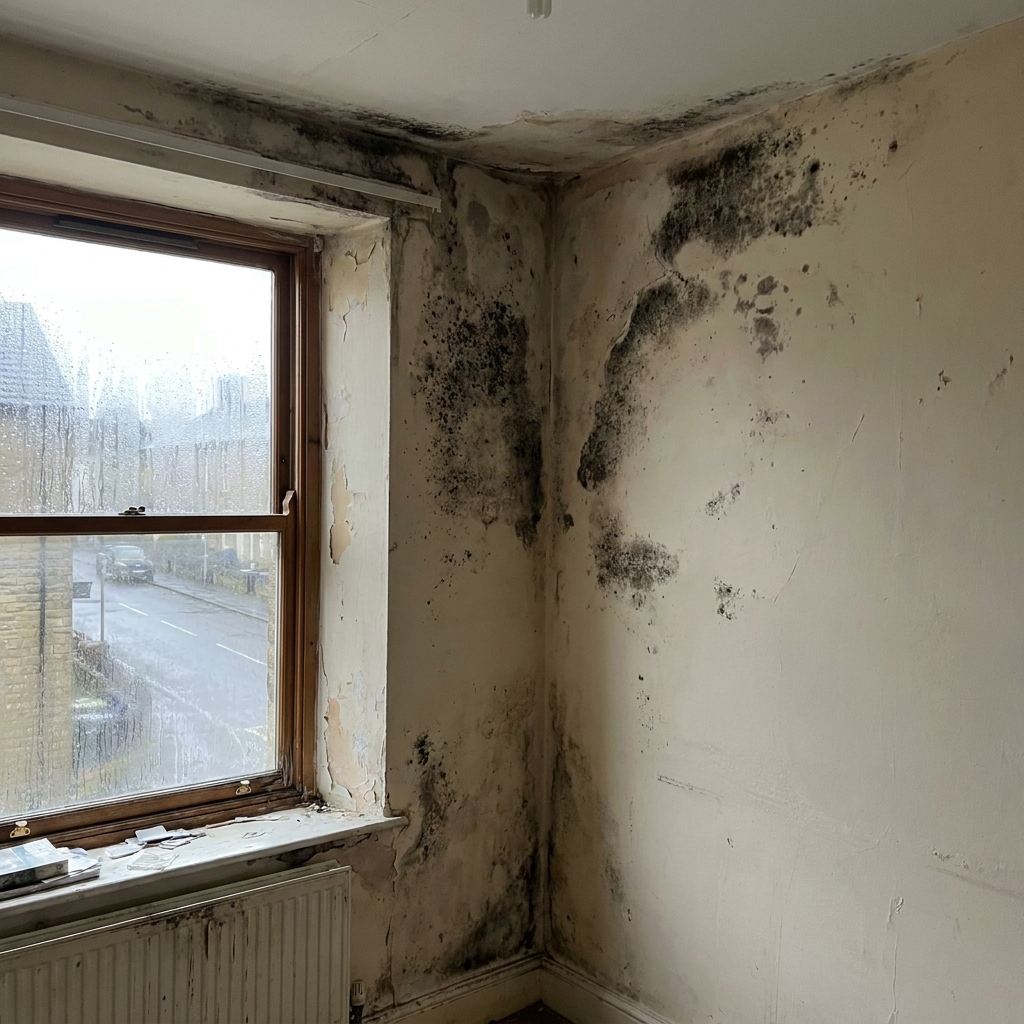
The short answer
Damp has three main causes: condensation (excess moisture in the air settling on cold surfaces), rising damp (groundwater drawn up through walls) and penetrating damp (water entering from outside through a defect). Mould is a consequence, not a separate problem — it grows wherever a surface stays damp long enough. Condensation is by far the most common cause in UK homes. Identifying the type correctly is essential, because the cure for one will not fix another.
“Damp” is an umbrella term for several different problems with different causes and very different cures. Get the diagnosis wrong and you can spend a fortune treating the wrong thing. This page explains the three main types of damp, why black mould appears, and how to begin telling them apart — though a definitive diagnosis needs a qualified surveyor.
Damp causes at a glance
- Most common cause Condensation (lifestyle & ventilation)
- Three main types Condensation, rising, penetrating
- Mould trigger Surface relative humidity staying high
- Health regulator NHS — respiratory effects
- Hazard framework gov.uk HHSRS (Housing Act 2004)
- Diagnosis Qualified damp surveyor / RICS
The three types of damp
Almost every damp problem in a UK home falls into one of three categories. Condensation is moisture already inside the home — from breathing, cooking, washing and drying clothes — that condenses on cold surfaces such as windows, external walls and behind furniture. Rising damp is groundwater drawn up through the base of a wall by capillary action, usually because a damp-proof course is missing, bridged or has failed. Penetrating damp is water finding its way in from outside through a specific defect — a cracked render, a leaking gutter, a failed window seal or a roof fault. The full breakdown is set out in our guide to the types of damp. Knowing which one you are dealing with is not academic: each is driven by a different source of water, leaves a different pattern, and needs a completely different remedy.
| Type | Source of water | Typical signs |
|---|---|---|
| Condensation | Moist indoor air | Window streaming, black mould in corners, musty smell |
| Rising damp | Ground beneath the wall | Tide mark to ~1m, salt staining, perished plaster low down |
| Penetrating damp | An external defect | Localised patch, worse after rain, often higher up the wall |
Why mould follows damp
Mould is not a separate fault — it is the biological result of a surface staying damp. Mould spores are present in all indoor air; they only germinate and grow when the relative humidity at a surface stays high for long enough, typically on cold, poorly ventilated spots. That is why black mould clusters in window reveals, behind wardrobes and in unheated bedrooms. A typical household adds several litres of moisture to the air every day, and if that moisture cannot escape it condenses on the coldest surfaces and feeds mould growth. Treat the damp and you remove the conditions the mould needs; clean the mould without addressing the damp and it simply returns.
- Cold surfaces — uninsulated external walls and thermal bridges chill the air against them.
- High indoor humidity — cooking, showering and drying washing indoors add litres of water to the air daily.
- Poor ventilation — modern airtight homes trap that moisture if extract fans and trickle vents are absent or unused.
- Stagnant air — furniture against cold walls stops air moving and lets damp settle.
How the law treats damp
Damp and mould are assessed under the Housing Health and Safety Rating System (HHSRS), introduced by the Housing Act 2004, which treats serious damp as a potential Category 1 hazard that a council’s environmental-health team can require to be fixed. In rented homes the Homes (Fitness for Human Habitation) Act 2018 and section 11 of the Landlord and Tenant Act 1985 place repair and fitness duties on landlords, and from October 2025 Awaab’s Law — introduced by the Social Housing (Regulation) Act 2023 — requires social landlords to investigate and act on damp and mould hazards within set timescales. The Housing Ombudsman’s “Spotlight on damp and mould” report urged landlords to move away from blaming tenant “lifestyle” and to treat damp as a building issue to be diagnosed and resolved.
Working out which one you have
Start with the pattern. Damp that is worst in winter, on windows and in cold corners, points to condensation. A horizontal tide-mark up to about a metre, with salt staining, suggests rising damp. A localised patch that worsens after rain points to penetrating damp. But surface symptoms overlap, salts can confuse moisture readings, and a single home can suffer more than one type at once — condensation alongside a penetrating-damp patch is common. Note exactly when and where the damp is worst, because that timing and location is the first thing a surveyor will ask about.
The order of action matters too. Redecorating before the cause is fixed simply restarts the cycle within months, and treating the wrong cause — injecting a chemical damp-proof course when the real problem is condensation, for instance — wastes money and leaves the home no drier. For minor, clearly diffuse condensation you can often improve matters yourself with better ventilation and steadier heating. For anything persistent, spreading or structural, or wherever vulnerable people live, the right next step is a qualified surveyor who can confirm the cause with a moisture profile before any treatment is specified. See the signs of damp in a house for a fuller checklist. This page is general information, not a site-specific survey.
Frequently asked questions
Is mould the same as damp?
No. Damp is excess moisture in the building or air; mould is the fungus that grows as a result. Removing the mould without fixing the underlying damp simply lets it return.
What is the most common cause of damp in UK homes?
Condensation. Everyday activities such as cooking, bathing and drying clothes indoors add moisture to the air, which settles on cold surfaces when ventilation and heating are inadequate.
Can damp make you ill?
The NHS links persistent damp and mould to respiratory problems, infections and worsened asthma and allergies, especially in children, older people and those with lung conditions. See a GP if anyone is affected.
Do I need a survey to find the cause?
For minor, obvious condensation you can often improve things yourself. For persistent, widespread or structural damp, a qualified damp surveyor should diagnose the cause before any treatment is carried out.
Sources & further reading
- gov.uk — Housing Health and Safety Rating System (HHSRS), Housing Act 2004
- NHS — Can damp and mould affect my health?
- RICS — Investigation of moisture and its effects in traditional buildings
- Housing Ombudsman — Spotlight on damp and mould
This guide is general information, not a site-specific survey, medical advice or legal advice. Damp and mould should be assessed by a qualified surveyor, and health concerns discussed with a GP or the NHS.