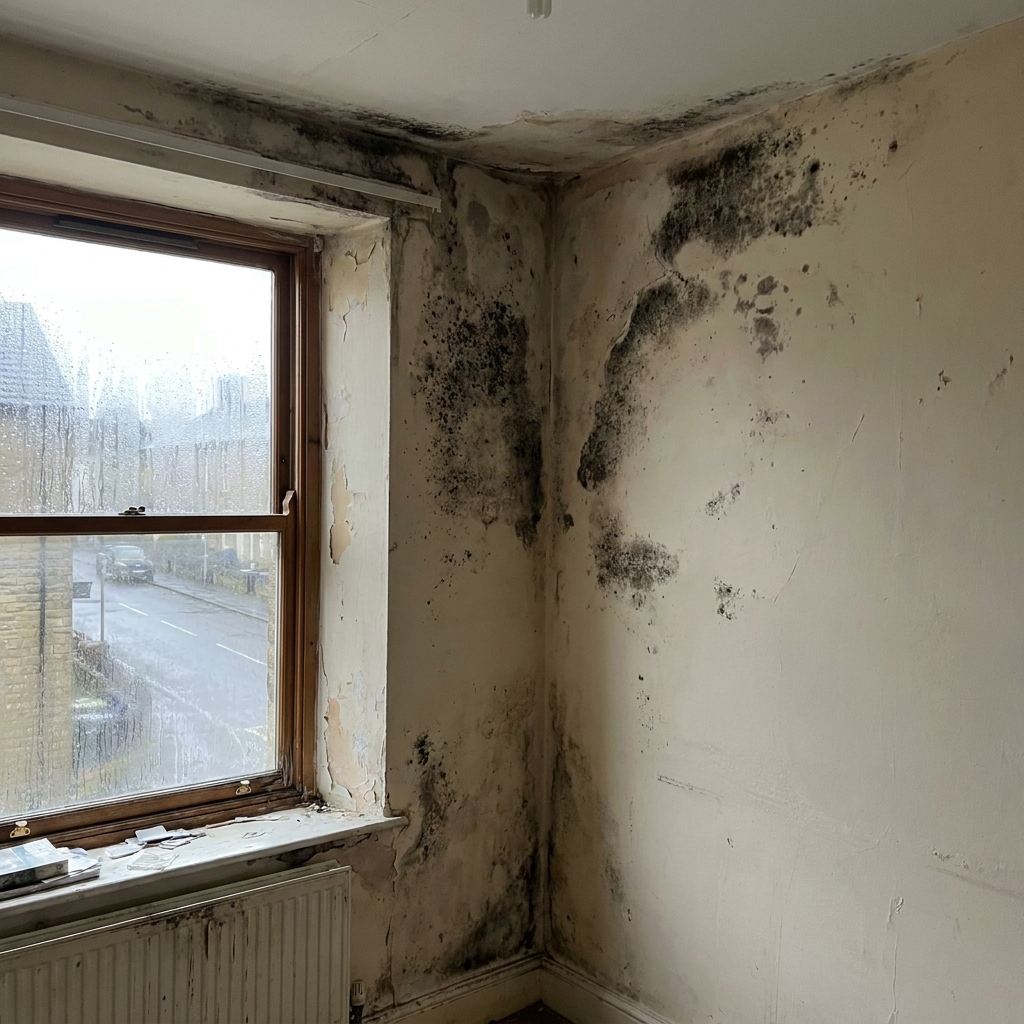
The short answer
Yes, in most cases. A landlord is responsible for damp and mould where it results from a disrepair they must fix under section 11 of the Landlord and Tenant Act 1985, where the home is unfit under the Homes (Fitness for Human Habitation) Act 2018, or where damp and mould amount to a hazard under the HHSRS in the Housing Act 2004. The landlord must be given notice of the problem and a reasonable chance to investigate and repair before they are in breach.
Damp and mould sit at the centre of a landlord’s legal obligations. Three overlapping duties — to repair, to provide a fit home, and to keep the property free of serious hazards — together mean that most damp and mould problems are the landlord’s to resolve. This guide explains each duty, the notice requirement, and the limits of landlord responsibility. It is general information, not legal advice.
Landlord duties at a glance
- Repair duty s.11 Landlord and Tenant Act 1985
- Fitness duty Homes (Fitness for Human Habitation) Act 2018
- Hazard standard HHSRS — Housing Act 2004
- Social landlords Awaab’s Law — set timescales
- Trigger Tenant gives notice of the defect
- Limit Reasonable time to investigate and fix
Three overlapping legal duties
A landlord’s responsibility for damp and mould flows from several pieces of law that work together. First, section 11 of the Landlord and Tenant Act 1985 requires landlords to keep in repair the structure and exterior — walls, roof, windows, guttering — and the installations for water, gas, electricity, heating and sanitation. A leak, failed damp-proof course or broken gutter that lets damp in is a repair the landlord must carry out. Second, the Homes (Fitness for Human Habitation) Act 2018 requires most rented homes to be fit for human habitation at the start of and throughout the tenancy; serious damp and mould can make a home legally unfit. Third, the Housing Health and Safety Rating System (HHSRS) under the Housing Act 2004 treats damp and mould growth as an assessable hazard that a council can require the landlord to remove.
| Law | What it requires |
|---|---|
| s.11 Landlord and Tenant Act 1985 | Keep structure, exterior and key installations in repair |
| Homes (Fitness for Human Habitation) Act 2018 | Provide and maintain a home fit to live in |
| HHSRS — Housing Act 2004 | Keep the home free of serious damp and mould hazards |
| Awaab’s Law (social housing) | Investigate and act on damp/mould within set timescales |
The notice requirement
For section 11 repairs, a landlord generally must be told about a problem before they can be in breach — their duty to repair is usually triggered by notice. That is why reporting in writing matters: it fixes the date the landlord knew. Under the Fitness Act, a tenant must also normally give the landlord a chance to put things right before bringing a court claim. So the practical first step is always a clear written report with photos, keeping a copy. See how to report damp to the council and your rights as a tenant.
Where a landlord may not be responsible
A landlord is not automatically liable for everything. If damp or mould is genuinely caused only by the tenant’s failure to use the home reasonably — never heating or ventilating a sound, dry property, or blocking vents — the landlord may not be in breach. Equally, until they have notice and a reasonable time to act, they are not yet in default. But poor insulation, inadequate ventilation provision and structural defects all point back to the landlord, so “tenant lifestyle” rarely settles the matter on its own.
What to do if your landlord won’t act
- Put the report in writing and allow a reasonable time for investigation.
- Escalate to your council’s environmental health team for an HHSRS inspection.
- For social tenants, follow the complaints process then the Housing Ombudsman — see complaining to a social landlord.
- Get free advice from Shelter or Citizens Advice before any legal action.
What a ‘reasonable time’ means
The law does not give a single fixed deadline for private landlords outside social housing; instead it asks what is reasonable in the circumstances. A burst pipe flooding a room is an emergency that should be tackled within days; a slow-developing patch of condensation mould may reasonably take longer to investigate and design a fix for. The more serious the hazard and the more vulnerable the occupants — babies, older people, anyone with a respiratory condition — the shorter the reasonable period becomes. If a landlord drags out a clear repair for weeks or months after notice, that delay itself can be a breach and can increase any later compensation. Tenants strengthen their position simply by reporting promptly, in writing, and by chasing politely but on the record. For social landlords, Awaab’s Law replaces this open-ended “reasonable time” with defined statutory timescales, which is one reason the social-housing route can move faster once it is triggered. None of this requires the tenant to prove the building science themselves — only to give clear notice and allow access for inspection and works.
This is general information about the UK position in 2026, not legal advice or a survey. For your circumstances, contact Shelter, your local authority or a housing solicitor.
Frequently asked questions
Is a landlord always responsible for damp?
Not always, but usually. They are responsible where damp results from disrepair under section 11, where the home is unfit under the 2018 Act, or where it is a hazard under the HHSRS. They are not liable for damp caused solely by a tenant’s own neglect, and only once they have had notice and a reasonable time to act.
Does the landlord have to be told first?
Yes, generally. The section 11 repair duty is usually triggered by notice, and the Fitness Act normally expects the landlord to be given a chance to put things right. Always report in writing and keep the date.
What counts as ‘unfit for human habitation’?
Among other factors, the courts consider freedom from damp, ventilation and the property’s general condition. Serious, persistent damp and mould that affects health or use of rooms can make a home unfit under the 2018 Act.
What if the landlord still does nothing?
Escalate to the council’s environmental health team for an HHSRS inspection, use the Housing Ombudsman if you are a social tenant, and take advice from Shelter or a solicitor about a disrepair or fitness claim.
Sources & further reading
- legislation.gov.uk — Landlord and Tenant Act 1985, section 11
- legislation.gov.uk — Homes (Fitness for Human Habitation) Act 2018
- GOV.UK — Housing Health and Safety Rating System (HHSRS)
- GOV.UK — Renting and damp: tenant and landlord responsibilities
This guide is general information, not a site-specific survey, medical advice or legal advice. Damp and mould should be assessed by a qualified surveyor, and health concerns discussed with a GP or the NHS.