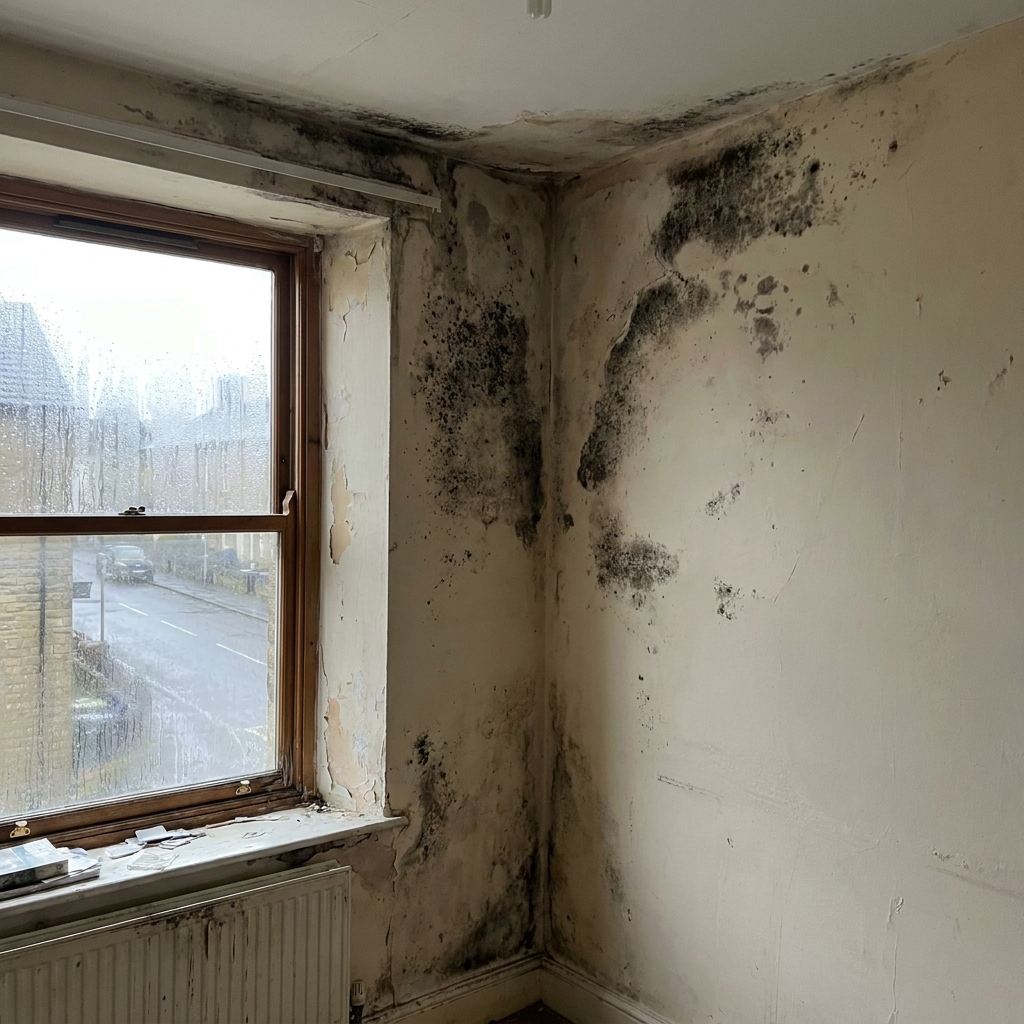
The short answer
In most cases the landlord is responsible for damp and mould caused by a defect they must repair — a leak, failed damp-proofing, broken guttering or inadequate ventilation — under section 11 of the Landlord and Tenant Act 1985 and the Homes (Fitness for Human Habitation) Act 2018. A tenant is only responsible where the mould is genuinely down to their own neglect, such as never heating or ventilating the home. Most cases are mixed, so the practical answer is usually: report it in writing and let the landlord investigate the cause.
Mould in a rented home is one of the most common — and most disputed — housing problems in the UK. Landlords sometimes blame “lifestyle”; tenants point to leaks and cold walls. This guide sets out who is actually responsible in law, how the cause is established, and the practical steps to get it resolved. It is general information, not legal advice or a survey of your specific property.
Responsibility at a glance
- Main duty Landlord — s.11 Landlord and Tenant Act 1985
- Fitness duty Homes (Fitness for Human Habitation) Act 2018
- Tenant duty Use the home in a ‘tenant-like manner’
- First step Report it in writing, with photos
- If ignored Council environmental health / HHSRS
- Not Legal advice — seek Shelter or a solicitor
The starting point: it is usually the landlord’s repair
Most mould is a symptom of excess moisture, and excess moisture usually has a structural cause: a roof or plumbing leak, penetrating damp, rising damp, failed pointing, blocked guttering, or a home that cannot be ventilated or affordably heated. Where the cause is a defect the landlord is obliged to repair, the resulting mould is the landlord’s responsibility. Under section 11 of the Landlord and Tenant Act 1985, landlords must keep in repair the structure and exterior of the dwelling and the installations for water, heating and sanitation. The Homes (Fitness for Human Habitation) Act 2018 goes further, requiring most rented homes to be fit to live in — and a property with serious damp and mould may not be fit. See what causes damp and mould and condensation versus damp for the underlying mechanisms.
When can a tenant be responsible?
A tenant must use the property in a “tenant-like manner” — for example, opening windows occasionally, not blocking air bricks or extractor fans, and heating the home to a reasonable level where they can afford to. If condensation mould is genuinely caused by a tenant never ventilating or heating a sound, well-built property, responsibility may fall on the tenant. In reality, courts and environmental-health officers recognise that a poorly insulated, cold or under-ventilated home makes condensation almost unavoidable, so “lifestyle” is rarely the whole story. The honest answer in most cases is shared cause, which is why the cause should be assessed by a qualified surveyor rather than assumed.
| Likely cause of mould | Usually responsible |
|---|---|
| Leak, penetrating or rising damp, broken guttering | Landlord (repair) |
| No or broken extractor fan / blocked air bricks | Landlord (provide adequate ventilation) |
| Cold, poorly insulated walls causing condensation | Landlord (fitness / hazard) |
| Never heating or ventilating a sound, dry home | Tenant (tenant-like use) |
How the cause — and the responsibility — is decided
You do not have to prove the cause yourself. Once you report the problem, the landlord should investigate, and a local authority can assess it under the Housing Health and Safety Rating System (HHSRS) in the Housing Act 2004, which treats damp and mould growth as a recognised hazard. If the property is socially rented, Awaab’s Law under the Social Housing (Regulation) Act 2023 requires the landlord to investigate damp and mould hazards within set timescales and act promptly on emergencies. A surveyor’s report often settles the lifestyle-versus-defect argument objectively.
What to do if you rent and have mould
- Report it to your landlord or agent in writing (email or letter), with dated photos.
- Keep a record of every report and response, and note any health effects.
- Clean small areas safely in the meantime — see cleaning mould safely.
- If nothing happens, contact your council’s environmental health team and get free advice from Shelter or Citizens Advice.
Why getting the cause right matters
The label put on the problem decides who pays, so it is worth understanding the difference. Condensation forms when warm, moist indoor air meets cold surfaces, and it is made far worse by cold walls, poor insulation and missing or broken extractor fans — all things a landlord controls. Rising damp, penetrating damp and leaks are structural and almost always the landlord’s repair. Only condensation in a genuinely warm, dry, well-ventilated home that the tenant refuses to use sensibly points clearly at the tenant. Because these causes look similar on the wall but differ completely in law, a qualified surveyor’s diagnosis is the fairest way to settle responsibility — and it stops a landlord dismissing a real building defect as “lifestyle”. Whoever the cause turns out to favour, the tenant’s job is to report promptly and clearly; the landlord’s job is to investigate properly rather than guess. Keeping rooms heated where affordable and ventilated helps in the meantime, but it does not transfer a structural defect onto the tenant.
This page is general information about the UK position in 2026, not legal advice or a property-specific survey. For your own situation, contact Shelter, your local authority or a housing solicitor.
Frequently asked questions
Is the landlord or tenant responsible for mould?
Usually the landlord, where the mould stems from a defect they must repair under section 11 of the Landlord and Tenant Act 1985 or where the home is unfit under the Homes (Fitness for Human Habitation) Act 2018. A tenant is only responsible where the mould is genuinely caused by their own neglect, such as never heating or ventilating a sound home. Most cases are mixed.
Can my landlord blame my lifestyle?
They can raise it, but it is rarely the whole answer. Cold, poorly insulated or under-ventilated homes make condensation almost unavoidable. A surveyor’s assessment, or a council HHSRS inspection, can establish the true cause objectively.
What if I rent from the council or a housing association?
Awaab’s Law under the Social Housing (Regulation) Act 2023 requires social landlords to investigate damp and mould hazards within set timescales and act promptly on emergencies. You can also complain to the Housing Ombudsman.
Should I just clean the mould myself?
Clean small areas safely to limit spread, but cleaning does not fix the cause. Report it so the underlying defect is investigated and repaired by the responsible party.
Sources & further reading
- legislation.gov.uk — Landlord and Tenant Act 1985, section 11
- legislation.gov.uk — Homes (Fitness for Human Habitation) Act 2018
- GOV.UK — Housing Health and Safety Rating System (HHSRS)
- GOV.UK — Awaab’s Law and the Social Housing (Regulation) Act 2023
- NHS — Can damp and mould affect my health?
This guide is general information, not a site-specific survey, medical advice or legal advice. Damp and mould should be assessed by a qualified surveyor, and health concerns discussed with a GP or the NHS.