The short answer
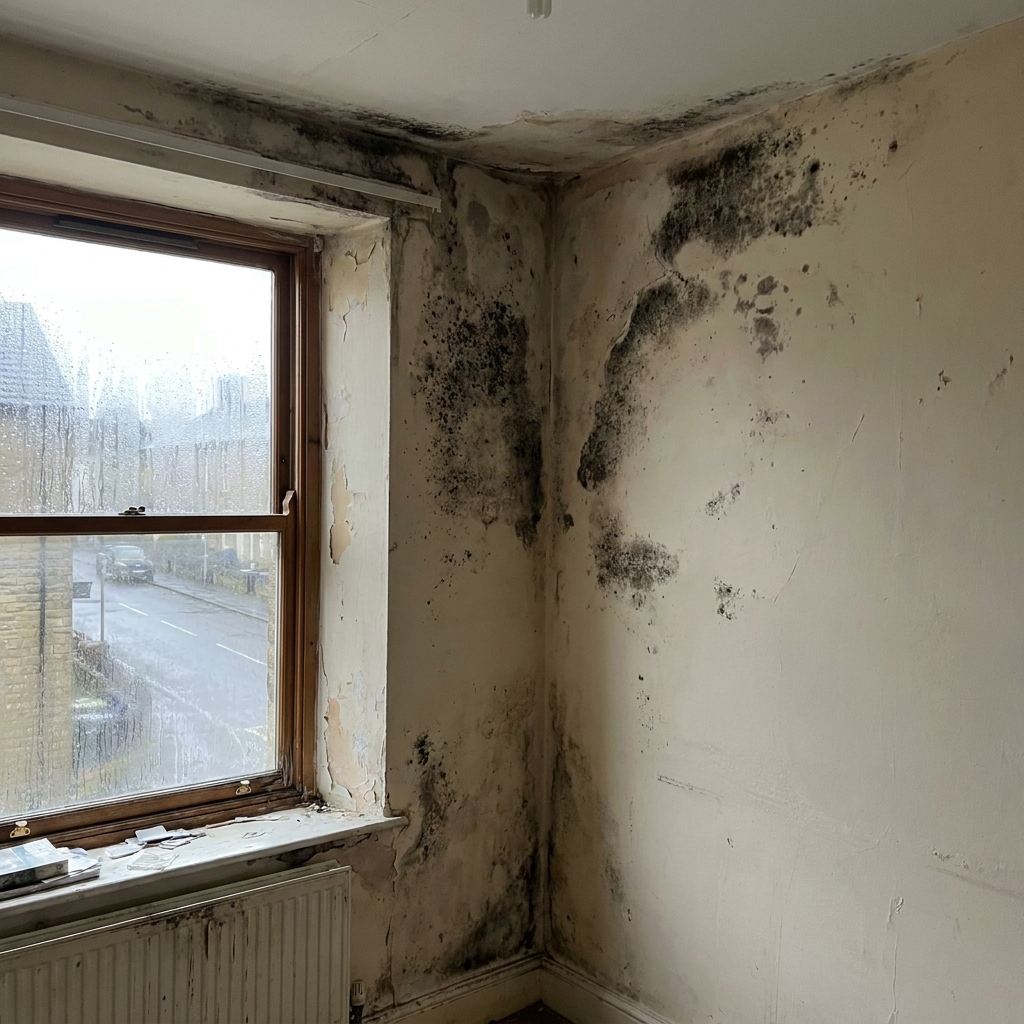
Black mould can affect health: the NHS links damp and mould to respiratory infections, allergic reactions and worsened asthma, with the risk greatest for babies, children, older people and anyone with a lung or immune condition. Most healthy adults exposed to small amounts are not seriously harmed, but mould should never be ignored, especially with vulnerable occupants. This page is general information — for symptoms or specific concerns, speak to a GP.
“Is black mould dangerous?” is one of the most common and most worrying damp questions. The honest answer is that it can affect health, the degree depends on the person and the exposure, and the NHS is the authority to follow. This page summarises the health context calmly, explains who is most at risk, and points you to proper medical advice.
Black mould & health at a glance
- Main health link Respiratory & allergic effects (NHS)
- Most at risk Babies, children, older & immune-compromised
- Common symptoms Coughing, wheeze, sneezing, irritation
- Asthma Can trigger or worsen attacks
- Healthy adults Usually less seriously affected
- If unwell See a GP / NHS 111
What the NHS says
The NHS states that damp and mould in the home can affect health, mainly through the respiratory system. Moulds produce allergens, irritants and, in some cases, toxic substances; inhaling or touching spores can cause an allergic reaction. Reported effects include respiratory infections, allergic responses such as sneezing, a runny nose and skin or eye irritation, and the triggering or worsening of asthma. The NHS is clear that not everyone is affected, and that the people most at risk are those who are already vulnerable. This is general information; the NHS, not this page, is the authority on health.
Who is most at risk
- Babies and children — developing lungs are more sensitive to mould and damp.
- Older people — higher susceptibility to respiratory infection.
- People with asthma or allergies — mould can trigger or worsen symptoms.
- People with weakened immunity or existing lung conditions — greater risk of infection.
Putting the risk in proportion
For most healthy adults, brief exposure to a small patch of mould is unlikely to cause serious harm, though it can still irritate the airways. The concern grows with the size of the affected area, the length of exposure, and the vulnerability of the occupants. A small patch of black mould in a bathroom is a different proposition from widespread mould in a child’s bedroom. The death of two-year-old Awaab Ishak, attributed to prolonged exposure to mould in a social home, prompted Awaab’s Law and a national shift in how seriously damp and mould are taken. The sensible response is the same in every case: remove the mould safely and fix the damp causing it.
| Situation | Concern level | Action |
|---|---|---|
| Small patch, healthy adults | Lower | Clean safely, fix the damp |
| Any mould, vulnerable occupant | Higher | Remove promptly; GP if symptoms |
| Widespread / recurring mould | Higher | Survey, professional removal |
Why it is taken so seriously now
Damp and mould are now treated as a serious housing-safety matter rather than a cosmetic nuisance. Under the Housing Health and Safety Rating System, severe damp and mould can be assessed as a hazard a council can require to be fixed. In rented homes, the Homes (Fitness for Human Habitation) Act 2018 lets tenants act where a property is unfit, and Awaab’s Law places investigation and repair timescales on social landlords. The Housing Ombudsman has been explicit that landlords should not blame tenant “lifestyle” and should diagnose and resolve the cause. The practical message for households is simple: do not live with mould, and do not accept being told to just wipe it away. If you rent and the cause is a building defect or inadequate ventilation, raise it with your landlord in writing and keep a record; if nothing is done, your local council’s environmental-health team can assess the hazard under the HHSRS. Throughout, treat any worsening health symptoms as a matter for the NHS rather than something to wait out.
What to do
Remove mould safely — with a mask, gloves and ventilation — or have it removed professionally if it is extensive, and crucially fix the underlying damp so it cannot return. See why there is black mould on your walls and cleaning mould safely. In rented homes, report mould to the landlord; serious cases are an HHSRS hazard, and from October 2025 social landlords have duties under Awaab’s Law. For any health concern, the NHS — not this page — is the authority.
Frequently asked questions
Can black mould make you ill?
The NHS links damp and mould to respiratory infections, allergic reactions and worsened asthma. Whether it makes a particular person ill depends on the amount of mould and how vulnerable they are.
Who is most affected by black mould?
Babies, children, older people, and anyone with asthma, allergies, a weakened immune system or an existing lung condition are most at risk and should avoid exposure.
Is a small patch of black mould dangerous?
A small patch is usually less serious for healthy adults but can still irritate airways and should be removed. Any mould is more of a concern where vulnerable people live in the home.
When should I see a doctor about mould?
See a GP or call NHS 111 if you have a persistent cough, wheeze, breathing difficulty, or worsening asthma or allergies that you think may be linked to damp or mould at home.
Sources & further reading
- NHS — Can damp and mould affect my health?
- gov.uk — Understanding and addressing the health risks of damp and mould in the home
- Housing Ombudsman — Spotlight on damp and mould
- gov.uk — Social Housing (Regulation) Act 2023 (Awaab’s Law)
This guide is general information, not a site-specific survey, medical advice or legal advice. Damp and mould should be assessed by a qualified surveyor, and health concerns discussed with a GP or the NHS.