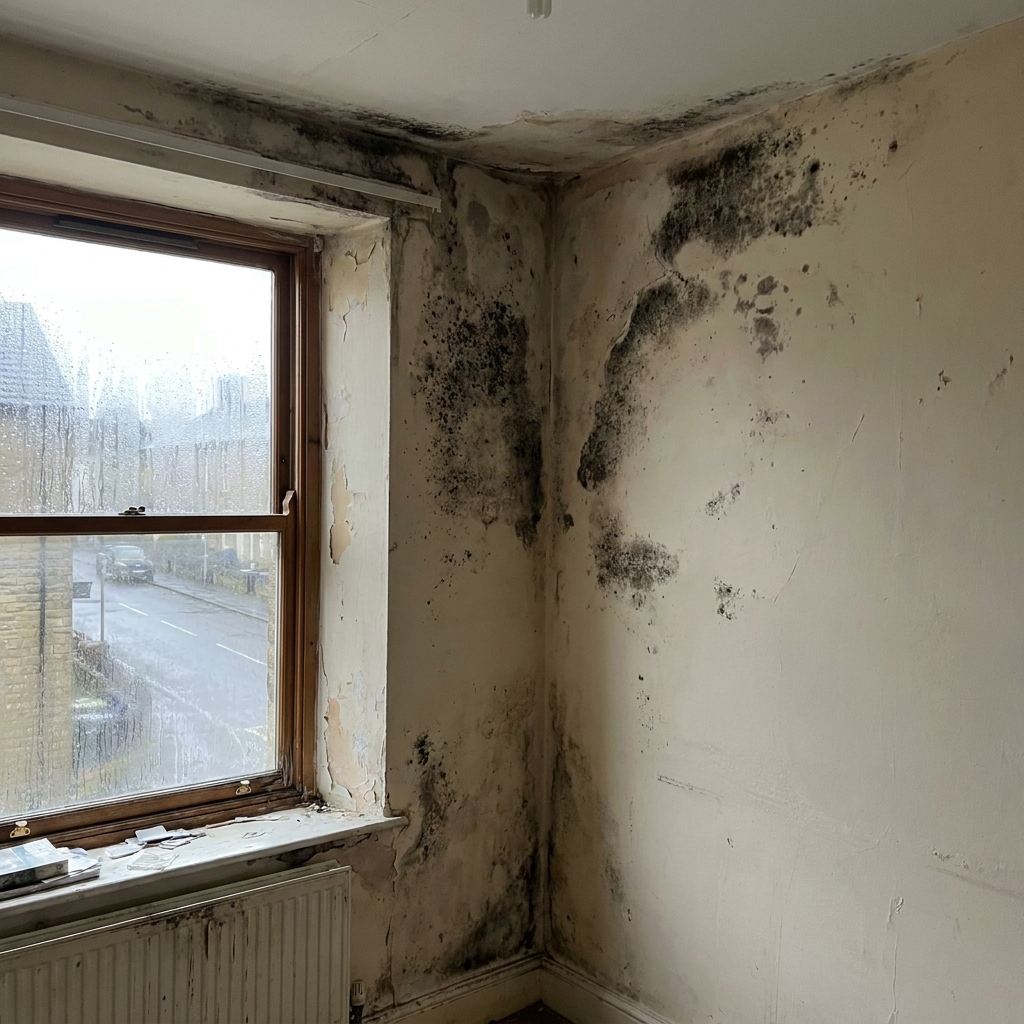
The short answer
You may be entitled to compensation where your landlord was responsible for damp and mould, had notice, and failed to repair within a reasonable time. It can cover the reduced enjoyment of your home, damaged belongings and any proven ill health. There is no fixed figure — the amount depends on severity and how long it lasted. Compensation can come via a court disrepair claim, or, for social tenants, the Housing Ombudsman. This is general information, not legal advice.
Where a landlord has left damp and mould unaddressed, tenants can sometimes recover compensation as well as forcing repairs. But the right to money is not automatic, and the amount depends on the facts. This guide explains when compensation is due, what it covers, how it is calculated, and the two main routes. It is general information about the UK position in 2026, not legal advice.
Compensation at a glance
- When owed Landlord responsible, had notice, failed to act
- Covers Loss of enjoyment, damaged goods, ill health
- Amount No fixed figure — severity & duration
- Court route Disrepair claim — county court
- Social route Housing Ombudsman (free)
- Evidence Written reports, photos, receipts, survey
When compensation is due
Compensation for damp and mould is not automatic. It generally arises where the landlord breached a legal duty — for example, the repairing duty under section 11 or the fitness duty under the Fitness Act 2018 — after having notice, and you suffered a loss as a result. The key elements are the same as for a disrepair claim: responsibility, notice, failure to repair in a reasonable time, and resulting harm. If the damp was caused solely by your own behaviour, or the landlord acted promptly once told, compensation is unlikely.
What compensation can cover
- Loss of enjoyment of the home — rooms unusable, distress and inconvenience while in disrepair.
- Damaged belongings — clothes, furniture, carpets, bedding ruined by damp or mould.
- Ill health — where a medical link to the damp can be shown (supported by GP or medical evidence).
- Extra costs — for example higher heating bills or temporary accommodation, where reasonable and evidenced.
For the loss-of-enjoyment element, courts often assess damages as a proportion of the rent for the period the home was in disrepair — the worse and longer the problem, the higher the proportion. There is no statutory tariff, so amounts vary widely with the facts.
| Route | Who it suits | Notes |
|---|---|---|
| Housing Ombudsman | Social tenants | Free; after the landlord’s complaints process |
| County court disrepair claim | Private or social tenants | Can order repairs and damages; take advice |
| Negotiated settlement | Either | Many claims settle once a survey is produced |
How to build your case
The strength of any compensation claim rests on evidence. Keep written reports to the landlord and their replies, dated photos of the damp and mould over time, receipts or photos of ruined belongings, a record of health effects with GP support, and ideally an independent damp survey proving the cause. For social tenants, the Housing Ombudsman can award compensation without going to court; for others, a county court disrepair claim is the usual route.
Realistic expectations and time limits
It helps to approach compensation with realistic expectations. There is no national tariff, and figures advertised by claims firms as “guaranteed” or “average” payouts should be treated with caution. In practice the loss-of-enjoyment element is often judged as a percentage of the rent for the months the home was affected, scaled by how bad the problem was and how much of the home was unusable; modest, short-lived damp recovers far less than severe mould that made bedrooms unusable for a long period. Damaged belongings are recovered at their fair value, not replacement-as-new, so receipts and photos matter. Any health element needs a genuine medical link, which is why GP records are important and why honest, proportionate claims fare best. Claims are also subject to legal time limits — shorter where personal injury is involved — so do not delay taking advice. Finally, weigh the route: the Housing Ombudsman is free and well suited to social tenants, while a court claim can deliver both an order for repairs and damages but carries cost and risk that a regulated solicitor should explain first. Fair compensation rewards a well-documented, truthful case far more reliably than an inflated one. It is also worth remembering that the primary aim of most tenants is a dry, healthy home; compensation is a secondary recognition of the harm caused while the landlord failed to act, not a windfall. Keeping that perspective tends to produce both a quicker repair and a fairer settlement, because landlords and the Ombudsman respond better to a measured, evidenced complaint than to an exaggerated demand.
This page is general information about the position in England in 2026, not legal advice or a valuation of your claim. For your situation, contact the Housing Ombudsman, Shelter, Citizens Advice or a regulated housing solicitor.
Frequently asked questions
Can I get compensation for damp and mould?
Possibly, where the landlord was responsible, had notice, and failed to repair in a reasonable time, and you suffered loss. It can cover loss of enjoyment of the home, damaged belongings and proven ill health. It is not automatic.
How much compensation will I get?
There is no fixed figure. For loss of enjoyment, courts often award a proportion of the rent for the period of disrepair, depending on severity and duration, plus the value of damaged goods and any proven health harm.
Do I have to go to court?
Not always. Social tenants can claim compensation through the Housing Ombudsman after the landlord’s complaints process, and many private claims settle by negotiation once an independent survey is produced. Court is the route if it cannot be resolved.
What evidence do I need for a claim?
Written reports to the landlord and replies, dated photos over time, receipts or photos of damaged belongings, GP or medical evidence for any ill health, and ideally an independent damp survey establishing the cause.
Sources & further reading
- Housing Ombudsman — Spotlight on damp and mould
- GOV.UK — Private renting: repairs and your rights
- legislation.gov.uk — Homes (Fitness for Human Habitation) Act 2018
- legislation.gov.uk — Landlord and Tenant Act 1985, section 11
This guide is general information, not a site-specific survey, medical advice or legal advice. Damp and mould should be assessed by a qualified surveyor, and health concerns discussed with a GP or the NHS.