The short answer
To remove black mould safely, wear a mask, gloves and eye protection, ventilate the room, and wipe a small patch with a ready-made mould remover or warm soapy water, then dry the area thoroughly. Do not brush or vacuum dry mould, as that spreads spores. Cleaning alone is temporary: unless you fix the underlying damp or condensation, the mould will grow back. Large areas (roughly over one square metre) and any mould caused by sewage or a structural leak should be handled by a professional.
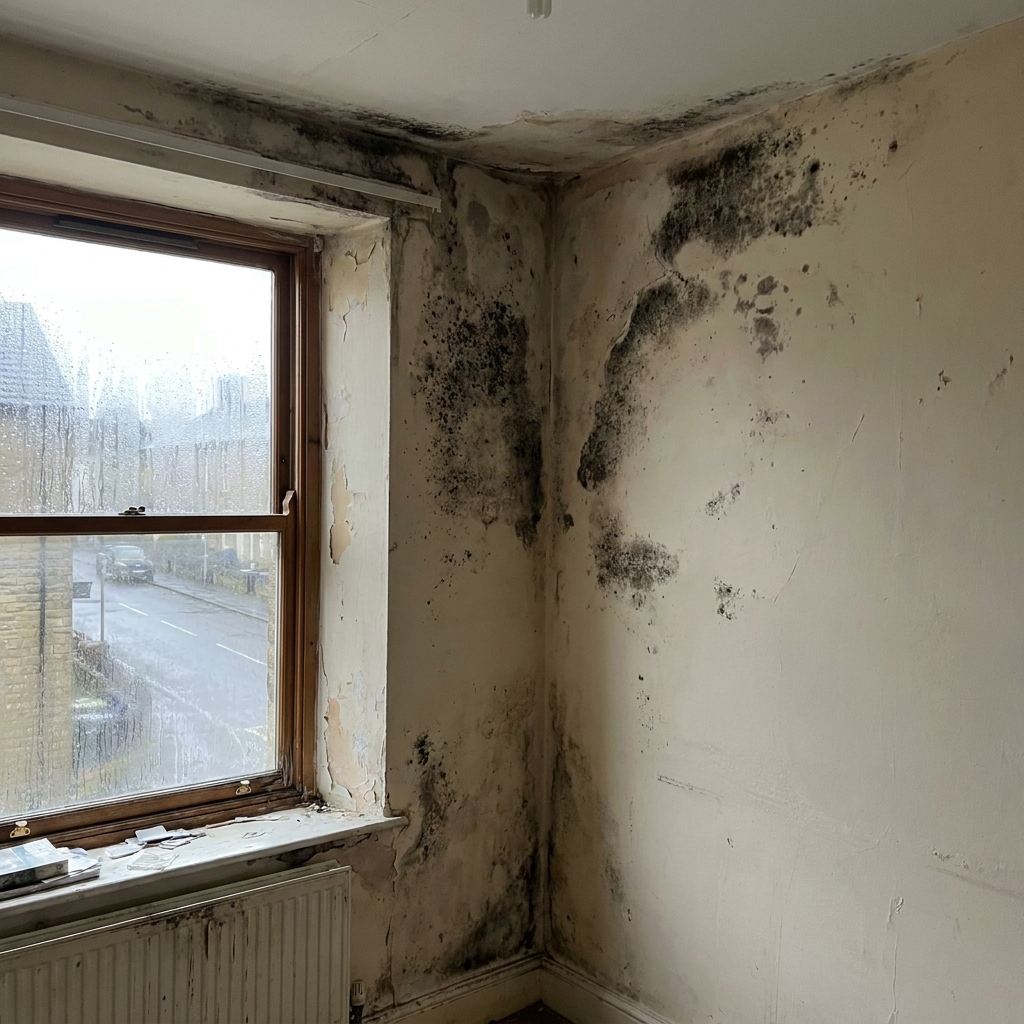
Black mould on a wall is a sign that a surface has been damp for long enough for spores to settle and grow — almost always from condensation. Removing it has two parts: cleaning what is there safely, and fixing the moisture that caused it so it does not return. The NHS advises caution because disturbing mould releases spores that can irritate the airways, so this guide covers how to protect yourself as well as how to clean.
Removing black mould at a glance
- Protect yourself Mask, gloves and eye protection
- Best for Small patches under about 1m²
- Never Brush or dry-vacuum mould — it spreads spores
- Clean with Mould remover or warm soapy water
- Then Dry the area and fix the damp source
- Call a pro for Large areas, leaks or sewage contamination
Protect yourself before you start
Disturbing mould sends spores into the air, and the NHS notes that breathing these in can irritate the airways — a particular concern for anyone with asthma, allergies, a weakened immune system, the very young or the elderly. Before cleaning, open a window for ventilation but keep internal doors shut so spores do not spread through the home. Wear a face mask rated for fine particles, rubber gloves and eye protection, and protect surrounding furnishings. If you have a respiratory condition, consider asking someone else to do the work; see mould, asthma and allergies and is black mould dangerous.
How to clean a small patch
For a small, hard-surface patch — roughly under a square metre — cleaning yourself is reasonable. The aim is to lift the mould off the surface without scattering spores.
- Fill a bucket with warm water and a little washing-up liquid, or use a ready-made mould-removal product as directed.
- Wipe the mould off gently with a damp cloth — do not brush vigorously or dry-vacuum, which flicks spores into the air.
- Use a second clean, dry cloth to remove any remaining moisture from the surface.
- Throw cloths away afterwards (or wash them separately on a hot cycle) and bag any soft items, such as mouldy cushions, that cannot be properly cleaned.
Avoid mixing cleaning chemicals, and never combine bleach with other products. For step-by-step safety detail see cleaning mould safely.
Stop it coming back
Mould needs moisture to grow, so the lasting fix is removing that moisture. In most homes the cause is condensation: improve ventilation with extractor fans and trickle vents, heat rooms more evenly to keep surfaces above dew point, and dry washing outside rather than on radiators. See how to stop condensation and ventilation to prevent mould. Where the mould is caused by penetrating or rising damp, the structural defect must be repaired first.
What to use, and what to avoid
A ready-made mould-removal spray or a simple solution of warm water and washing-up liquid is enough for most small patches on hard surfaces. Specialist anti-mould products contain a fungicide that can slow regrowth, but they still do not address the moisture beneath. Whatever you use, follow the label, work in a ventilated room, and never mix cleaning chemicals — combining bleach with ammonia-based or acidic cleaners can release dangerous fumes. Resist the temptation to simply paint over the area afterwards: anti-mould paint applied to a wall whose cause has not been fixed will fail as the mould pushes through, so see does anti-mould paint work before reaching for a brush. Porous materials — wallpaper, plasterboard, soft furnishings — can hold mould below the surface, and where these are affected, surface cleaning may not be enough and replacement may be needed.
When to call a professional
Get professional help if the affected area is large (roughly more than one square metre), if the mould keeps returning despite your efforts, if it follows a flood, a plumbing leak or sewage, or if a household member is unwell. A specialist can remove contaminated materials safely, treat the surface and advise on the moisture source. If you rent, report the mould to your landlord — tackling damp and mould is generally their responsibility, and social landlords have duties under Awaab’s Law to investigate and act within set timescales. See mould in a rented property and Awaab’s Law explained. This page is general information, not medical advice — if you feel unwell, speak to a GP.
Frequently asked questions
Does bleach kill black mould?
Bleach or a proprietary mould remover can clean mould off a hard surface, but it does not address the moisture that caused it. Without fixing the damp or condensation, the mould returns. Never mix bleach with other cleaning products.
Is it safe to remove black mould myself?
Small patches on hard surfaces are generally safe to clean with a mask, gloves and eye protection. Larger areas, or mould following a leak or sewage, should be handled professionally — and anyone with a respiratory condition should avoid disturbing it.
Why does mould keep growing back on the same wall?
Because the wall keeps getting damp. The most common cause is condensation on a cold surface; cleaning removes the growth but not the moisture, so it regrows until the ventilation or damp problem is fixed.
Should I remove mouldy plaster or wallpaper?
If mould has penetrated porous materials such as plasterboard, wallpaper or soft furnishings, surface cleaning may not be enough and those materials may need removing and replacing. A surveyor can advise on the extent.
Sources & further reading
- NHS — Can damp and mould affect my health?
- Property Care Association (PCA) — mould remediation guidance
- GOV.UK — Understanding and addressing the health risks of damp and mould in the home
- Housing Ombudsman — Spotlight on damp and mould report
This guide is general information, not a site-specific survey, medical advice or legal advice. Damp and mould should be assessed by a qualified surveyor, and health concerns discussed with a GP or the NHS.