The short answer
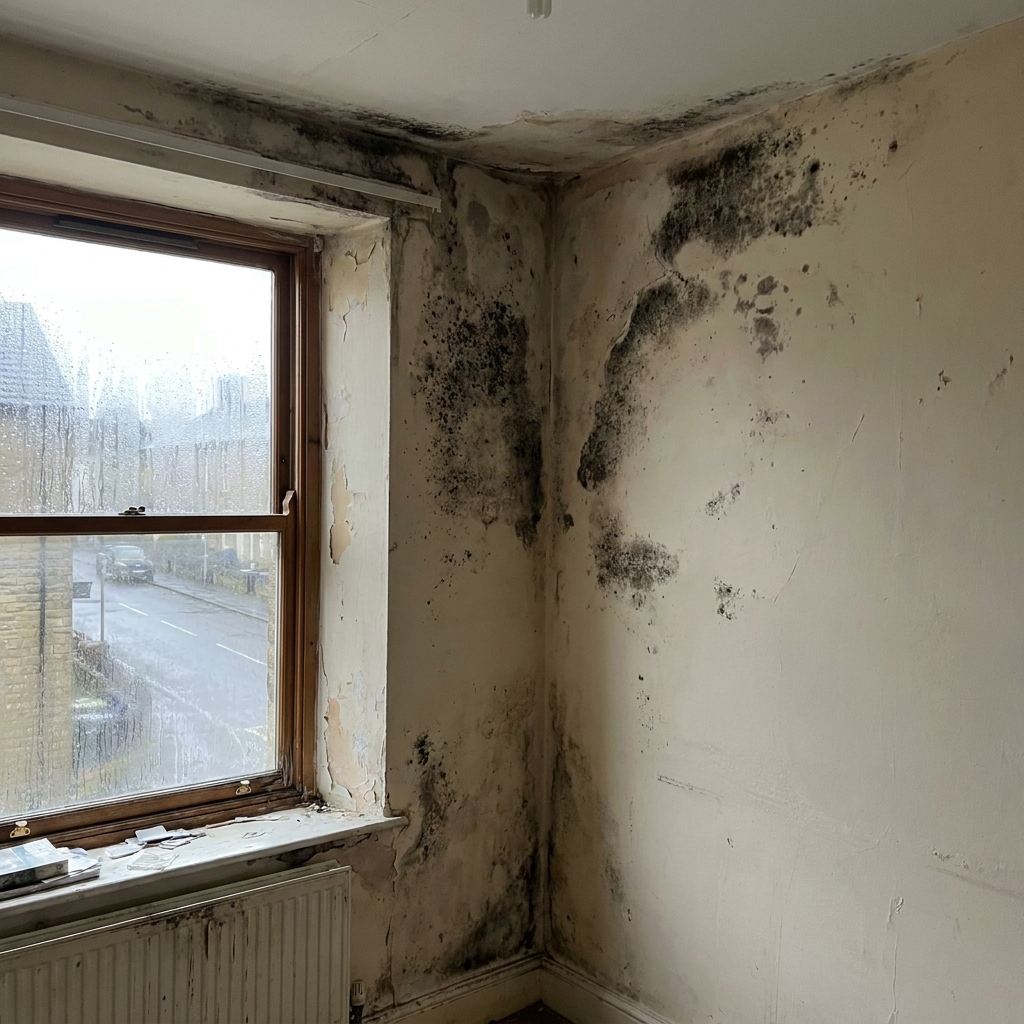
There is no official “safe” amount of indoor mould, so the honest answer is that any mould should be removed and the cause fixed. Risk rises with three things: how large the affected area is, how long you are exposed, and how vulnerable the people living there are. A small patch in a little-used room is lower risk than mould across a bedroom wall. Rather than chasing a threshold, the NHS-aligned approach is simple: remove visible mould, treat the underlying damp, and prioritise rooms used by children or anyone with respiratory problems.
People often want a number — a square-metre figure below which mould is “fine”. There is no such official threshold in the UK, and that is for good reason: the same patch affects different people differently. This page explains, calmly and factually, what actually drives the risk, how surveyors and environmental-health officers think about extent, and why “remove it and fix the cause” is the right rule regardless of size. It is general information, not a survey or medical advice.
How much mould is dangerous at a glance
- Official safe level None — no defined “safe” amount
- Risk drivers Area, exposure time, vulnerability of occupants
- Lower risk Small patch, little-used room, healthy adults
- Higher risk Large area, bedroom, children or respiratory conditions
- Rule of thumb Remove it and fix the cause whatever the size
Is there a “safe” amount of mould?
No. There is no official UK threshold below which household mould is considered safe. Health bodies do not publish a square-metre figure because the effect of mould depends on the person as much as the amount. The NHS frames it the other way round: if you have damp and mould, get rid of it — not “measure it and decide whether to bother”. So the practical rule is to treat visible mould as something to remove, then judge how urgently and how thoroughly based on the factors below. Anyone offering you a precise “safe” figure is going beyond what the evidence supports.
What actually drives the risk
Three things determine how much a given amount of mould matters, and they interact — a small patch in the wrong room for the wrong person can matter more than a larger one elsewhere:
- Area — a larger, well-established colony releases more spores and allergens into the air than a small patch.
- Exposure time — mould on a bedroom wall, where someone sleeps for hours every night, matters more than the same patch in a rarely-used utility room or garage.
- Who is exposed — the NHS flags babies, children, older people, and people with asthma, allergies or weakened immune systems as more vulnerable. The same patch is a higher priority in a child’s room than in a spare room used once a month.
| Extent | Typical approach | When to escalate |
|---|---|---|
| Small patch (roughly under 1 m²) | Clean yourself safely, fix the cause | If it keeps returning |
| Larger or recurring growth | Get the underlying damp investigated | If widespread or in a bedroom |
| Extensive mould across walls/ceilings | Professional removal and a damp survey | Always — treat as a priority |
| Any amount where someone is vulnerable | Prioritise removal regardless of size | If symptoms appear, see a GP |
How professionals judge extent
Environmental-health officers assess damp and mould in rented homes using the Housing Health and Safety Rating System (HHSRS) under the Housing Act 2004. They look at the likelihood of harm and how serious that harm could be — not a single area threshold. The most serious hazards are rated Category 1, which a council can require a landlord to address; less serious cases are rated Category 2. A qualified damp surveyor assessing your home will likewise weigh extent, cause and the building’s condition rather than apply a fixed number. A small survey of this kind typically costs in the region of £150–£350 and is the most reliable way to understand how serious a problem really is.
What to do at any size
The approach is the same whatever the extent: remove the mould and treat the cause. Clean small areas carefully (see how to clean mould safely) and improve ventilation to lower indoor humidity, since most household mould is fuelled by condensation. For larger, recurring or unexplained mould, get a qualified surveyor to find the underlying cause of the damp rather than repeatedly cleaning the same surface every winter, which treats the symptom and never the cause. If anyone in the home is unwell, see a GP — this page is general information, not a diagnosis, and a symptom checklist cannot tell you whether mould is to blame. And if you rent, your landlord is responsible for serious damp and mould hazards: see mould in a rented property for how to report it and what your landlord must do.
Frequently asked questions
Is there a safe amount of mould in a house?
No. There is no official UK threshold below which mould is considered safe. The NHS advice is to remove damp and mould rather than measure it. Risk rises with the area affected, how long you are exposed, and how vulnerable the people living there are.
Is a small patch of mould dangerous?
A small patch is generally lower risk than a large, established area, and can usually be cleaned safely yourself. But it should still be removed and the cause fixed, because it can grow and because risk is higher for children and anyone with respiratory problems.
How big does mould have to be to call a professional?
There is no fixed size, but professional help is sensible for extensive mould across walls or ceilings, mould that keeps returning despite cleaning, or any mould with an unexplained cause. A qualified damp surveyor assesses extent, cause and building condition together.
When does mould become a legal hazard in a rented home?
Councils assess damp and mould using the Housing Health and Safety Rating System under the Housing Act 2004, weighing the likelihood and seriousness of harm rather than a set area. The most serious hazards are Category 1, which a council can require a landlord to address.
Sources & further reading
- NHS — Can damp and mould affect my health?
- gov.uk — Housing Health and Safety Rating System (HHSRS)
- Housing Ombudsman — Spotlight on damp and mould
This guide is general information, not a site-specific survey, medical advice or legal advice. Damp and mould should be assessed by a qualified surveyor, and health concerns discussed with a GP or the NHS.