The short answer
You can usually clean a small area of mould yourself, but it must be done carefully — and you must fix the underlying damp or it will return. The NHS advises that if mould is caused by condensation, a small amount can be removed by wiping with a cloth and a suitable cleaning product, while protecting yourself. Ventilate the room, wear gloves and protection, and avoid disturbing large amounts of spores. For extensive mould, or mould caused by sewage or contaminated water, do not tackle it yourself — use a professional.
Cleaning mould is one of those jobs that is simple when small and a job for professionals when large. Doing it safely means protecting yourself from spores, using the right approach, and — crucially — fixing the cause so it does not come straight back. This page sets out a calm, NHS-aligned method for small areas, the protective steps that matter, and the clear signs that you should stop and call someone in. It is general guidance; for persistent or widespread damp, get a qualified survey.
Cleaning mould safely at a glance
- DIY suitable for Small areas caused by condensation
- Protection Gloves, mask, eye protection; ventilate the room
- Avoid Disturbing or brushing large amounts of dry spores
- Don’t DIY if Extensive mould, or sewage/contaminated water
- Essential after Fix the underlying damp so it does not return
Can you clean mould yourself?
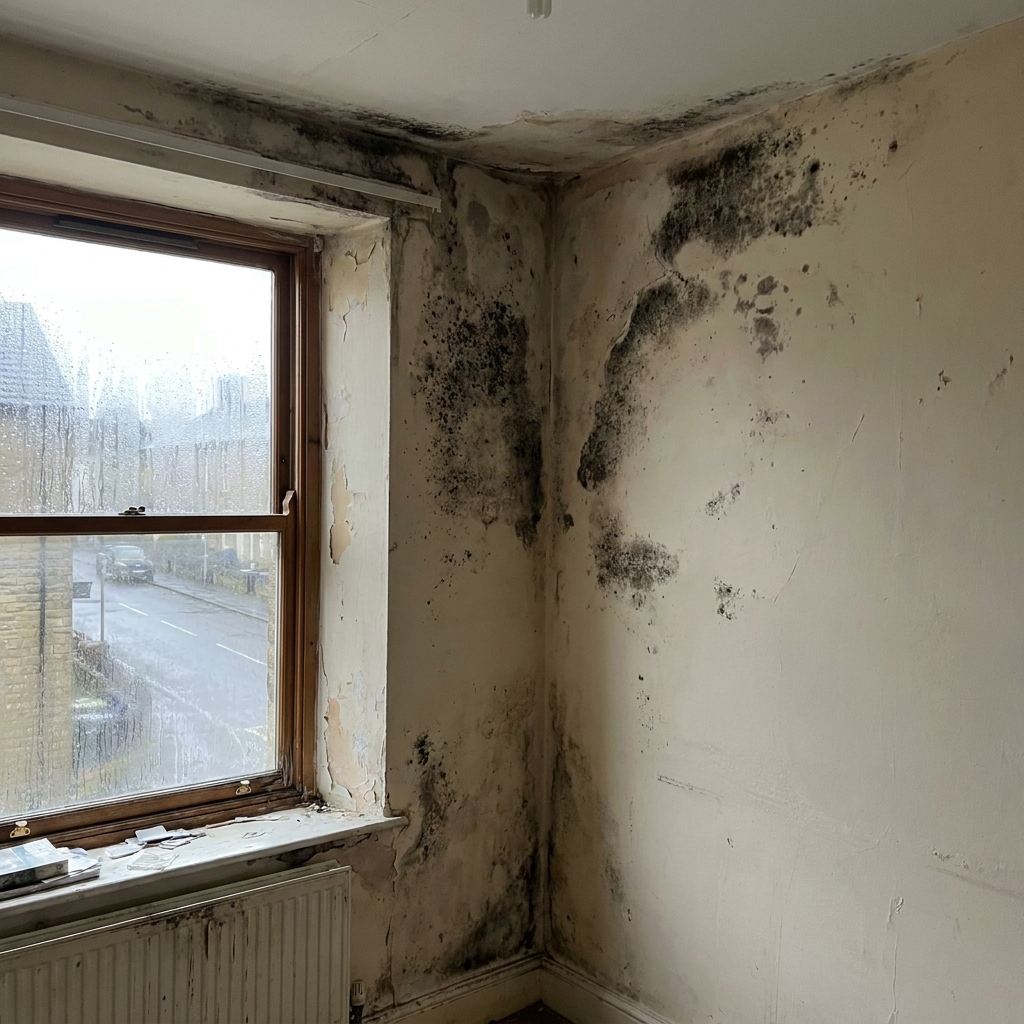
For a small area caused by condensation, yes. The NHS advises that a small amount of mould can be removed by wiping it away with a cloth and a suitable cleaning product, taking care to protect yourself. The key word is small. If mould covers a large area, keeps coming back despite cleaning, or is caused by sewage or other contaminated water, it should be dealt with by a professional rather than tackled yourself. Knowing where that line falls is the difference between a safe afternoon job and a job that exposes you to a heavy dose of spores or to contaminated material. As a rough guide, a patch you could cover with a tea towel is usually within the scope of a careful DIY clean; anything much larger, or growth that has spread across a wall or ceiling, is not.
Step-by-step: small areas
The method matters as much as the product. Work calmly through these steps:
- Ventilate. Open a window and keep the door to the rest of the home closed, so spores are not spread from room to room.
- Protect yourself. Wear rubber gloves, eye protection and a face mask to avoid breathing in or touching spores.
- Wipe, don’t brush. Use a damp cloth and a suitable cleaning product to wipe the mould off the surface. Avoid dry-brushing or vacuuming, which sends spores into the air.
- Dry the area. Dry the surface thoroughly afterwards, as remaining moisture simply lets mould return within weeks.
- Dispose carefully. Put the cloth and any disposable items in a bag and throw them away; wash any fabrics or soft furnishings that touched the mould on a warm wash.
When to call a professional
Cleaning is for small, condensation-driven patches. Stop and bring in a professional if any of these apply, because the risk or the underlying problem is beyond a domestic clean:
| Situation | Why DIY isn’t safe |
|---|---|
| Large or widespread mould | Heavy spore exposure; needs proper equipment |
| Mould from sewage or flood water | Contamination risk beyond ordinary mould |
| Mould keeps returning | Underlying damp needs a survey, not just cleaning |
| You are pregnant or vulnerable | Reduce your exposure — ask someone else or a pro |
Professional mould removal typically costs in the region of £200–£1,000 depending on the extent, and is worth it where the affected area is large or the cause is unclear. If you are pregnant or have a respiratory condition, it is sensible to let someone else handle larger areas — see mould and pregnancy for the precautions that apply.
Fix the cause or it comes back
Cleaning mould without fixing the damp is only a temporary win. The NHS is explicit that you should treat the underlying cause as well as removing the mould, or it will simply grow back on the same surface. Most household mould is condensation-driven, so improving ventilation, reducing indoor humidity and heating the home steadily are what stop it returning — using extractor fans in the kitchen and bathroom, opening windows after cooking and showering, and not drying washing on radiators in unventilated rooms. For mould you cannot explain, or that recurs despite cleaning, get a qualified surveyor to find the underlying problem; a survey of this kind typically costs around £150–£350 and saves you cleaning the same wall every winter. And if you rent, report it, as your landlord is responsible for serious damp and mould hazards — see mould in a rented property for how to do so.
Frequently asked questions
How do I clean mould safely myself?
For a small area, ventilate the room, wear gloves, a mask and eye protection, then wipe the mould off with a cloth and a suitable cleaning product — do not dry-brush it. Dry the surface afterwards and dispose of cloths carefully. Crucially, fix the underlying damp so it does not return.
Should I use bleach to clean mould?
A suitable cleaning product can remove small areas of mould. Whatever you use, never mix bleach with other cleaners, ventilate the room and follow the product label. For large areas, or mould from sewage or flood water, use a professional rather than household products.
When should I not clean mould myself?
Do not tackle it yourself if the mould is extensive, keeps returning, or is caused by sewage or contaminated water. If you are pregnant or have a respiratory condition, it is also sensible to ask someone else or a professional to remove larger areas.
Why does mould come back after I clean it?
Because cleaning removes the mould but not the cause. Mould returns if the underlying damp — usually condensation — is still there. Improve ventilation, reduce humidity, and get a qualified survey for persistent or unexplained damp so the problem is fixed at source.
Sources & further reading
- NHS — Can damp and mould affect my health?
- gov.uk — Understanding and addressing the health risks of damp and mould in the home
- Housing Ombudsman — Spotlight on damp and mould
This guide is general information, not a site-specific survey, medical advice or legal advice. Damp and mould should be assessed by a qualified surveyor, and health concerns discussed with a GP or the NHS.