The short answer
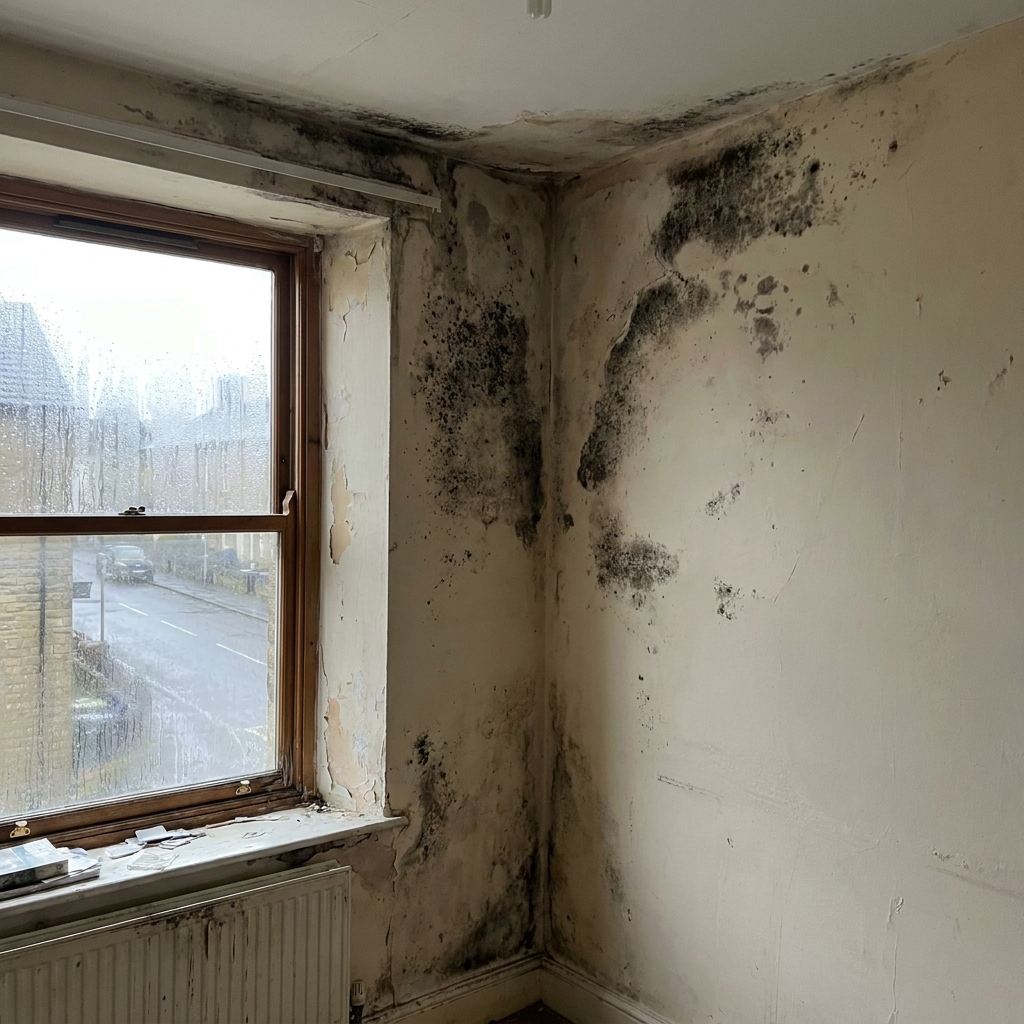
Penetrating damp is water entering a building from outside through a specific defect — cracked render, defective pointing, blocked or leaking gutters, a failed window seal or a roof fault. It typically shows as a localised patch that worsens after rain and can appear at any height. The cure is to find and repair the defect, then let the wall dry out — not to inject a damp-proof course, which treats a different problem.
Unlike condensation (from indoor air) or rising damp (from the ground), penetrating damp comes through a fault in the building’s outer shell. Rain finds the weak point and tracks inside. Because the fix is the defect, not the symptom, the first job is detective work. This page explains the common causes, signs and repairs — and why masking the inside surface makes things worse.
Penetrating damp at a glance
- Cause Water in through an external defect
- Common culprits Render, gutters, roof, seals, pointing
- Classic sign Localised patch, worse after rain
- Height Any — not just near the floor
- Cure Repair the defect, then dry out
- Not the cure A damp-proof course
What causes penetrating damp
Penetrating damp begins with a defect in the building envelope that lets rainwater in. Common causes include cracked or blown render and defective pointing on brickwork; blocked, leaking or overflowing gutters and downpipes; failed seals around windows and doors; damaged flashing, slipped tiles or other roof faults; and porous masonry on exposed, weather-facing walls. Solid-walled (pre-cavity) homes are more prone to penetration than modern cavity-wall construction, because there is no air gap to interrupt the path of the water. Driving rain on an exposed elevation will exploit even a small defect, which is why the same wall can be dry for months and then wet after a storm.
How to recognise it
- A defined patch rather than a diffuse spread — often with a darker, damper centre.
- Worsens after rain and may dry back during long dry spells.
- Appears at any height, frequently linked to the defect above it (a gutter, a window head, a roof valley).
- Staining and blistering of plaster and paint, and sometimes mould around the wettest area.
| Defect | Where damp shows | Repair |
|---|---|---|
| Leaking gutter/downpipe | Vertical streak below the fault | Clear or replace; re-fix |
| Cracked/blown render | Patch behind the crack | Cut out and re-render |
| Failed window seal | Around the reveal/sill | Re-seal / renew mastic |
| Roof/flashing fault | Top-floor ceiling or wall | Roofer to repair |
How to fix penetrating damp
The repair depends on the source, so the first step is to trace it — checking gutters during rain, inspecting render and pointing, and examining the roof and window seals. Once the defect is repaired, the wall needs time to dry, which can take weeks or months for thick masonry; gentle heating and good ventilation help. Damaged internal plaster may then need to be renewed. Where exposed walls remain vulnerable even after repair, a breathable water-repellent treatment is sometimes used, but only after the underlying fault is fixed and never as a substitute for it.
Maintenance that prevents it
Most penetrating damp starts with neglected maintenance, so a little routine care prevents the bulk of it. Clear gutters and downpipes at least once or twice a year, especially after autumn leaf-fall, and watch them during heavy rain to spot overflows. Repair cracked or hollow-sounding render and re-point eroded mortar joints before they let water track inside. Renew failed mastic around windows and doors, and have the roof, flashing and chimney checked periodically. On exposed, weather-facing elevations, keeping the masonry sound is the best defence. Catching a small defect early is far cheaper than drying out and re-plastering a wall after months of water ingress. A useful habit is to walk the outside of the property after the first heavy rain of autumn, looking for overflowing gutters, damp streaks down the wall below downpipes, and dark patches on render that take a long time to dry — these are the early fingerprints of penetrating damp before it ever shows on the inside.
When to call a professional
Cleared gutters and a re-sealed window are jobs many homeowners can manage. Roof faults, large areas of failed render, and any case where the source is unclear call for a roofer, builder or qualified surveyor who can use the pattern of staining to trace the entry point. For rented homes, repairing the building fabric is generally the landlord’s responsibility — see landlord responsibility for damp. If you are unsure whether it is penetrating or another type, our guides on rising damp and condensation help you compare. This page is general information, not a site-specific survey.
Frequently asked questions
How do I tell penetrating damp from rising damp?
Penetrating damp appears as a localised patch that worsens after rain and can be at any height; rising damp shows as a horizontal tide-mark low on the wall and is present all year. The link to rainfall is the key clue.
Will a damp-proof course fix penetrating damp?
No. A damp-proof course treats rising damp from the ground. Penetrating damp comes through an external defect and is fixed by repairing that defect — the gutter, render, roof or seal.
How long does a wall take to dry after fixing the leak?
It varies with wall thickness and conditions, from a few weeks to several months for thick solid masonry. Ventilation and gentle heating speed drying; do not seal the surface until it is dry.
Is penetrating damp the landlord’s responsibility in a rented home?
Repairs to the structure and exterior — including roofs, gutters, walls and window frames — are generally the landlord’s duty under section 11 of the Landlord and Tenant Act 1985 and the Homes (Fitness for Human Habitation) Act 2018.
Sources & further reading
- RICS — Investigation of moisture and its effects in traditional buildings
- Property Care Association (PCA) — Penetrating damp guidance
- gov.uk — Housing Health and Safety Rating System (HHSRS)
- gov.uk — Landlord and Tenant Act 1985, section 11 repairing obligations
This guide is general information, not a site-specific survey, medical advice or legal advice. Damp and mould should be assessed by a qualified surveyor, and health concerns discussed with a GP or the NHS.