The short answer
Condensation is itself a type of damp — it is moisture from the indoor air settling on cold surfaces, rather than water entering the building. “Damp” usually refers to rising or penetrating damp, where water comes from the ground or outside through a defect. The distinction matters because condensation is cured by ventilation and heating, while structural damp needs building repairs. Most household damp problems in the UK are, in fact, condensation.
People often ask whether they have “condensation or damp” as if they were separate things. Strictly, condensation is one of the types of damp — but it has a different cause and cure from rising and penetrating damp, so telling them apart is the first practical step. This page explains the difference clearly and how to test which one you are facing.
Condensation vs damp at a glance
- Condensation Indoor air moisture on cold surfaces
- Rising/penetrating damp Water from ground or outside
- Condensation cure Ventilation, heating, less moisture
- Damp cure Building repair (DPC, render, roof)
- Most common Condensation
- Both can cause Black mould
What condensation actually is
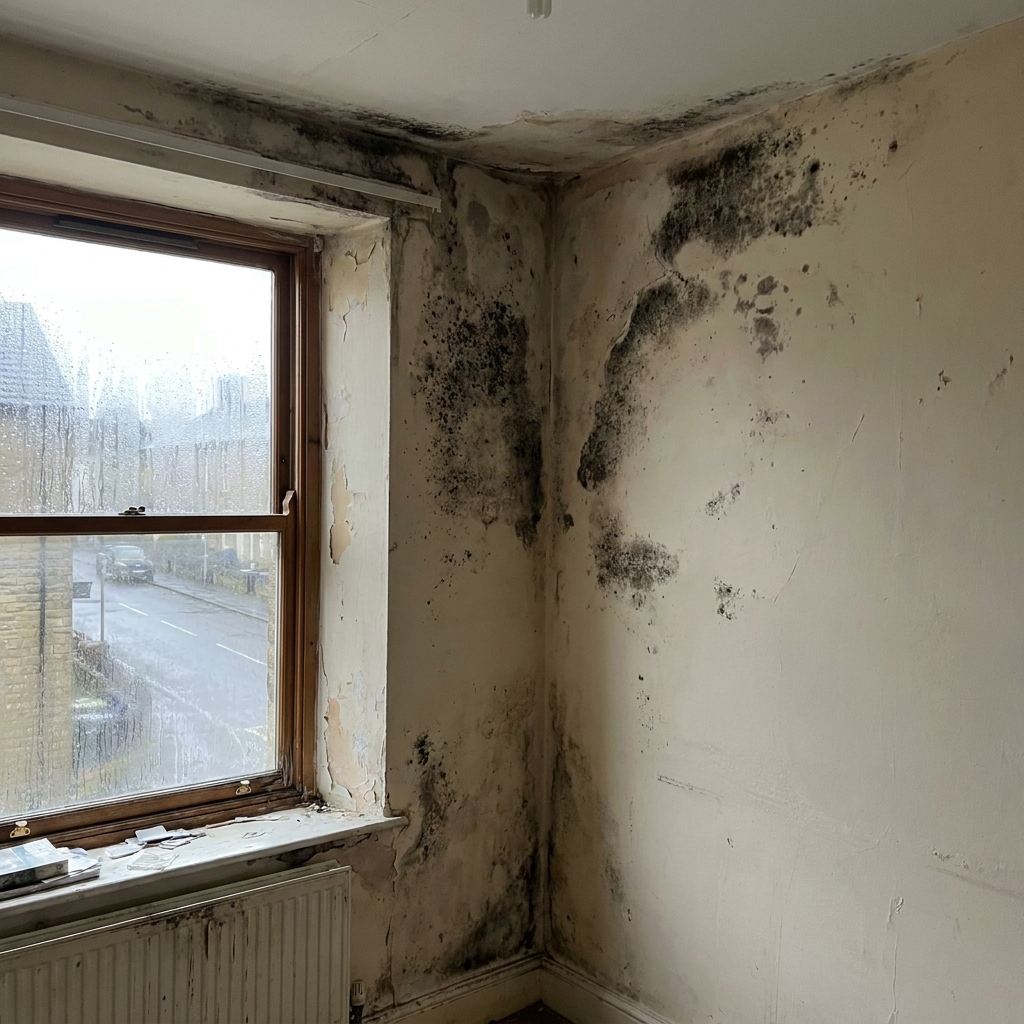
Air holds water vapour, and warm air holds more than cold air. When warm, moist indoor air touches a cold surface — a window, an external wall, a cold spot behind a wardrobe — it cools and can no longer hold all its moisture, so water condenses out. A typical household generates several litres of moisture a day through breathing, cooking, bathing and drying clothes indoors. If that moisture is not ventilated away, condensation and then black mould follow. This makes condensation a genuine form of damp, just one driven by indoor conditions and the temperature of surfaces rather than by a fault in the building fabric.
How “damp” differs
When people say “damp” they usually mean rising damp or penetrating damp — water coming into the building from the ground or the outside. Rising damp travels up through the wall base where the damp-proof course is missing or bridged. Penetrating damp comes through a defect such as cracked render, a leaking gutter or a failed seal. Unlike condensation, these are building faults, and no amount of ventilation will fix them; they need physical repair. That is precisely why distinguishing condensation from true structural damp is the first and most important step.
| Clue | Points to condensation | Points to rising/penetrating damp |
|---|---|---|
| Worst in cold weather | Yes | Not specifically |
| Worst after rain | No | Penetrating: yes |
| Water on windows | Yes | No |
| Tide-mark low on wall | No | Rising: yes |
| Mould in cold corners | Typical | Less typical |
Why the difference matters
The cures are opposite. Condensation is reduced by managing moisture — using extractor fans, opening trickle vents, drying washing outdoors, and heating the home steadily so surfaces stay above the dew point. Structural damp needs physical repair: a new damp-proof course, fixing render, clearing gutters or repairing a roof. Spend on a damp-proof course when the real problem is condensation and you will still have the mould; conversely, ventilating a wall fed by groundwater will never dry it. Getting the diagnosis right first is what saves money.
- Test 1 — timing: condensation peaks in cold months and overnight, easing in warm, dry weather.
- Test 2 — location: condensation favours windows, cold corners and surfaces behind furniture on external walls.
- Test 3 — after rain: a patch that worsens after rain points to penetrating damp, not condensation.
- Test 4 — height: a tide-mark low on a ground-floor wall, with salts, points to rising damp.
Everyday moisture and how to cut it
Because condensation is driven by the moisture you add to the air, small daily habits make a real difference. Cooking with pan lids on and the extractor running, keeping bathroom doors shut and the fan on during and after a shower, and drying washing outdoors or in a vented tumble dryer all cut the litres of water released indoors. Opening trickle vents and briefly cross-ventilating each morning clears the overnight build-up from breathing. None of this fixes rising or penetrating damp, but for genuine condensation it is often the difference between a dry wall and a mouldy one — and it costs nothing.
When to get it checked
If the pattern is clearly condensation and mild, improving ventilation and heating often resolves it without professional help. If you see a low tide-mark, a patch that follows rain, mould that returns despite good ventilation, or any damp where vulnerable people live, have a qualified surveyor confirm the cause with moisture readings before any treatment. This is general information, not a site-specific survey, medical advice or legal advice.
Frequently asked questions
Is condensation a type of damp?
Yes. Condensation is one of the three main types of damp. It differs from rising and penetrating damp in that the water comes from moist indoor air rather than from the ground or outside.
How do I know if it’s condensation or rising damp?
Condensation appears on windows and in cold corners and is worst in cold weather; rising damp shows as a horizontal tide-mark low on the wall and is present all year. A surveyor can confirm with moisture readings.
Does condensation cause black mould?
Yes. Condensation keeps surfaces damp enough for mould spores to grow, which is why black mould so often appears in window reveals and cold corners.
Can a dehumidifier fix condensation?
A dehumidifier can reduce indoor humidity and help in the short term, but lasting control of condensation comes from better ventilation, steady heating and cutting moisture at source.
Sources & further reading
- gov.uk — Housing Health and Safety Rating System (HHSRS)
- RICS — Investigation of moisture and its effects in traditional buildings
- NHS — Can damp and mould affect my health?
- Housing Ombudsman — Spotlight on damp and mould
This guide is general information, not a site-specific survey, medical advice or legal advice. Damp and mould should be assessed by a qualified surveyor, and health concerns discussed with a GP or the NHS.