The short answer
Most mould can be lived with safely while it is removed and fixed — leaving home is rarely necessary, but it can be the right call in serious cases. Warning signs include extensive mould across walls and ceilings, a vulnerable person whose health is clearly affected, or a property a council deems to have a serious (Category 1) hazard. If you are worried about anyone’s health, see a GP. If you rent, report it — in serious cases a council can require the landlord to act, and you may be entitled to alternative accommodation.
“Should we move out?” is a question people ask when mould feels overwhelming. For most homes the answer is no — the mould can be removed and the cause fixed while you stay put. But there are genuinely serious cases where leaving, temporarily or otherwise, is reasonable. This page helps you judge the difference calmly, points to who can assess it properly, and sets out your rights. It is general information, not medical, survey or legal advice — serious cases should be assessed by the right professional.
When to leave at a glance
- Usual position Mould can be removed while you stay — leaving is rare
- Warning signs Extensive growth, affected health, serious structural damp
- Who assesses health A GP
- Who assesses the home A qualified surveyor or council environmental health
- Serious legal hazard HHSRS Category 1 — council can require action
Do you usually need to leave?
For the great majority of homes, no. Mould is unpleasant and should be dealt with, but it can normally be removed and the underlying damp fixed while you continue to live there. The NHS advice centres on getting rid of the mould and treating the cause, not on moving out. So the starting point is reassurance: a patch of mould, even a stubborn one, is a problem to solve rather than a reason to pack. Moving home is disruptive and expensive, and it is rarely the proportionate response to ordinary household mould. The question to ask is not “should we flee?” but “how quickly can the mould be removed and the cause fixed, and who needs protecting in the meantime?”
Signs a case may be serious
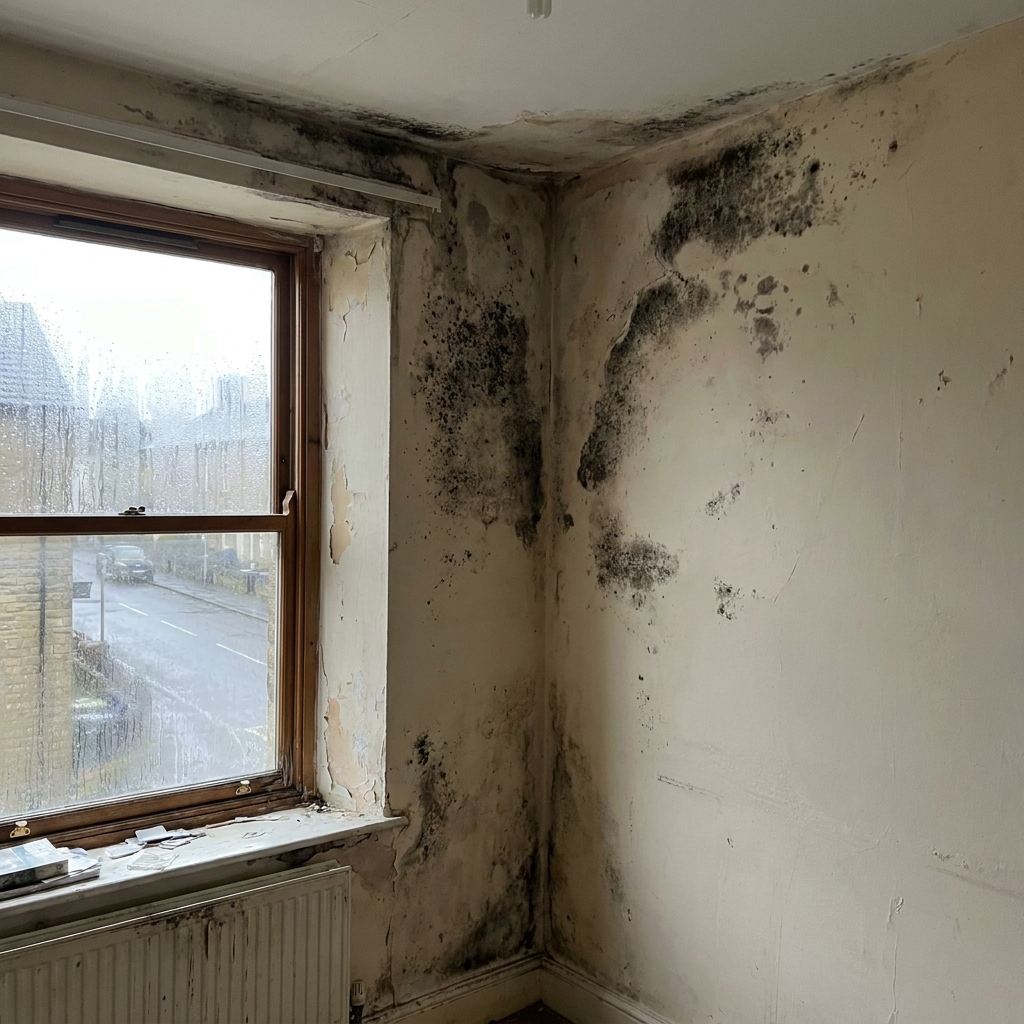
There are situations where staying put is harder to justify, at least until the problem is tackled. Consider getting urgent professional advice if:
- Mould is extensive — covering large areas of walls or ceilings, especially in bedrooms where people sleep for hours.
- A vulnerable person in the home — a baby, young child, older person, or someone with asthma, severe allergies or a weakened immune system — has health that is clearly affected.
- There is serious underlying damp or structural problems making the home cold and persistently wet.
- A council has identified a serious hazard under the Housing Health and Safety Rating System.
Even in these cases, leaving is not always the answer — sometimes the right move is to relocate sleeping arrangements within the home, accelerate the repair, or push the landlord and council to act quickly. The decision should rest on professional assessment, not fear.
| Severity | Typical response |
|---|---|
| Small or moderate mould | Remove it, fix the cause, stay in the home |
| Extensive mould, no one unwell | Professional removal and damp survey; usually stay |
| Vulnerable person, health affected | See a GP; reduce exposure; consider temporary moves of bedrooms |
| Serious hazard (Category 1) | Council can require landlord action; alternative housing may apply |
Who can assess it properly
Two kinds of assessment matter. For health, a GP can advise whether symptoms warrant action. For the home, a qualified damp surveyor can establish the cause and extent, and a council’s environmental health team can assess hazards under the Housing Act 2004. Councils rate the most serious hazards as Category 1 and have powers to require a landlord to deal with them; less serious cases are Category 2. See how much mould is dangerous for how extent is weighed by the professionals who do this for a living.
Your options if you rent
If you are a tenant in a seriously affected home, you are not without options. Report the problem to your landlord in writing and keep records, including photographs and notes of any effect on health. If they fail to act, the council’s environmental health team can intervene under the Housing Act 2004, and in serious cases you may be entitled to alternative accommodation while major work is done. Social tenants have additional protection under Awaab’s Law, which sets timescales for landlords to investigate and act on damp and mould. Where damp has caused harm or damage to your health or belongings, a housing disrepair claim may be possible. Citizens Advice or a housing solicitor can talk you through which route fits your situation, and this page is general information rather than legal advice.
Frequently asked questions
Do I need to move out because of mould?
Usually not. Most mould can be removed and the cause fixed while you stay in the home. Leaving is rarely necessary, but it can be reasonable in serious cases — extensive growth, a vulnerable person whose health is clearly affected, or a home a council deems seriously unsafe.
When is mould a serious health risk?
Risk is higher when mould is extensive, exposure is prolonged, and the people affected are vulnerable — babies, children, older people, or those with asthma, allergies or weakened immunity. If someone’s health is clearly affected, see a GP rather than judging it yourself.
Can a council say my home is unfit to live in?
Yes. Councils assess hazards including damp and mould under the Housing Health and Safety Rating System (Housing Act 2004). The most serious are Category 1 hazards, and councils have powers to require landlords to address them. Contact environmental health to request an inspection.
Will I get alternative accommodation if mould is severe?
In serious cases, where major work is needed or a home is unfit, tenants may be entitled to alternative accommodation. This depends on the circumstances and your tenancy. Report the problem in writing, involve the council if the landlord does not act, and seek advice from Citizens Advice or a housing solicitor.
Sources & further reading
- NHS — Can damp and mould affect my health?
- gov.uk — Housing Health and Safety Rating System (HHSRS)
- Housing Ombudsman — Spotlight on damp and mould
This guide is general information, not a site-specific survey, medical advice or legal advice. Damp and mould should be assessed by a qualified surveyor, and health concerns discussed with a GP or the NHS.