The short answer
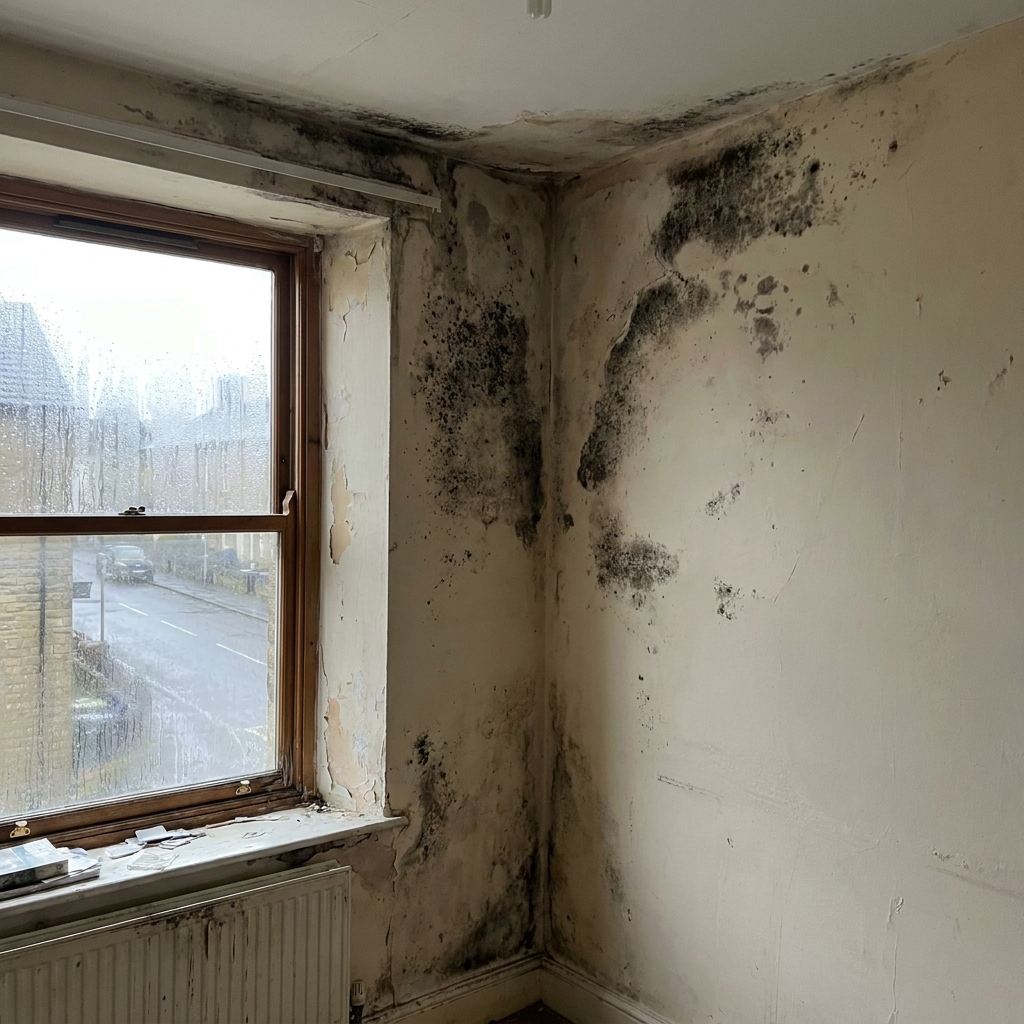
Black mould grows on walls where a surface stays damp and poorly ventilated — almost always a symptom of condensation, though rising or penetrating damp can also feed it. Spores are always in the air; they only bloom when humidity at the surface stays high, which is why mould favours cold corners, window reveals and walls behind furniture. Removing it safely matters, but it returns unless you fix the underlying damp.
Black mould on a wall is alarming, but it is a symptom rather than the root problem. It tells you a surface is staying damp for long enough for mould spores to grow. This page explains why it appears, where it clusters, the health context, and how to remove it without making things worse or simply inviting it straight back.
Black mould at a glance
- What it is Mould fungus growing on a damp surface
- Usual cause Condensation (high surface humidity)
- Favourite spots Cold corners, windows, behind furniture
- Health link NHS — respiratory & allergy risk
- Removal cost £200–£1,000 depending on extent
- Key rule Fix the damp or it returns
Why black mould grows
Mould spores are present in all indoor air and are harmless until they find moisture. When a surface stays damp — because warm, moist air keeps condensing on it — the spores germinate and the familiar black, sometimes greenish, growth appears. The most common driver is condensation: a home producing several litres of moisture a day from cooking, washing and breathing, without enough ventilation to remove it. Less often, penetrating or rising damp keeps the wall wet from the building side. Either way, the mould is the messenger, not the message: it marks where the surface is staying wet.
Where it appears and why
- Room corners and ceiling junctions — cold thermal bridges where air barely moves.
- Window reveals and sills — the coldest surfaces, where condensation forms first.
- Behind wardrobes and beds against external walls — trapped, stagnant, cold air.
- Unheated bedrooms — cool surfaces plus overnight moisture from breathing.
The common thread is a cold surface that air cannot circulate around. Improving airflow and warming those surfaces removes the conditions the mould needs, which is why ventilation and steady heating do more than any cleaning spray.
Removing black mould safely
For small areas (under about a square metre) on hard surfaces, mould can usually be cleaned by a competent adult. Ventilate the room, wear a mask and gloves, and wipe the area with a proprietary mould remover or a suitable cleaning solution, then dry thoroughly. Avoid brushing or vacuuming dry mould, which sends spores into the air. Do not simply paint over it — mould grows back through ordinary paint. Larger or recurring infestations, and any in homes with vulnerable occupants, warrant professional removal.
| Extent | Approach | Typical cost |
|---|---|---|
| Small patch (<1m²) | Careful DIY clean + ventilate | Cost of cleaning kit |
| Several walls / rooms | Professional removal | £200–£1,000 |
| Recurring / vulnerable home | Survey + treat cause | Survey £150–£350 |
The cycle that keeps mould alive
Mould thrives on a self-reinforcing cycle: a cold surface chills the air against it, that air releases moisture, the surface stays wet, and spores colonise it. Break any link in that chain and the mould loses its foothold. Warming the surface — through better heating or, longer term, insulation — raises it above the dew point. Moving air across it — through ventilation or simply pulling furniture off the wall — stops moisture settling. Cutting the moisture you add to the room reduces the load in the first place. Cleaning alone touches none of these, which is exactly why scrubbed-off mould reappears within weeks unless the conditions change. This is also why anti-mould paints and sprays are only ever a finishing touch: they can slow regrowth on a treated surface, but they do nothing about the cold, damp conditions underneath, and a wall that is still chilled and starved of airflow will eventually defeat them.
Stopping it coming back
Cleaning treats the symptom; lasting control means fixing the damp. For condensation, improve ventilation — extractor fans in kitchen and bathroom, trickle vents, drying washing outdoors — and heat the home steadily so surfaces stay above the dew point. Pull furniture a little off external walls to let air move behind it. For structural damp, repair the cause. In rented homes, report mould to the landlord in writing, as serious cases are an HHSRS hazard. This page is general information, not medical advice or a site-specific survey.
Frequently asked questions
Why does black mould keep coming back after I clean it?
Because cleaning removes the mould but not the damp feeding it. Unless you fix the underlying condensation or structural damp, the surface stays wet enough for spores to regrow.
Is it safe to clean black mould myself?
Small areas on hard surfaces can usually be cleaned with a mask, gloves and good ventilation. Larger areas, or homes with babies, older people or anyone with breathing problems, are better handled professionally.
Can I just paint over black mould?
No. Mould grows back through ordinary paint. Remove the mould, fix the damp, let the wall dry, then redecorate — anti-mould paint can help but is not a substitute for curing the damp.
Is black mould on walls dangerous?
The NHS associates mould with respiratory and allergy problems, especially for vulnerable people. See our guide on whether black mould is dangerous, and consult a GP if anyone has symptoms.
Sources & further reading
- NHS — Can damp and mould affect my health?
- gov.uk — Understanding and addressing the health risks of damp and mould in the home
- Property Care Association (PCA) — Mould and condensation guidance
- Housing Ombudsman — Spotlight on damp and mould
This guide is general information, not a site-specific survey, medical advice or legal advice. Damp and mould should be assessed by a qualified surveyor, and health concerns discussed with a GP or the NHS.