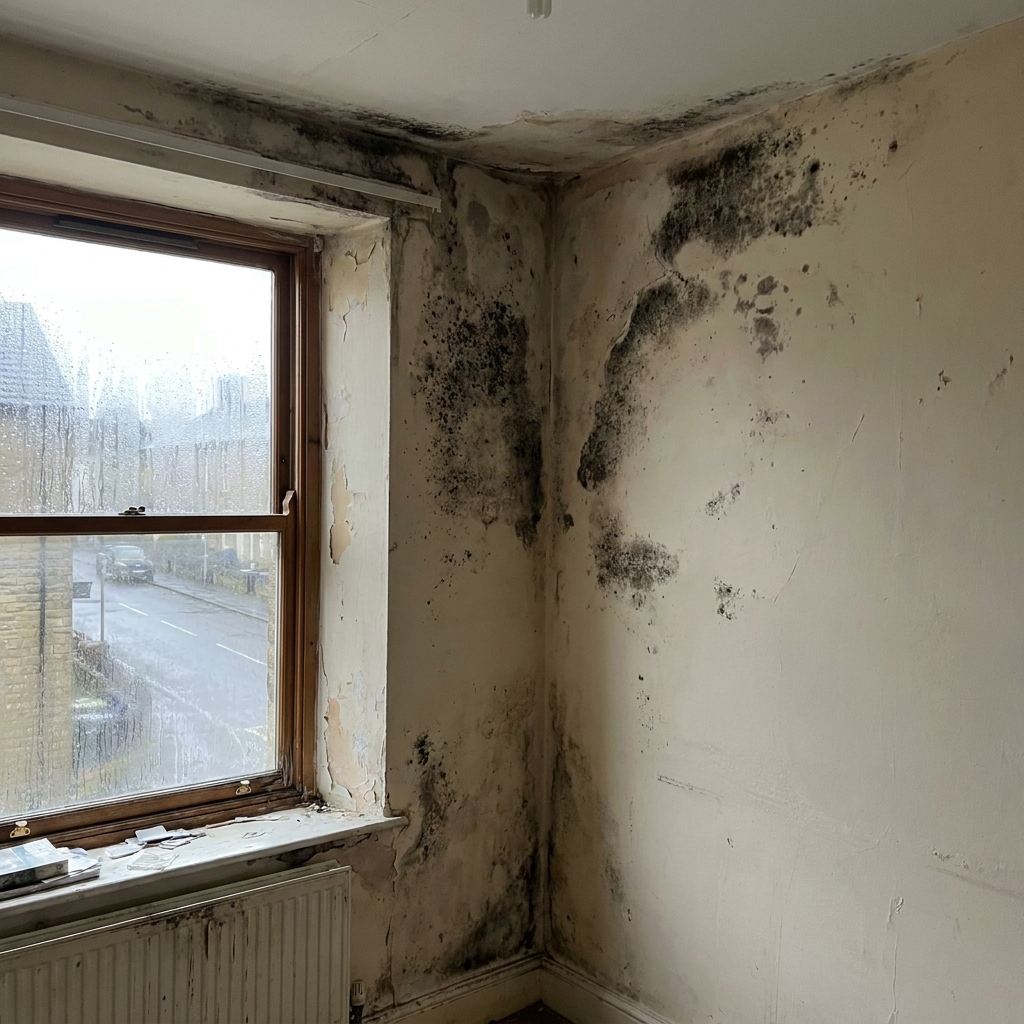
The short answer
Professional mould removal in 2026 typically costs £200–£1,000, depending on how large the affected area is and how badly materials are contaminated. A small patch you can often clean yourself for the price of a mask and a mould remover. But cleaning is only part of the cost: unless you also fix the damp or condensation that caused the mould, it returns — so budget for the underlying repair too, which is usually the larger expense.
Mould removal sounds like a one-off job, but the cost has two parts: cleaning the mould off, and fixing the moisture that caused it. The cleaning itself is often inexpensive, especially for a small patch you can handle yourself. The real cost — and the part that stops the mould coming back — is dealing with the underlying condensation or damp. This guide sets out typical UK figures for 2026 and what affects them.
Mould removal costs at a glance
- Professional removal £200–£1,000
- Main cost driver Size of the affected area
- DIY small patch Cost of a mask + mould remover
- Hidden cost Fixing the damp source
- Often needed Ventilation or damp repair
- Renting? Usually the landlord’s cost
Typical 2026 mould removal costs
Professional mould removal generally falls in the £200–£1,000 range, with the figure rising as the affected area grows and as porous materials — plaster, plasterboard, soft furnishings — need replacing rather than just wiping. A small patch on a hard surface costs little to deal with yourself.
| Situation | Typical 2026 cost |
|---|---|
| Small patch (DIY, hard surface) | Cost of mask + mould remover |
| Professional clean, limited area | £200–£500 |
| Larger area or contaminated materials | £500–£1,000 |
| Plus: fixing the cause (e.g. PIV unit) | £400–£1,500 fitted |
These are indicative UK ranges, not quotes. Always get the work specified and priced in writing, and make sure the quote states clearly what is and is not included — in particular whether it covers only the visible cleaning or also addressing the moisture source. A figure that looks cheap because it stops at wiping the surface is rarely the better deal once the mould returns and you pay a second time.
The cost that matters most: fixing the cause
Cleaning mould without fixing its cause is money wasted, because it grows straight back. Most household mould comes from condensation, so the lasting fix is usually a ventilation improvement — an extractor fan, trickle vents or a positive-input ventilation (PIV) unit at £400–£1,500 fitted — rather than the cleaning itself. Where the mould stems from penetrating or rising damp, the structural repair is the real cost; see damp-proofing cost. Diagnose the cause first with how to stop condensation and ventilation to prevent mould.
What drives the price
- Area affected — a single corner versus a whole room or several rooms.
- Materials involved — wiping a painted wall is cheap; removing and replacing mouldy plasterboard or carpet is not.
- Cause of the moisture — condensation, a leak, penetrating or rising damp each carry a different repair cost.
- Health sensitivity — where a vulnerable person is in the home, a more thorough professional remediation may be advised.
- Access and disruption — mould behind fitted units, in lofts or in awkward corners takes longer to reach and treat safely.
Because these factors vary so widely between homes, two quotes for “mould removal” can describe quite different pieces of work. The only way to compare them fairly is to ask each contractor exactly what their price covers, how they intend to deal with the moisture source, and what guarantee — if any — they offer on the result.
Why the cheapest job is the one you do once
It is tempting to treat mould removal as a tidy-up — clean the wall, move on — but that framing is exactly what makes it expensive over time. Mould is not the problem; it is the visible evidence of a moisture problem. Pay only for the clean and you will be paying again at the next cold snap, because the wall keeps getting damp. Pay to understand and fix the moisture — usually a modest ventilation improvement — and the cleaning becomes a one-off. When you weigh up a quote, separate the two parts in your head: what does this cost cover for removal, and what (if anything) does it cover for the cause? A £300 clean that ignores the condensation is worse value than a slightly higher figure that also fits an extractor fan or PIV unit and ends the cycle.
DIY versus professional
A small patch on a hard surface — roughly under a square metre — is usually safe to clean yourself with a mask, gloves and eye protection; see how to remove black mould. Call a professional for large areas, mould following a flood or sewage, repeated regrowth, or where someone in the home is vulnerable. If you rent, the cost generally falls to your landlord, and social landlords have duties under Awaab’s Law to investigate and act within set timescales; see mould in a rented property. These figures are typical UK ranges, not a quotation, medical advice or legal advice.
Frequently asked questions
How much does professional mould removal cost?
Typically £200–£1,000 in 2026, depending on the size of the affected area and whether contaminated materials such as plasterboard need replacing. Fixing the underlying damp is usually a separate, often larger, cost.
Can I just clean mould myself to save money?
Yes for a small patch on a hard surface, using a mask, gloves and eye protection. But cleaning alone is temporary — without fixing the damp or condensation, the mould returns regardless of who removes it.
Does mould removal include fixing the damp?
Not necessarily — a basic mould clean may only treat the surface. Ask any contractor whether their quote includes diagnosing and fixing the moisture source, as that is what stops the mould coming back.
Who pays for mould removal in a rented home?
Tackling damp and mould is generally the landlord’s responsibility, so the cost should not fall on the tenant. Social landlords also have specific duties under Awaab’s Law to investigate and act on damp and mould.
Sources & further reading
- Property Care Association (PCA) — mould remediation guidance
- NHS — Can damp and mould affect my health?
- GOV.UK — Understanding and addressing the health risks of damp and mould in the home
- Typical UK contractor market ranges, 2026
This guide is general information, not a site-specific survey, medical advice or legal advice. Damp and mould should be assessed by a qualified surveyor, and health concerns discussed with a GP or the NHS.