The short answer
Ventilation prevents damp and mould by removing moist indoor air before it condenses on cold surfaces. The main options are extractor fans in the kitchen and bathroom, trickle vents on windows, daily airing, and — for persistent whole-house humidity — a positive-input ventilation (PIV) unit at around £400–£1,500 fitted, which gently introduces filtered fresh air to push damp air out. Ventilation is the single most effective long-term defence against condensation mould.
Mould needs moisture, and in most homes that moisture is condensation from humid indoor air. Ventilation breaks the cycle by carrying that moist air outside before it can settle on cold walls and windows. It ranges from the simple and free — opening windows, using trickle vents — to mechanical systems such as extractor fans and whole-house positive-input ventilation. This guide explains each option and where it fits.
Ventilation options at a glance
- Goal Remove moist air before it condenses
- Spot ventilation Extractor fans in kitchen & bathroom
- Background Trickle vents and daily airing
- Whole-house Positive-input ventilation (PIV)
- PIV cost £400–£1,500 fitted
- Best for Condensation, the commonest damp cause
Why ventilation prevents mould
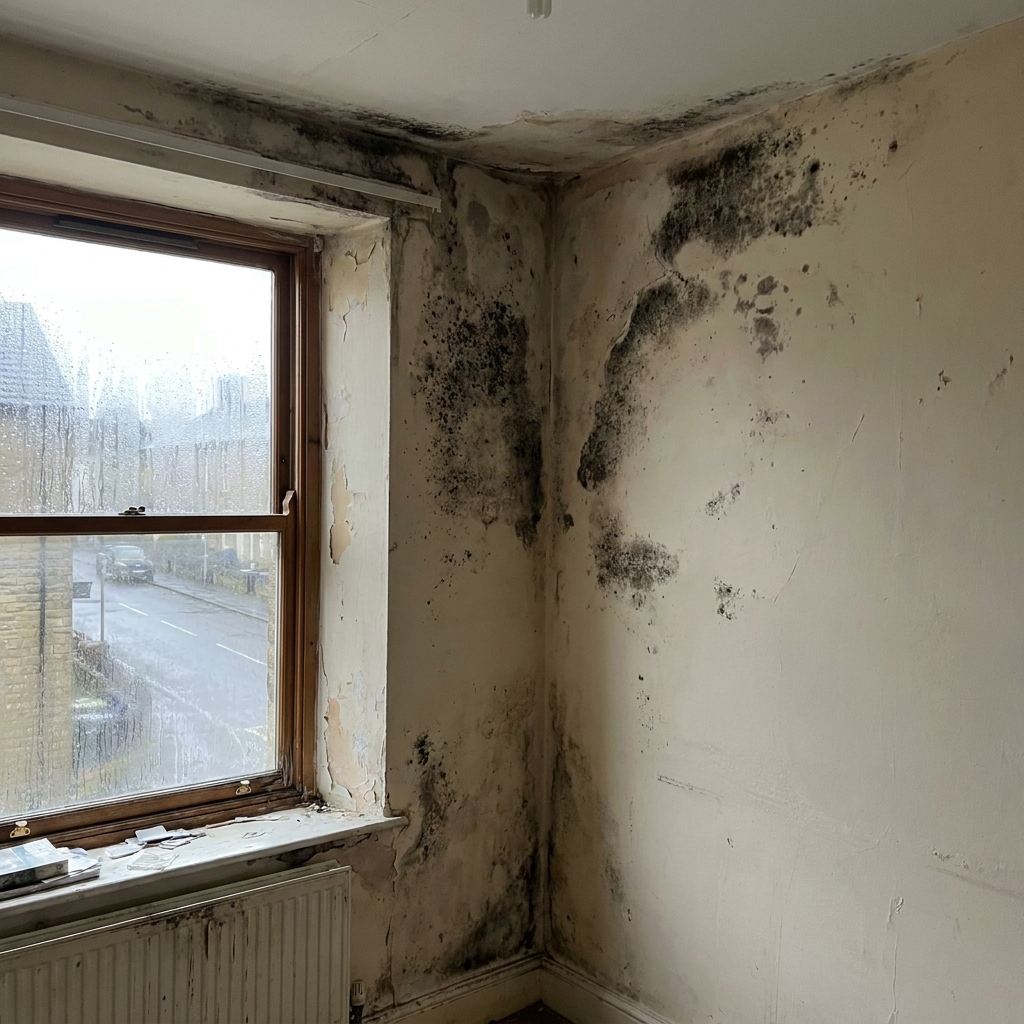
Black mould in a home almost always grows because a surface stays damp, and that dampness is usually condensation: humid indoor air meeting a cold wall or window. Ventilation tackles the problem at the root by replacing moist inside air with drier outside air, so there is less water vapour to condense in the first place. It is the most effective long-term defence against condensation mould — far more so than repeatedly cleaning the mould off, which only treats the symptom. To see how the moisture builds up, read how to stop condensation and what causes damp and mould.
Everyday and spot ventilation
- Extractor fans — in the kitchen and bathroom, where most moisture is produced; run them during and for a while after cooking and showering.
- Trickle vents — the slots in modern window frames; keep them open to provide constant background airflow.
- Daily airing — opening windows briefly each day, especially after showering or cooking, clears built-up moisture.
- Internal doors — keep kitchen and bathroom doors shut while in use so moist air is extracted rather than spread through the home.
Positive-input ventilation (PIV) and other systems
Where a whole home stays persistently humid — and ventilation by fans and vents is not enough — a positive-input ventilation unit can be the answer. A PIV unit is usually mounted in the loft and gently introduces a continuous supply of fresh, filtered air into the home, raising the internal air pressure slightly so that stale, moist air is pushed out through natural gaps. It works quietly and continuously, and typically costs around £400–£1,500 fitted. Other whole-house options include mechanical extract ventilation (MEV) and, in well-sealed properties, mechanical ventilation with heat recovery (MVHR).
| System | How it works | Typical cost |
|---|---|---|
| Extractor fan | Removes moist air at source | Low |
| Trickle vents | Constant background airflow | Low |
| PIV unit | Pushes damp air out with fresh air | £400–£1,500 fitted |
| MVHR | Balanced supply/extract with heat recovery | Higher |
How to choose between the options
For most homes, the starting point is the cheapest: make sure the kitchen and bathroom extractor fans work and are actually used, keep trickle vents open, and air the home briefly each day. This alone resolves a great deal of condensation mould. Step up to a whole-house system when the problem is not confined to one wet room but spreads across the home — misted windows in several rooms, a generally damp feel, mould returning in multiple spots — or when the layout makes spot ventilation impractical. A PIV unit suits older, naturally leaky homes because it relies on stale air escaping through small gaps. A very airtight, well-insulated property is better matched to a balanced MVHR system, which recovers heat from the air it extracts. The right choice depends on the building, which is why an assessment beats guesswork when the bill runs into hundreds of pounds.
Ventilation alongside heating and moisture control
Ventilation works best as one part of a trio with even heating and reduced moisture production. Keeping the home warm lifts surface temperatures above dew point; producing less moisture means there is less to remove. A dehumidifier can support these measures in a humid room. If, despite good ventilation, mould persists, get an independent assessment to check for cold spots, poor insulation or a non-condensation source. If you rent and ventilation is inadequate, this may be your landlord’s responsibility; see landlord responsibility for damp. This page is general information, not a survey of your property.
Frequently asked questions
Does a PIV unit stop damp and mould?
A PIV unit is very effective against condensation mould, which is the most common cause, because it continuously pushes moist air out and brings filtered fresh air in. It will not stop rising or penetrating damp, which need a building repair instead.
How much does a PIV unit cost to fit?
Typically around £400–£1,500 fitted, depending on the unit and the property. Running costs are low as the fan uses little power. It is often cheaper than repeatedly treating recurring condensation mould.
Are extractor fans enough to prevent mould?
In many homes, extractor fans in the kitchen and bathroom plus trickle vents and daily airing are enough to control condensation. Where a whole home stays humid, a PIV or other whole-house system may be needed in addition.
Can too much draught-proofing cause mould?
Yes — sealing a home tightly without providing ventilation traps moisture indoors and can worsen condensation and mould. Draught-proofing should always be balanced with controlled ventilation such as trickle vents and extractor fans.
Sources & further reading
- GOV.UK — Understanding and addressing the health risks of damp and mould in the home
- Property Care Association (PCA) — ventilation and condensation guidance
- NHS — Can damp and mould affect my health?
- English Housing Survey — ventilation and condensation in the housing stock
This guide is general information, not a site-specific survey, medical advice or legal advice. Damp and mould should be assessed by a qualified surveyor, and health concerns discussed with a GP or the NHS.