The short answer
Stop condensation by tackling the three things it needs: moisture, cold surfaces and poor ventilation. Produce less moisture (dry washing outside, cover pans, use extractor fans), keep the home warm and evenly heated so surfaces stay above dew point, and ventilate with trickle vents, extractor fans or a positive-input ventilation unit. Condensation is the most common cause of damp and mould in UK homes and, unlike rising or penetrating damp, is usually fixed without major building work.
Most of the damp and mould people see in their homes is not water leaking in — it is condensation, water from the air settling on cold surfaces. Everyday living puts a surprising amount of moisture into the air: cooking, washing, showering and even breathing. When that moist air meets a cold wall or window, it condenses, and given time mould follows. The good news is that condensation is the most controllable form of damp, and this guide explains how.
Stopping condensation at a glance
- It needs Moisture + cold surface + poor airflow
- Worst season Winter, on cold external walls and windows
- Cut moisture Dry washing outside, cover pans, lids on
- Ventilate Extractor fans, trickle vents, PIV
- Heat Warm and even, to lift surfaces above dew point
- PIV unit £400–£1,500 fitted
Why condensation happens
Warm air holds more moisture than cold air. When warm, humid indoor air touches a colder surface — a single-glazed window, a north-facing external wall, a cold corner behind a wardrobe — it cools, can no longer hold the water vapour, and that vapour condenses into liquid on the surface. Leave that surface damp for long enough and black mould grows. This is why condensation is worst in winter, in unheated rooms, and in the coldest, least-ventilated spots. It is a different problem from water entering the building; to be sure which you have, see condensation vs damp and what causes damp and mould.
Produce less moisture
- Dry washing outdoors where possible; if drying indoors, do it in one ventilated room with the door shut and a window open.
- Vent tumble dryers to the outside (or use a condenser model).
- Cover pans when cooking and keep the kitchen door shut with the extractor running.
- Shut the bathroom door during and after showering, and run the extractor fan.
- Avoid using bottled-gas or paraffin heaters indoors — they release large amounts of water vapour.
Ventilate and heat the home
Moisture has to be able to leave the home. Use extractor fans in the kitchen and bathroom, open trickle vents on windows, and air rooms briefly each day. For homes that stay persistently humid, a positive-input ventilation (PIV) unit — which gently introduces fresh, filtered air from the loft to push moist air out — is an effective whole-house fix at around £400–£1,500 fitted; see ventilation to prevent mould. At the same time, keep the home reasonably and evenly heated: a constant background warmth keeps surfaces above the dew point far better than short bursts of high heat in one room. A dehumidifier (£100–£300) can help manage humidity, but it is an aid, not a cure.
| Action | What it tackles |
|---|---|
| Extractor fans & trickle vents | Removing moist air at source |
| Even background heating | Keeping surfaces above dew point |
| Drying washing outside | Reducing moisture produced |
| PIV unit (whole house) | Persistent, whole-home humidity |
Cold spots and where mould appears
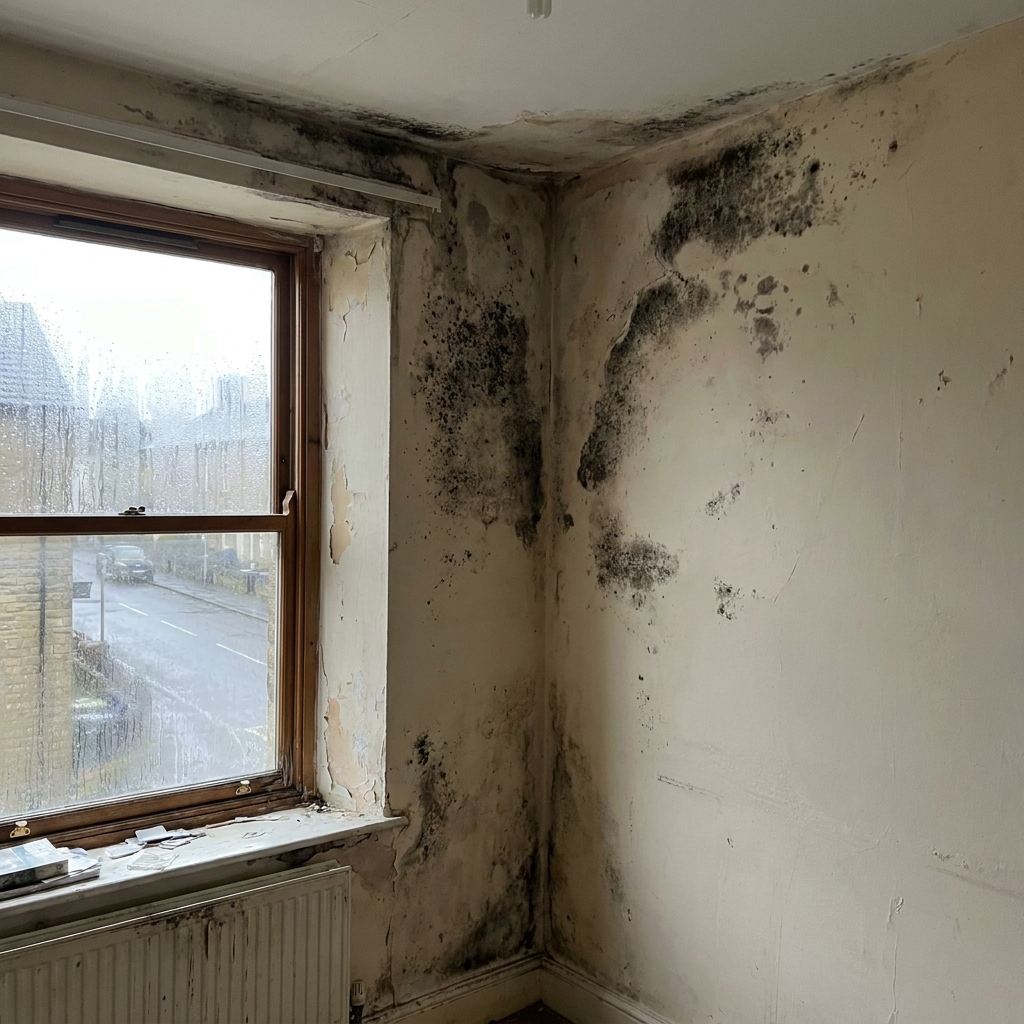
Condensation does not form evenly across a room — it picks on the coldest surfaces, which is why mould so often appears in the same tell-tale places: the corners of external walls, behind wardrobes and beds pushed against an outside wall, around window reveals, and on north-facing walls that never catch the sun. These are “cold bridges”, points where heat escapes faster and the surface stays below the dew point. Two simple habits help: leave a small gap between large furniture and external walls so air can circulate behind it, and avoid overfilling wardrobes and cupboards on outside walls, where still, cold, humid air is ideal for mould. Where cold spots are caused by poor or missing insulation, improving the insulation raises the surface temperature and is often the most durable fix of all — though it must always be paired with adequate ventilation so moisture can still escape.
If condensation persists
If you have improved moisture, heating and ventilation and condensation continues — or if mould keeps returning — there may be an underlying issue such as poor insulation creating cold spots, or the damp may not be condensation at all but penetrating or rising damp. Get an independent assessment to be sure. If you rent and the home cannot be kept free of condensation despite reasonable use, raise it with your landlord; see landlord responsibility for damp. This page is general information, not a survey, medical or legal advice.
Frequently asked questions
What is the main cause of condensation in a house?
Everyday moisture — from cooking, washing, showering and drying clothes indoors — meeting cold surfaces in poorly ventilated rooms. It is the most common cause of household damp and mould, and is usually fixable without major building work.
Does heating the house stop condensation?
Even background heating helps by keeping surfaces above the dew point, but heating alone is not enough — you also need to reduce moisture and ventilate. The three work together; one without the others rarely solves it.
Will a dehumidifier stop condensation?
A dehumidifier can lower indoor humidity and help manage condensation, but it treats the symptom rather than the cause. Lasting control comes from ventilation, even heating and producing less moisture; a dehumidifier is a useful aid alongside these.
Should I open windows in winter to stop condensation?
Brief daily airing, plus trickle vents and extractor fans, helps moisture escape without losing too much heat. The goal is controlled ventilation rather than leaving windows wide open, which wastes heat and can make surfaces colder.
Sources & further reading
- GOV.UK — Understanding and addressing the health risks of damp and mould in the home
- NHS — Can damp and mould affect my health?
- Property Care Association (PCA) — condensation and ventilation guidance
- English Housing Survey — damp and condensation in the housing stock
This guide is general information, not a site-specific survey, medical advice or legal advice. Damp and mould should be assessed by a qualified surveyor, and health concerns discussed with a GP or the NHS.