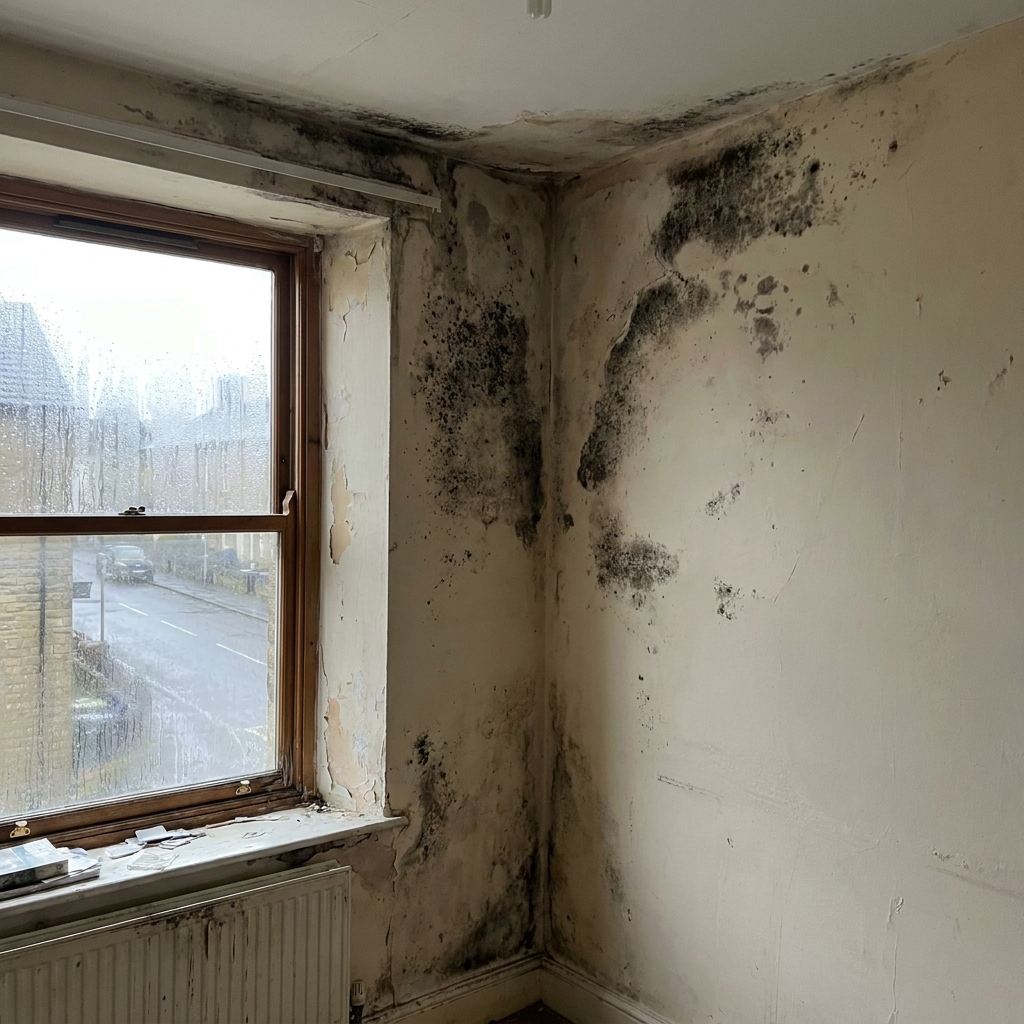
The short answer
The symptoms most commonly linked to mould are respiratory and allergic: sneezing, a runny nose, red eyes, coughing, wheezing and a skin rash. The NHS says mould can also trigger asthma attacks in people with asthma. These symptoms overlap with everyday illnesses, so the useful clue is whether they ease when you are away from the affected room and return when you go back. Mould cannot be diagnosed from symptoms alone — if you have a persistent cough, breathing difficulty or symptoms you are worried about, see a GP.
Searches for “mould toxicity symptoms” often lead to alarming, unverified claims online. The calm, evidence-based picture is more reassuring and more useful. This page sets out the symptoms the NHS actually links to damp and mould, explains why they are easy to confuse with other conditions, and is clear about the limits: it is general information, not a diagnosis. Only a GP can assess your health, so if you are worried about your symptoms, book an appointment rather than relying on a checklist.
Mould symptoms at a glance
- Most common Sneezing, runny nose, red eyes, cough, skin rash
- In asthma Can trigger or worsen attacks
- Useful clue Symptoms ease away from the affected room
- Cannot do Diagnose mould from symptoms alone
- See a GP if Persistent cough, breathing difficulty, or you are worried
What symptoms is mould linked to?
The NHS sets out the symptoms associated with damp and mould clearly. Breathing in or touching mould spores may cause an allergic reaction, including:
- Sneezing.
- A runny or blocked nose.
- Red, itchy or watering eyes.
- A skin rash.
- Coughing and, in some people, wheezing.
In people who have asthma, mould can trigger an asthma attack — worsening cough, wheeze, chest tightness and breathlessness. These are the recognised effects. This page deliberately avoids the long, unverified symptom lists found on some websites, which attribute a wide range of unrelated problems — fatigue, memory loss, joint pain and much else — to “mould toxicity” without good evidence. Sticking to what the NHS actually describes is both calmer and more useful, because it points you towards the right action rather than alarming you about symptoms mould is unlikely to be causing.
Why mould symptoms are easy to confuse
Almost every symptom above can also be caused by a cold, hay fever, dust, pet allergies or other conditions. That is why you cannot diagnose mould exposure from symptoms alone, and why claims of a single “mould illness” should be treated with caution. The most useful real-world clue is the pattern: do your symptoms ease when you spend time away from the damp room or property, and come back when you return? A symptom diary noting where and when you feel worse — over a week or two — is far more helpful to a GP than any online checklist, and it gives the clinician something concrete to work with when deciding whether your home, an allergy or an infection is the more likely cause.
| Symptom | Could be mould-related if… | Also caused by |
|---|---|---|
| Persistent cough | It eases away from the damp room | Cold, chest infection, asthma |
| Sneezing / runny nose | Worse indoors, year-round | Hay fever, dust, pet allergy |
| Red, itchy eyes | Worse in the affected room | Allergies, tiredness |
| Wheezing / breathlessness | You have asthma and it is flaring | Asthma, infection — seek advice |
| Skin rash | On exposed skin in a mouldy area | Eczema, contact irritation |
When to see a GP
See a GP if you have a cough that will not clear, breathing problems, a worsening skin or respiratory condition, or symptoms you are simply worried about — especially for a baby, child, older person or anyone with a weakened immune system. Take note of whether symptoms improve away from home, as this helps the clinician reach the right conclusion. For severe breathing difficulty, do not wait — seek urgent help or call 999. A GP can also advise whether your symptoms point to mould, an allergy, an infection or something else entirely, and can refer you for tests or to a specialist if needed. There is no benefit to self-diagnosing “mould poisoning” from a website; a clinician who can examine you is the proper source of an answer.
Treat the cause as well as the symptom
Whatever your symptoms, removing the mould and fixing the damp reduces your exposure. Clean small areas carefully (see how to clean mould safely), improve ventilation to lower humidity, and get a qualified surveyor to find the cause of persistent damp. To understand who is most at risk and why, see is mould dangerous to your health. If you rent, your landlord is responsible for serious damp and mould hazards — see mould in a rented property.
Frequently asked questions
What are the symptoms of mould exposure?
The NHS links mould to sneezing, a runny or blocked nose, red itchy eyes, coughing, a skin rash and, in people with asthma, worsened symptoms or attacks. These overlap with many ordinary conditions, so mould cannot be diagnosed from symptoms alone.
Can mould cause symptoms all over the body?
Be cautious of websites listing a huge range of unrelated symptoms as “mould toxicity” — these claims are largely unverified. The NHS associates mould mainly with respiratory and allergic symptoms. If you have unexplained or persistent symptoms, see a GP rather than self-diagnosing online.
How do I know if my symptoms are from mould?
You cannot be certain from symptoms alone. The most useful clue is the pattern: symptoms that ease when you are away from the affected room and return when you go back may point to mould or damp. Keep a simple diary and share it with a GP.
When should I see a doctor about mould symptoms?
See a GP if you have a persistent cough, breathing difficulty, a worsening skin or respiratory condition, or symptoms you are worried about — particularly for babies, children, older people or anyone with a weakened immune system. Seek urgent help for severe breathing difficulty.
Sources & further reading
- NHS — Can damp and mould affect my health?
- gov.uk — Understanding and addressing the health risks of damp and mould in the home
- Housing Ombudsman — Spotlight on damp and mould
This guide is general information, not a site-specific survey, medical advice or legal advice. Damp and mould should be assessed by a qualified surveyor, and health concerns discussed with a GP or the NHS.