The short answer
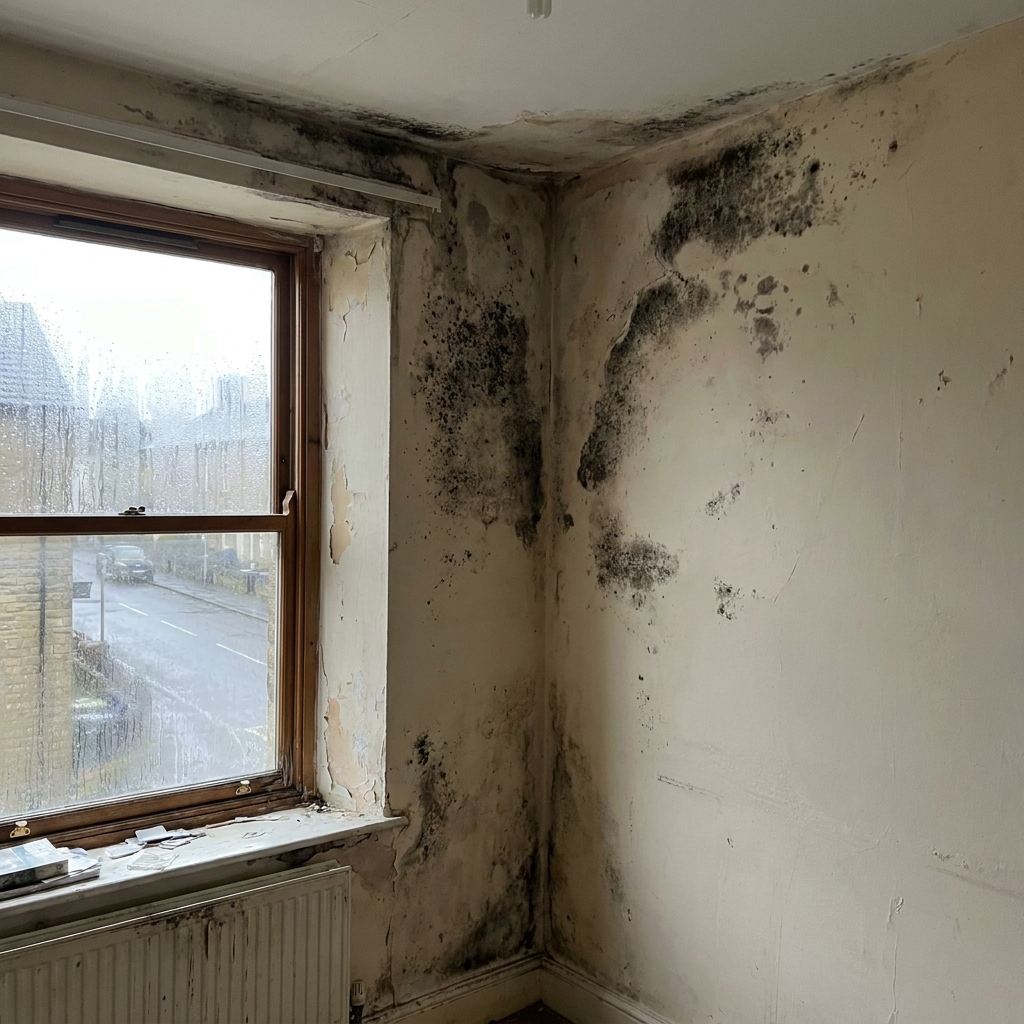
The main signs of damp are black mould, a musty smell, tide-marks or staining on walls, peeling paint or blown plaster, condensation on windows, and cold, damp-feeling surfaces. Different patterns point to different causes: mould in cold corners suggests condensation, a low tide-mark suggests rising damp, and a patch that worsens after rain suggests penetrating damp. Spotting the signs early limits damage — but confirming the cause needs a surveyor.
Damp rarely announces itself with a single dramatic sign. More often it is a combination of small clues — a smell here, a stain there, mould in a corner. Reading those clues together helps you spot a problem early and points towards the likely cause. This page is a practical checklist of what to look for, room by room and surface by surface.
Signs of damp at a glance
- Most visible sign Black mould in corners & on windows
- Tell-tale smell Persistent musty, earthy odour
- Rising damp clue Tide-mark low on the wall
- Penetrating clue Patch that worsens after rain
- Decor signs Peeling paint, blown plaster, salts
- Confirm with Moisture meter + surveyor
What you can see
The most obvious visual signs are black mould (often in corners, on window reveals or behind furniture), brown or yellow staining and water tide-marks, peeling or blistering paint and wallpaper lifting at the edges, and blown or crumbling plaster. White, fluffy salt deposits low on a wall suggest rising damp, while a sharply defined damp patch points to penetrating damp. On windows, regular streaming and pooling water is a clear sign of condensation. Look also at ceilings below bathrooms and flat roofs, where staining can betray a leak.
What you can smell and feel
- A musty, earthy smell — often the first sign, and a strong indicator even before damp is visible.
- Cold, clammy surfaces — walls that feel damp or noticeably colder than the room.
- Condensation — misted or streaming windows, especially mornings in cold weather.
- Rotting or soft timber — decaying skirting, window frames or floorboards.
| Sign | Most likely cause | Where to look |
|---|---|---|
| Mould in corners, on windows | Condensation | Cold rooms, behind furniture |
| Tide-mark to ~1m + salts | Rising damp | Base of ground-floor walls |
| Defined patch, worse after rain | Penetrating damp | Below gutters, near roof, walls |
| Persistent musty smell | Any damp | Whole room / cupboards |
Reading the signs together
No single sign is conclusive, but the combination usually points one way. Mould plus streaming windows plus a cold corner reads as condensation. A tide-mark plus salt staining plus perished skirting reads as rising damp. A wet patch that comes and goes with the weather reads as penetrating damp. Note when and where the signs are worst — that timing and location is exactly what a surveyor will ask about, and it often distinguishes one cause from another more reliably than any single symptom.
A simple room-by-room check
You can do a useful first sweep yourself in under an hour. In bedrooms, look at the coldest external corners, behind the headboard and inside wardrobes on outside walls. In bathrooms and kitchens, check around windows, behind the toilet cistern and along silicone seals where mildew gathers. On ground-floor walls, look low down for tide-marks, salt bloom and soft, perished skirting. Upstairs, inspect ceilings below the roof and around chimney breasts for staining. In each spot, note whether the surface feels cold and clammy, whether there is a musty smell, and whether the problem is worse after cold nights or after rain — those three observations alone point most damp towards its likely cause. Keep a brief note of what you find and when — a photograph with the date, plus whether the spot was wet after a cold night or after rain — because that record is exactly the evidence a surveyor, or in a rented home a landlord or council officer, will want to see, and it helps track whether the problem is getting worse.
When to act
Early signs — a little condensation, a small patch of mould — can often be tackled with better ventilation and heating. Spreading mould, structural staining, a musty smell that will not go, or any sign in a home with vulnerable occupants warrants a proper damp survey. Acting early is far cheaper than waiting until plaster, skirting or timbers are damaged. In a rented home, report the signs to your landlord in writing and keep dated photographs; see mould in a rented property. The longer damp is left, the more it spreads from a surface nuisance into damaged plaster, decayed timber and ruined decoration, so an early, honest assessment almost always works out cheaper than a wait-and-see approach. This page is general information, not a site-specific survey, medical advice or legal advice.
Frequently asked questions
What is usually the first sign of damp?
Often a persistent musty smell, which can appear before any mould or staining is visible. A cold, clammy feel to walls and condensation on windows are also early signs.
How can I tell what type of damp I have from the signs?
Mould in cold corners and on windows suggests condensation; a tide-mark low on the wall suggests rising damp; a defined patch that worsens after rain suggests penetrating damp. A surveyor can confirm.
Can damp be hidden?
Yes. Damp often hides behind furniture against external walls, under floor coverings and inside cupboards. A musty smell with no visible mould is a common sign of hidden damp.
Should I get a survey if I see signs of damp?
For minor condensation you can often act yourself. For spreading mould, structural staining, persistent smells, or any damp where vulnerable people live, a qualified damp survey is advisable.
Sources & further reading
- gov.uk — Housing Health and Safety Rating System (HHSRS)
- RICS — Investigation of moisture and its effects in traditional buildings
- Property Care Association (PCA) — Recognising damp and mould
- NHS — Can damp and mould affect my health?
This guide is general information, not a site-specific survey, medical advice or legal advice. Damp and mould should be assessed by a qualified surveyor, and health concerns discussed with a GP or the NHS.