The short answer
A damp survey is an inspection that diagnoses the type and cause of damp in a building so the correct repair can be specified. A competent surveyor takes moisture readings, checks ventilation, external defects and ground levels, and explains whether you are dealing with condensation, penetrating damp or true rising damp. You usually need one when damp is visible, persistent or flagged in a homebuyer report, because the cure depends entirely on the cause — and the wrong cure wastes money.
“Damp” is a symptom, not a diagnosis. Condensation, penetrating damp and rising damp look similar on a wall but have completely different cures, so the single most useful thing you can do is establish which one you have. That is the job of a damp survey: a structured inspection that reads the moisture, finds the source and tells you what — if anything — needs doing.
Damp surveys at a glance
- Purpose Diagnose the type and cause of damp
- Typical cost £150–£350 for a focused survey
- Who should do it An independent RICS or PCA-qualified surveyor
- Duration About 1–2 hours for a typical home
- Output A written report with findings and recommendations
What a damp survey actually checks, room by room
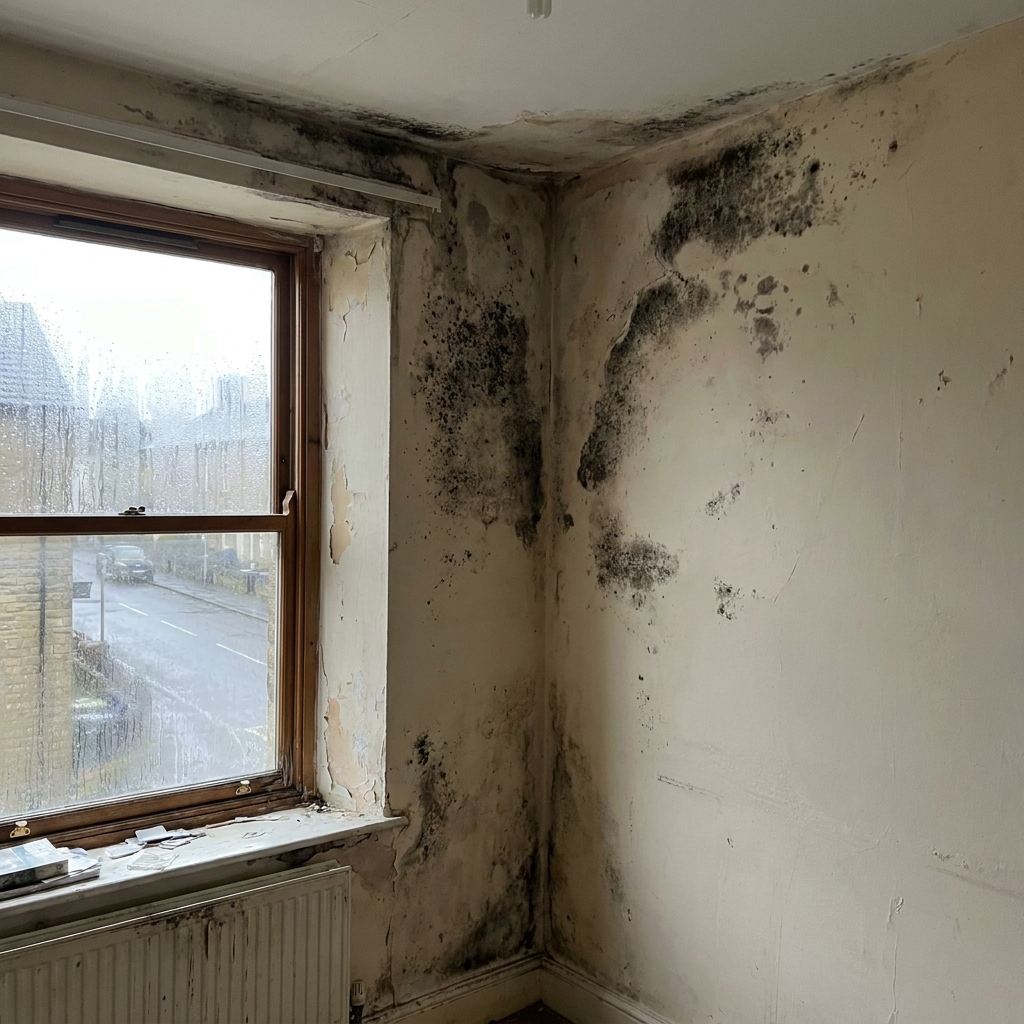
A competent surveyor does far more than wave a meter at a wall. They build a picture of how moisture is getting into the building, where it is travelling and why it is showing where it is. A thorough inspection works through the property methodically. Externally, the surveyor looks at ground levels (soil or paving bridging the damp-proof course), the condition of pointing and render, the state of gutters, downpipes and gullies, roof coverings and flashings, window sills and weatherings, air-brick coverage and any evidence of past remedial work. Internally, they move room by room: skirtings and the base of walls for the classic tide-mark of rising damp; cold corners, window reveals and the backs of wardrobes where black mould from condensation gathers; chimney breasts for salt staining; ceilings beneath bathrooms and flat roofs for leaks; and the kitchen and bathroom for extract ventilation and visible plumbing faults.
Within each room the surveyor combines tools with judgement:
- Moisture readings — an electrical conductance meter (a protimeter) gives a quick comparative profile up a wall; where it matters, the true moisture content of the masonry is confirmed by a calcium-carbide (“speedy”) test or laboratory gravimetric analysis, which distinguishes genuine water from hygroscopic salts.
- Relative humidity and surface temperature — to judge whether condensation is forming on cold surfaces, often using a hygrometer and an infrared thermometer to find the dew point.
- Construction and history — solid wall versus cavity, suspended timber versus solid floor, the age of the property and any previous treatment, all of which change how moisture behaves.
- Damp-proof course — whether a physical (slate or bitumen) or chemical DPC exists, and whether it has been bridged, breached or has genuinely failed.
Why the diagnosis matters more than the damp
The three common forms of damp look alike on a wall but need completely different cures, which is the entire point of the exercise. Condensation — by far the most common — is solved with heating, ventilation and reducing moisture in the air, not with chemicals. Penetrating damp is solved by fixing the external defect feeding it: the leaking gutter, the cracked render, the failed flashing. True rising damp, where groundwater is drawn up through masonry by capillary action, is genuine but far rarer than it is sold, and only it may justify a new damp-proof course. RICS and the Property Care Association both single out misdiagnosis — typically condensation treated as rising damp and “cured” with an injected DPC and replastering — as the most common and most expensive mistake in the sector.
Do you actually need one, and which type?
You probably need a survey if damp is persistent, spreading, smells musty, has been flagged in a homebuyer or mortgage valuation, or someone is about to quote for major work. You may not need one for a single patch of mould in a cold corner that clears with better ventilation — that is usually condensation you can manage yourself. The test is simple: if the cause is genuinely unclear, or money is about to be spent, get an independent diagnosis first. A focused, independent survey typically costs £150–£350 — cheap against the cost of the wrong cure.
| Type of survey | What it covers | Typical use |
|---|---|---|
| Focused damp survey | One specific problem — diagnosis and cause | Existing damp in your own home |
| RICS Home Survey (Level 2/3) | Whole-property condition, including damp | Buying a house |
| Specialist damp & timber report | Damp plus wet rot, dry rot and woodworm | Older properties, mortgage retention |
What you get and what to do next
The output is a written report that names the type of damp, identifies the cause, recommends a proportionate cure and gives a sense of priority and scale. Use it to obtain like-for-like quotes from contractors, to support a mortgage application, or to discuss repairs with a landlord. For the cost of the cure itself, see damp survey cost. This page is general information, not a site-specific survey, and is not legal or medical advice. Any damp affecting health, structure or value should be assessed in person by a qualified surveyor.
Frequently asked questions
How long does a damp survey take?
A focused survey of a typical home takes about one to two hours on site, plus time to write up. Larger or more complex properties take longer.
Is a damp survey the same as a homebuyer survey?
No. A homebuyer or RICS Home Survey assesses the whole property’s condition and may flag damp; a focused damp survey investigates one damp problem in detail and specifies the cure.
Will the surveyor tell me the cause?
Yes — a competent surveyor identifies whether you have condensation, penetrating damp or rising damp, explains the mechanism and recommends the appropriate repair in writing.
Should I use a free survey from a damp-proofing company?
Treat it with caution. A free inspection from a firm that sells remedial work is effectively a sales visit. For an impartial diagnosis, instruct an independent surveyor paid for the report.
Sources & further reading
- RICS — Investigation of moisture and its effects in traditional buildings
- Property Care Association (PCA) — guidance on damp diagnosis and remedial treatment
- gov.uk — Housing Health and Safety Rating System (HHSRS): damp and mould hazard
This guide is general information, not a site-specific survey, medical advice or legal advice. Damp and mould should be assessed by a qualified surveyor, and health concerns discussed with a GP or the NHS.