The short answer
Anti-mould paint can help resist surface mould by adding a fungicide to the coating, but it does not fix the damp or condensation that causes mould in the first place. Painted over an unresolved moisture problem, it will eventually fail as the mould pushes through or the paint peels. It works only as a final step, after the cause has been fixed and any existing mould removed. Treat it as insurance on a cured wall, not as a substitute for fixing the damp.
Anti-mould or fungicidal paint is heavily marketed as a simple answer to a mouldy wall, and it can play a useful role — but only if you understand its limits. Mould grows because a surface is damp; the paint adds a mould-resisting agent to the finish, which can slow regrowth, but it does nothing about the moisture underneath. Used in the wrong order, it simply hides the problem. This guide explains when it helps and when it is a waste of money.
Anti-mould paint at a glance
- What it is Paint with an added fungicide
- What it does Resists surface mould growth
- What it doesn’t do Fix the damp or condensation behind it
- Use it Only after fixing the cause
- On its own A temporary cover-up, not a cure
- First Remove existing mould safely
What anti-mould paint is and how it works
Anti-mould paint — sometimes called fungicidal or anti-condensation paint — is a coating with a fungicide added to the formulation. The fungicide makes the painted surface more resistant to mould taking hold, and some anti-condensation paints also include an insulating additive intended to keep the surface slightly warmer and so less prone to condensation. Both can slow the return of mould on a wall. What neither does is remove the moisture that mould feeds on. The paint acts at the surface; the cause — condensation, or water entering the structure — sits behind it. To understand that cause, see what causes damp and mould and black mould on walls.
Why it fails when used as a cure
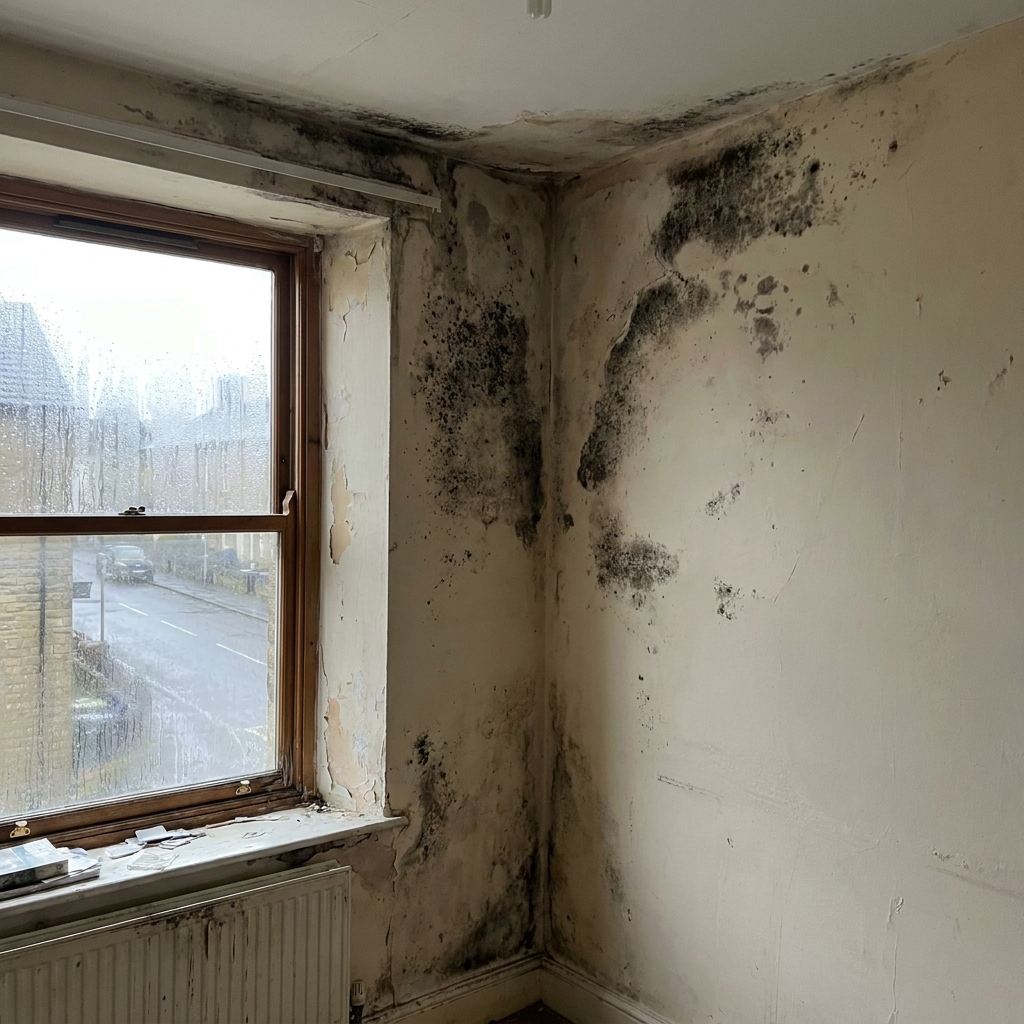
Painting anti-mould paint straight over a damp, mouldy wall is the classic mistake. The underlying problem continues, and within weeks or months one of two things happens:
- Mould pushes through — persistent moisture overwhelms the fungicide and growth reappears on or under the new coating.
- The paint peels — moisture trapped behind the film lifts it from the wall, leaving a worse finish than before.
In short, the paint hides the symptom while the damp — and any structural damage it is doing — carries on unseen. That is why it should never be the first or only step.
How to use it correctly
Anti-mould paint earns its place only as the last step in the right sequence:
- Fix the cause first — improve ventilation and heating for condensation, or repair the leak or damp-proof course for water ingress. See how to stop condensation and ventilation to prevent mould.
- Remove existing mould safely — clean it off with the proper protection before decorating; see how to remove black mould.
- Let the wall dry — paint only onto a dry, sound surface.
- Then apply the paint — as added protection on a wall whose cause has already been cured.
Follow that order and the paint is doing the job it is actually capable of: protecting a sound, dry, cured surface. Reverse it — paint first, hope the damp sorts itself out — and you are simply burying the problem under a coat that will not hold. Manufacturers’ own instructions reflect this, which is why they specify a clean, dry, mould-free surface before application.
Where it genuinely earns its place
Used correctly, anti-mould and anti-condensation paints do have a legitimate role. On a wall in a bathroom or kitchen — rooms that are humid by nature and where some condensation is hard to avoid entirely — a fungicidal finish applied after the cause has been addressed gives an extra margin of protection against mould re-establishing. Anti-condensation paints with an insulating additive can also take a little of the chill off a cold surface, nudging it above the dew point and making condensation slightly less likely to form. These are real, if modest, benefits. The key word is after: the paint is the belt-and-braces finishing layer on a wall whose ventilation, heating and any water-ingress problems have already been sorted out. It is never the thing that does the heavy lifting, and treating it as such is where people go wrong and money is wasted.
The honest verdict
Anti-mould paint works as insurance, not as a cure. On a wall where the damp has genuinely been fixed and the mould removed, it can help keep mould from coming back. Relied on alone over an unresolved problem, it is a temporary cover-up that wastes money and lets the real defect worsen. If you are unsure why a wall keeps going mouldy, get an independent assessment before reaching for the paint. This page is general information, not a survey of your property, medical advice or legal advice.
Frequently asked questions
Does anti-mould paint actually work?
It works as a finishing layer that resists surface mould, but only on a wall where the underlying damp or condensation has already been fixed. Used over an unresolved moisture problem, it fails as the mould returns or the paint peels.
Can I paint over mould with anti-mould paint?
No — you should never paint over active mould. Remove the mould safely and fix the cause first, let the wall dry, and only then apply anti-mould paint as added protection. Painting over mould traps the problem.
Is anti-mould paint a cure for damp?
No. It is a surface coating with a fungicide; it does nothing about the moisture that causes mould. It is a useful final step on a cured wall, not a substitute for ventilation, heating or fixing water entering the structure.
How long does anti-mould paint last?
On a wall where the cause has been properly fixed and the surface kept dry, it can last for years as a finish. Over an ongoing damp problem it fails quickly, as the moisture overwhelms the fungicide or lifts the paint.
Sources & further reading
- Property Care Association (PCA) — mould remediation and decoration guidance
- GOV.UK — Understanding and addressing the health risks of damp and mould in the home
- NHS — Can damp and mould affect my health?
- GOV.UK — Housing Health and Safety Rating System (HHSRS) guidance
This guide is general information, not a site-specific survey, medical advice or legal advice. Damp and mould should be assessed by a qualified surveyor, and health concerns discussed with a GP or the NHS.