The short answer
A musty, damp smell is caused by mould and mildew releasing gases (microbial volatile organic compounds) as they grow on damp surfaces. The smell often appears before any visible mould, which makes it a useful early warning of hidden damp — behind furniture, under floors or in cupboards on cold external walls. Air fresheners only mask it. The smell goes for good only when you remove the mould and fix the damp feeding it.
That distinctive earthy, musty smell is one of the most reliable signs of damp — and one of the most frustrating, because the source is often hidden. The odour itself is produced by growing mould. This page explains what causes it, where to hunt for the source, and how to clear it properly rather than just covering it up with a scented spray.
Musty smell at a glance
- What causes it Gases released by growing mould/mildew
- Why it matters Often the first sign of hidden damp
- Common hiding spots Behind furniture, under floors, cupboards
- Quick fix None — masking sprays don’t cure it
- Real fix Remove mould + fix the damp
- Helps drying Ventilation, heating, dehumidifier
What the smell actually is
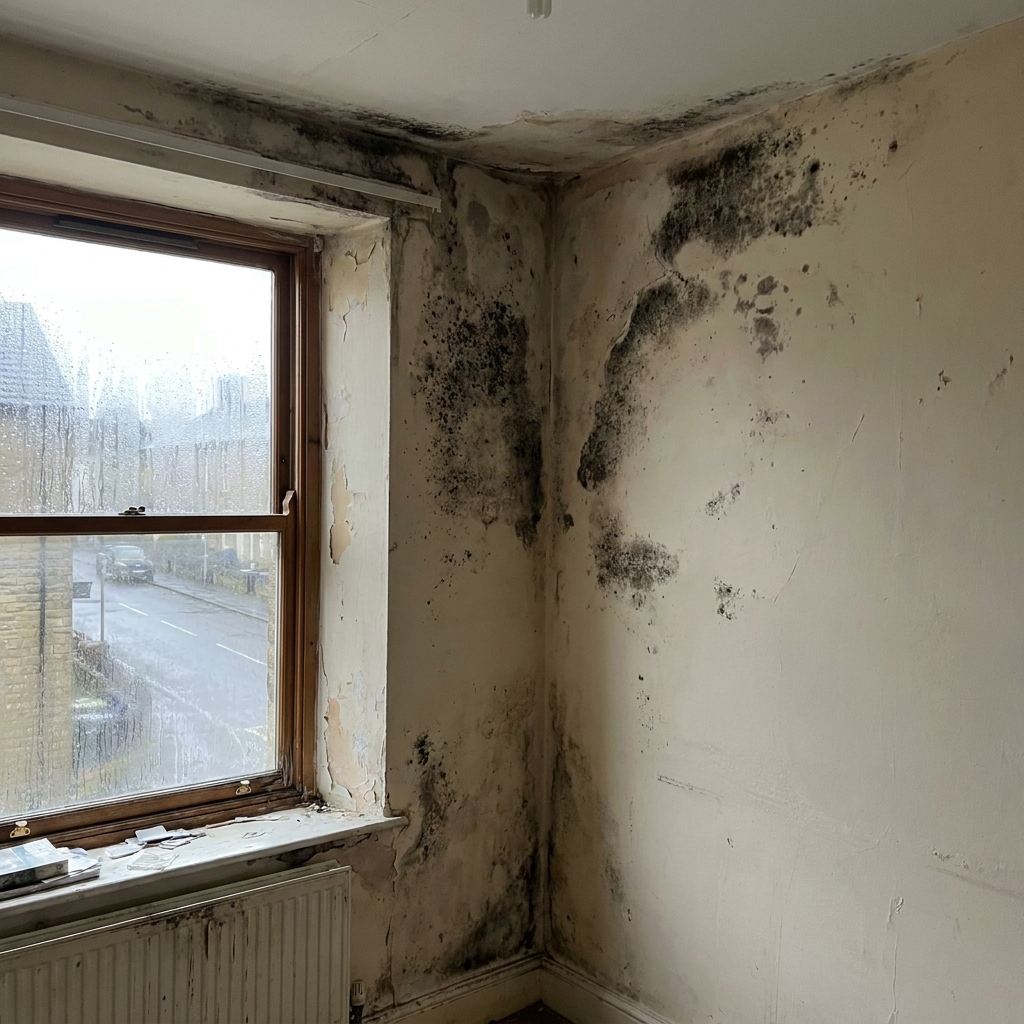
The musty smell is produced by mould and mildew as they grow. As these fungi break down damp materials they release microbial volatile organic compounds — gases that the nose registers as that characteristic earthy, stale odour. Because mould only grows where a surface stays damp, the smell is a direct signal of excess moisture somewhere in the home, even when nothing is yet visible. That makes it one of the most useful early warnings of damp in a house, often noticeable the moment you walk into an affected room after time away.
Where the smell hides
- Behind wardrobes and sofas against cold external walls, where air is trapped.
- Under carpets, laminate and vinyl, where moisture collects out of sight.
- Inside built-in cupboards and wardrobes on north-facing or external walls.
- Cellars, under-stairs cupboards and unventilated bathrooms, which stay cool and humid.
Tracing the source
Track the smell to where it is strongest, then look for the cause. Move furniture away from external walls and check behind it; lift the edge of floor coverings on suspect floors; open and air cupboards. Pinpointing the type of damp guides the fix — condensation needs ventilation, while rising or penetrating damp needs building repairs. The pattern of where and when the smell is worst is the same evidence a surveyor uses.
| Where smell is strongest | Likely cause | Next step |
|---|---|---|
| Cold corners, behind furniture | Condensation | Improve ventilation & heating |
| Low on ground-floor walls | Rising damp | Check DPC; get a survey |
| Near a wall after rain | Penetrating damp | Check gutters, render, roof |
| Cellar / under-floor | Ground moisture, poor airflow | Ventilate; surveyor if persistent |
Why the smell lingers in soft furnishings
Even after you fix the damp, a musty smell can linger because fabrics, carpets, curtains and stored items absorb both moisture and the odour-causing compounds. Mould spores settle into soft materials and keep releasing that stale smell until they are cleaned out. Wash or dry-clean affected textiles, air bedding and clothing thoroughly, and consider replacing badly affected carpet underlay or cardboard storage that has been sitting against a damp wall. Hard surfaces clear quickly once dry, but porous and fabric items are the usual reason a room still smells faintly musty weeks after the wall itself has dried out. It is worth being methodical: empty and air affected cupboards, wash or replace items that have sat against a damp wall, and run a dehumidifier in the room for a while to pull the last moisture out of plaster and fabrics. Only once the source is fixed and the soft materials are clean and dry will the smell go for good rather than fading and returning.
Getting rid of it for good
Remove any mould safely — mask, gloves and ventilation — clean affected surfaces, wash or replace badly affected soft furnishings, and dry the area thoroughly. A dehumidifier (typically £100–£300) and steady ventilation speed drying. But the smell only stays away if the damp is cured: improve ventilation for condensation, or repair the building defect for structural damp. See how to get rid of damp. Above all, resist the temptation to mask the problem: a plug-in air freshener buys a few hours but lets the damp and mould carry on quietly behind the scenes, doing more damage and, where vulnerable people live, posing a health risk the NHS takes seriously. Find the source, fix it, dry the room, and the smell goes with it. This page is general information, not medical advice or a site-specific survey.
Frequently asked questions
Why does my house smell musty but I can’t see mould?
The smell comes from mould growing out of sight — behind furniture, under floors or in cupboards on cold walls. The odour often appears before any visible growth, making it an early warning of hidden damp.
Do air fresheners get rid of a damp smell?
No. They only mask the odour. The smell returns because the mould is still growing. The only lasting fix is to remove the mould and cure the damp causing it.
Is a musty smell a health risk?
The smell itself signals mould, which the NHS links to respiratory and allergy problems, particularly for vulnerable people. Removing the mould and fixing the damp protects both your home and your health.
Will a dehumidifier remove a damp smell?
A dehumidifier helps by drying the air and surfaces, which slows mould growth, but it does not fix the underlying cause. Use it alongside removing the mould and addressing the source of the damp.
Sources & further reading
- NHS — Can damp and mould affect my health?
- Property Care Association (PCA) — Mould and condensation guidance
- gov.uk — Understanding and addressing the health risks of damp and mould in the home
- RICS — Investigation of moisture and its effects in traditional buildings
This guide is general information, not a site-specific survey, medical advice or legal advice. Damp and mould should be assessed by a qualified surveyor, and health concerns discussed with a GP or the NHS.