The short answer
To get rid of damp for good you must identify which type it is and fix the cause, not just the symptom. Condensation is cured by ventilation and heating; penetrating damp by repairing the external defect (gutter, roof, render or pointing) that lets water in; rising damp by restoring a working damp-proof course. Drying paint or anti-mould spray alone will fail if the source remains. A qualified surveyor should confirm the diagnosis before any treatment is paid for.
“Damp” is a symptom, not a single problem — and the right cure depends entirely on the cause. The most common form by far is condensation, which is a ventilation and heating issue rather than water entering the building. Penetrating and rising damp involve water getting into the structure and need a physical repair. Treating the wrong cause wastes money and lets the damp return, so this guide explains how to tell them apart and deal with each properly.
Getting rid of damp at a glance
- Step one Diagnose the type before treating
- Most common cause Condensation (a ventilation issue)
- Condensation cure Ventilate, heat evenly, reduce moisture
- Penetrating cure Repair the external defect letting water in
- Rising damp cure Restore a working damp-proof course
- Confirm with A qualified independent surveyor
Diagnose the type before you treat anything
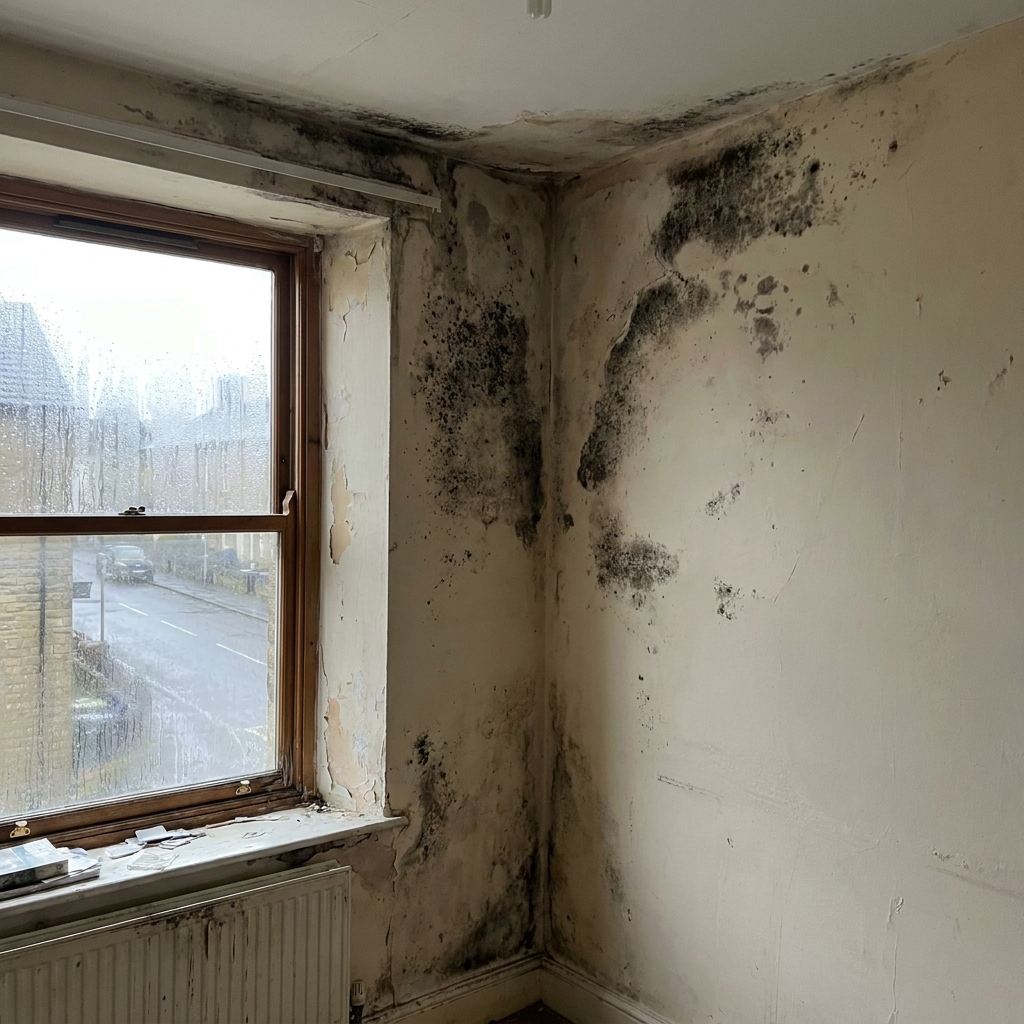
There is no single cure for “damp”, because the word covers three quite different problems. Getting rid of it for good starts with correct diagnosis — spending money on the wrong treatment is the single most common reason damp keeps coming back. Condensation forms when warm, moist indoor air meets a cold surface; it shows as water on windows, black mould in corners and behind furniture, and is usually worst in winter. Penetrating damp is water entering through the building fabric — a leaking gutter, slipped roof tile, cracked render or failed pointing — and tends to appear as a defined patch that worsens after rain. Rising damp is groundwater drawn up through the base of a wall where the damp-proof course has failed or is bridged, leaving a tide-mark up to about a metre. To explore the differences in detail, see types of damp and condensation vs damp.
Fix the source, not the symptom
Once you know the type, the treatment follows logically. The principle is the same in every case: remove the cause and the damp stops. Wiping mould or painting over a stain treats the symptom only and the problem returns within weeks.
- Condensation — improve ventilation (extractor fans in kitchen and bathroom, trickle vents, a positive-input ventilation unit), heat the home more evenly, and cut moisture production by drying washing outside and covering pans. See how to stop condensation and ventilation to prevent mould.
- Penetrating damp — find and repair the external defect: clear and re-seal gutters, replace cracked tiles, repoint perished mortar, renew failed render or sealant around windows. Let the wall dry fully before redecorating.
- Rising damp — confirm the diagnosis (it is over-diagnosed), then restore the damp-proof course, usually a chemical DPC injection, and remove any bridge such as high external ground or piled-up soil against the wall. See how to treat rising damp.
| Type | Tell-tale sign | The fix |
|---|---|---|
| Condensation | Window misting, mould in cold corners | Ventilation, heating, less moisture |
| Penetrating | Defined patch, worse after rain | Repair the external defect |
| Rising | Tide-mark up to ~1m, salts | Restore the damp-proof course |
Let walls dry before you redecorate
After the cause is fixed, a wall that has been wet needs time to dry — often months for solid masonry — before plastering and painting. Sealing in trapped moisture causes paint to blister and salts to bloom through fresh plaster. A qualified surveyor or the Property Care Association can advise on drying times and whether replastering is needed. Tackle any remaining mould safely first; see cleaning mould safely.
Why the wrong fix wastes money
The reason damp has a reputation for being expensive and recurring is that people treat the symptom they can see rather than the cause they cannot. A homeowner who paints over a stain, or who pays for a chemical damp-proof course when the real problem is condensation, spends money and still has damp a few months later. The mechanism matters: condensation is moisture coming out of the indoor air onto a cold surface, while penetrating and rising damp are water coming into the building from outside or below. Drying the air helps the first and does nothing for the others; injecting a wall helps genuine rising damp and is useless against condensation. Matching the treatment to the mechanism is the whole game, which is why an honest diagnosis — from someone with no treatment to sell — is the cheapest money you will spend.
There is also a health and a structural dimension to acting early. Left untreated, persistent damp feeds black mould, which the NHS links to respiratory irritation and which poses a greater risk to babies, older people and anyone with asthma or a weakened immune system — see is mould dangerous to health. Structurally, prolonged damp can rot timber, perish plaster and damage decoration, so a small problem fixed promptly is far cheaper than a large one left to spread.
When to call in a professional
Simple condensation you can often manage yourself. But where the cause is unclear, the damp is extensive, where there is rot or crumbling plaster, or where you have been quoted for major work, get an independent assessment from a surveyor or a PCA member before committing. A qualified inspection will test the wall, check external ground levels and rainwater goods, and tell you which of the three problems you actually have. If you rent, the repair may be your landlord’s responsibility rather than yours — see landlord responsibility for damp. This page is general information, not a site-specific survey, medical advice or legal advice.
Frequently asked questions
Can I get rid of damp myself?
Condensation you can usually manage yourself with better ventilation, heating and moisture control. Penetrating and rising damp involve fixing a structural defect and are best diagnosed by a qualified surveyor before treatment.
Why does my damp keep coming back?
Almost always because the cause was never fixed — for example mould was wiped off but the condensation continued, or a stain was painted over while the gutter still leaked. Treat the source, not the symptom.
Does painting over damp get rid of it?
No. Paint, including anti-mould paint, hides the symptom but does not stop water entering or address poor ventilation. The damp returns unless the underlying cause is dealt with first.
How long does a damp wall take to dry out?
It depends on the wall and how wet it became, but solid masonry can take several months to dry fully after the source is fixed. Redecorating too soon traps moisture and causes paint and plaster to fail.
Sources & further reading
- GOV.UK — Housing Health and Safety Rating System (HHSRS) guidance
- Property Care Association (PCA) — damp diagnosis and treatment guidance
- RICS — damp and timber surveying standards
- NHS — Can damp and mould affect my health?
This guide is general information, not a site-specific survey, medical advice or legal advice. Damp and mould should be assessed by a qualified surveyor, and health concerns discussed with a GP or the NHS.