The short answer
Mould is a recognised trigger for asthma and allergies. The NHS explains that moulds produce allergens which can cause an allergic reaction — sneezing, a runny nose, red eyes and a skin rash — and that mould can trigger asthma attacks in people with asthma. It does not usually cause asthma to develop, but it can make existing asthma and allergies worse. Removing the mould, fixing the damp and improving ventilation reduces exposure; anyone whose symptoms persist should see a GP.
For people with asthma or hay-fever-style allergies, damp and mould are more than a cosmetic nuisance — they are a trigger. Mould releases tiny spores and allergens into the air that sensitive airways react to. This page explains the link calmly and factually: how mould affects asthma and allergies, who is most likely to react, and what you can do. It is general information rather than medical advice; if your asthma or allergy symptoms are getting worse, speak to a GP or asthma nurse.
Mould, asthma & allergies at a glance
- How it acts Mould releases allergens and spores into the air
- Allergic symptoms Sneezing, runny nose, red eyes, skin rash
- Asthma effect Can trigger or worsen asthma attacks
- Most affected Asthma, allergy and eczema sufferers
- Key fix Remove mould, control damp, ventilate
How mould triggers symptoms
Moulds reproduce by releasing microscopic spores into the air, along with allergens and irritants. When a sensitised person breathes these in, the immune system can over-react — the same mechanism behind other allergies. The NHS lists the typical results: sneezing, a runny nose, red eyes and a skin rash. For someone with asthma, the airways are already twitchy, and mould allergens can tip them into a flare-up: coughing, wheezing, chest tightness and breathlessness. Because the spores are airborne, the effect is not limited to touching the mould — simply being in a room with an established growth means breathing them in.
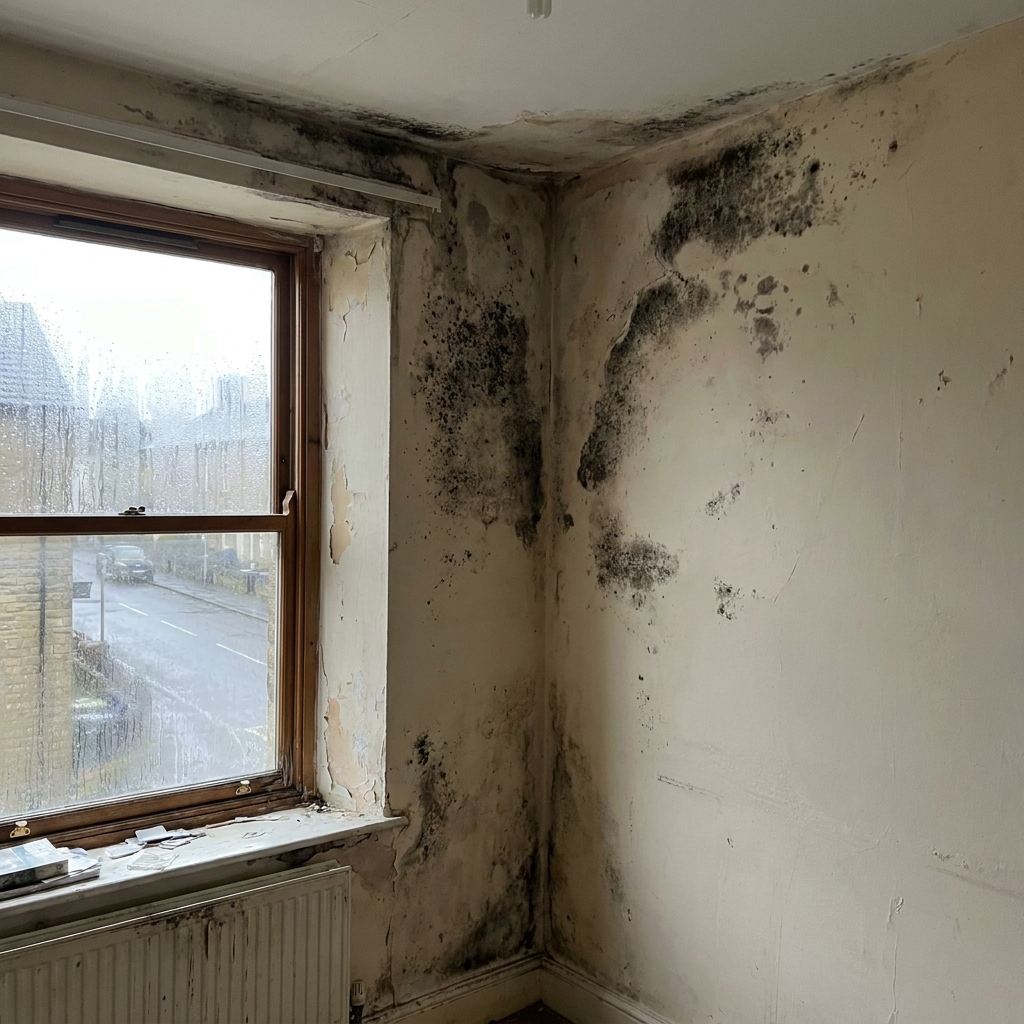
Crucially, the dose and exposure matter. A large area of black mould on a bedroom wall — a room where someone spends eight hours a night — presents far more exposure than a small patch in a little-used room. This is why bedrooms, where people breathe slowly and deeply for hours, deserve particular attention when someone in the household has asthma or allergies.
Who reacts most?
The NHS identifies people with respiratory problems, such as allergies and asthma, and people with existing skin problems such as eczema, as more likely to be affected by mould. So do babies, children, older people and the immunocompromised. If you fall into one of these groups, reducing mould exposure is a sensible part of managing your condition — as routine as avoiding other known triggers:
- People with asthma — mould can trigger attacks; keep to your asthma action plan and reliever.
- Allergy sufferers — may notice hay-fever-like symptoms indoors, year-round rather than just in pollen season.
- People with eczema — skin can flare on contact or exposure.
Does mould cause asthma, or just make it worse?
This is the key distinction, and one where a lot of online writing overreaches. The clear, NHS-supported position is that mould can trigger and worsen asthma symptoms in people who already have asthma. Whether mould exposure causes asthma to develop in the first place is a more complex research question and not something to self-diagnose. The practical point is the same either way: reduce exposure, and discuss any new or worsening symptoms with a clinician rather than trying to settle the question from a website. For a child, in particular, persistent wheeze should always be a conversation with a GP.
| Step | Why it helps |
|---|---|
| Remove visible mould | Cuts the source of airborne allergens |
| Fix the damp cause | Stops mould returning after cleaning |
| Improve ventilation | Lowers humidity so mould cannot establish |
| Use extractor fans | Removes moisture at source in kitchen and bathroom |
| Keep to your asthma plan | Manages symptoms while you fix the home |
Reducing your exposure
The most effective thing you can do is treat the cause, not just the symptom. Most household mould is driven by condensation — warm, moist air meeting cold surfaces. Reducing indoor humidity, ventilating well and heating the home steadily all help. Remove small areas of mould carefully (see how to clean mould safely), and consider longer-term ventilation measures such as extractor fans, trickle vents or, in stubborn cases, a positive-input ventilation unit. If mould keeps returning, get a qualified surveyor to find the underlying problem rather than cleaning the same wall every winter. And if you rent, your landlord is responsible for serious damp and mould hazards — see mould in a rented property.
Frequently asked questions
Can mould trigger an asthma attack?
Yes. The NHS says mould can trigger asthma attacks in people with asthma. Mould releases allergens and spores that irritate sensitive airways, causing coughing, wheezing and breathlessness. Removing the mould and controlling damp reduces this risk; keep to your asthma action plan.
Does mould cause asthma?
Mould is a well-recognised trigger that worsens existing asthma. Whether it causes asthma to develop is a more complex question and not something to self-diagnose. Either way, reducing exposure is sensible, and any new or worsening symptoms should be discussed with a GP.
What allergy symptoms does mould cause?
The NHS lists sneezing, a runny nose, red eyes and a skin rash as common allergic reactions to mould. Symptoms that appear indoors and ease when you leave the affected room are a useful clue that mould or damp may be involved.
How do I reduce mould if I have asthma?
Remove visible mould safely, fix the underlying damp, and improve ventilation to lower humidity. Use extractor fans, avoid drying washing indoors, and heat the home steadily. If mould keeps returning, get a qualified damp survey to find the cause.
Sources & further reading
- NHS — Can damp and mould affect my health?
- gov.uk — Understanding and addressing the health risks of damp and mould in the home
- Housing Ombudsman — Spotlight on damp and mould
This guide is general information, not a site-specific survey, medical advice or legal advice. Damp and mould should be assessed by a qualified surveyor, and health concerns discussed with a GP or the NHS.