The short answer
Mildew is a flat, surface-growing fungus — usually grey or white and powdery — while mould is a deeper, often fuzzy or slimy growth that is frequently black or green and can damage the material it grows on. Both thrive on damp surfaces, both signal a moisture problem, and both are removed by cleaning and then fixing the damp. Mould, particularly black mould, is generally the greater concern for both buildings and health.
“Mould” and “mildew” are often used interchangeably, but they describe different growths. Both are fungi that need damp to grow, and both are warnings of a moisture problem — but they look different, behave differently and differ in how much they threaten your home and health. This page sets out the practical distinctions and how to treat each.
Mould vs mildew at a glance
- Mildew Flat, powdery, grey/white surface growth
- Mould Raised, fuzzy/slimy, often black or green
- Both need A damp surface to grow
- Greater concern Mould, especially black mould
- Both signal An underlying moisture problem
- Both cured by Cleaning + fixing the damp
What mildew is
Mildew is a form of fungus that grows flat against a surface. It typically appears as a thin, powdery or downy film, usually grey or white, sometimes with a yellowish tinge. It is common on damp bathroom grout and sealant, on fabrics, and on organic materials such as paper and leather kept in humid conditions. Because it sits on the surface, mildew is generally easier to wipe away than mould — though, like mould, it returns if the damp remains. It is largely a cosmetic nuisance rather than a structural threat, but it is still a clear sign that a surface is too wet.
What mould is
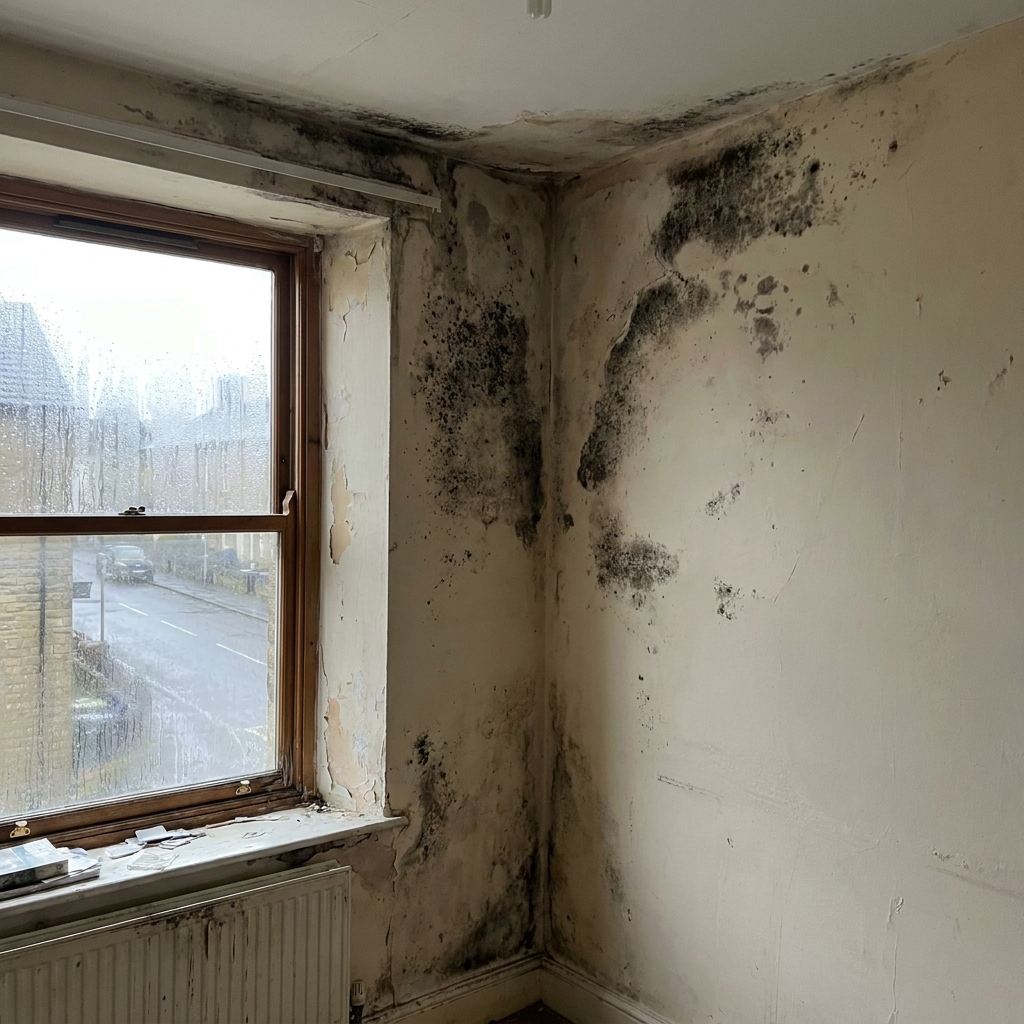
Mould is a fungus that grows in a denser, often raised, fuzzy or slimy colony and tends to penetrate the material it grows on rather than just sitting on top. It is frequently black or dark green — the black mould seen in cold corners and window reveals is the familiar example. Because it can grow into plaster, wood and other materials, mould is more damaging to the building and is the form more strongly associated by the NHS with health effects, particularly respiratory and allergic ones.
| Feature | Mildew | Mould |
|---|---|---|
| Appearance | Flat, powdery, downy | Raised, fuzzy or slimy |
| Colour | Grey, white, yellowish | Black, green, sometimes other |
| Growth | On the surface | Into the material |
| Damage | Mostly cosmetic | Can damage fabric & structure |
| Typical spots | Grout, sealant, fabric | Walls, ceilings, behind furniture |
How to treat each
- Mildew — usually wipes off hard surfaces with a suitable cleaner; wash affected fabrics. Dry the area thoroughly afterwards.
- Mould — clean small areas carefully with mask, gloves and ventilation; remove and replace badly affected porous materials; consider professional removal for large or recurring growth.
- Both — do not just paint over the area; the growth returns through paint unless the damp is fixed.
Where each one tends to appear
Knowing the typical haunts of each helps you read a room. Mildew favours warm, humid, splash-prone spots: shower grout and sealant, window sills that gather condensation, and fabrics or paper stored in muggy cupboards. Mould prefers cold, still, persistently damp surfaces: the corners of unheated bedrooms, window reveals, and walls hidden behind furniture on the cold side of the house. A bathroom may show flat grey mildew on the sealant while a bedroom on the same external wall develops raised black mould — two different growths driven by the same excess moisture, each pointing back to ventilation, heating and the temperature of the surface. In practice the label matters less than the response: improve the airflow, warm the cold surface and cut the moisture at source, and both the flat grey film and the raised black colony lose the conditions they depend on. Treat the room, not just the stain.
The point that matters most
Whether you have mould or mildew, the underlying message is the same: a surface is staying damp. Cleaning deals with the growth, but it will come back unless you cure the moisture — improving ventilation for condensation, or repairing the defect for penetrating or rising damp. Distinguishing the two helps you judge how serious the problem is, but neither is solved by cleaning alone. If growth keeps returning on the same spot despite repeated cleaning, treat that as a clear signal the underlying moisture has not been addressed, and have the cause assessed properly — by a qualified surveyor for structural damp, or by improving ventilation and heating for condensation. This page is general information, not medical advice or a site-specific survey.
Frequently asked questions
What is the main difference between mould and mildew?
Mildew is a flat, powdery, usually grey or white surface growth, while mould is a raised, fuzzy or slimy growth, often black or green, that penetrates the material. Mould is generally the greater concern.
Is mildew as dangerous as mould?
Mildew is usually more of a cosmetic, surface problem, while mould can damage materials and is more strongly linked by the NHS to health effects. Both should be removed and the damp behind them fixed.
Can mildew turn into mould?
They are different fungi rather than stages of the same thing, but both grow in the same damp conditions, so a surface with mildew can also develop mould if it stays wet.
How do I stop mould and mildew coming back?
Remove the growth, then cure the damp: improve ventilation and heating for condensation, or repair the building defect for structural damp. Cleaning alone will not keep either away.
Sources & further reading
- NHS — Can damp and mould affect my health?
- gov.uk — Understanding and addressing the health risks of damp and mould in the home
- Property Care Association (PCA) — Mould and condensation guidance
- RICS — Investigation of moisture and its effects in traditional buildings
This guide is general information, not a site-specific survey, medical advice or legal advice. Damp and mould should be assessed by a qualified surveyor, and health concerns discussed with a GP or the NHS.