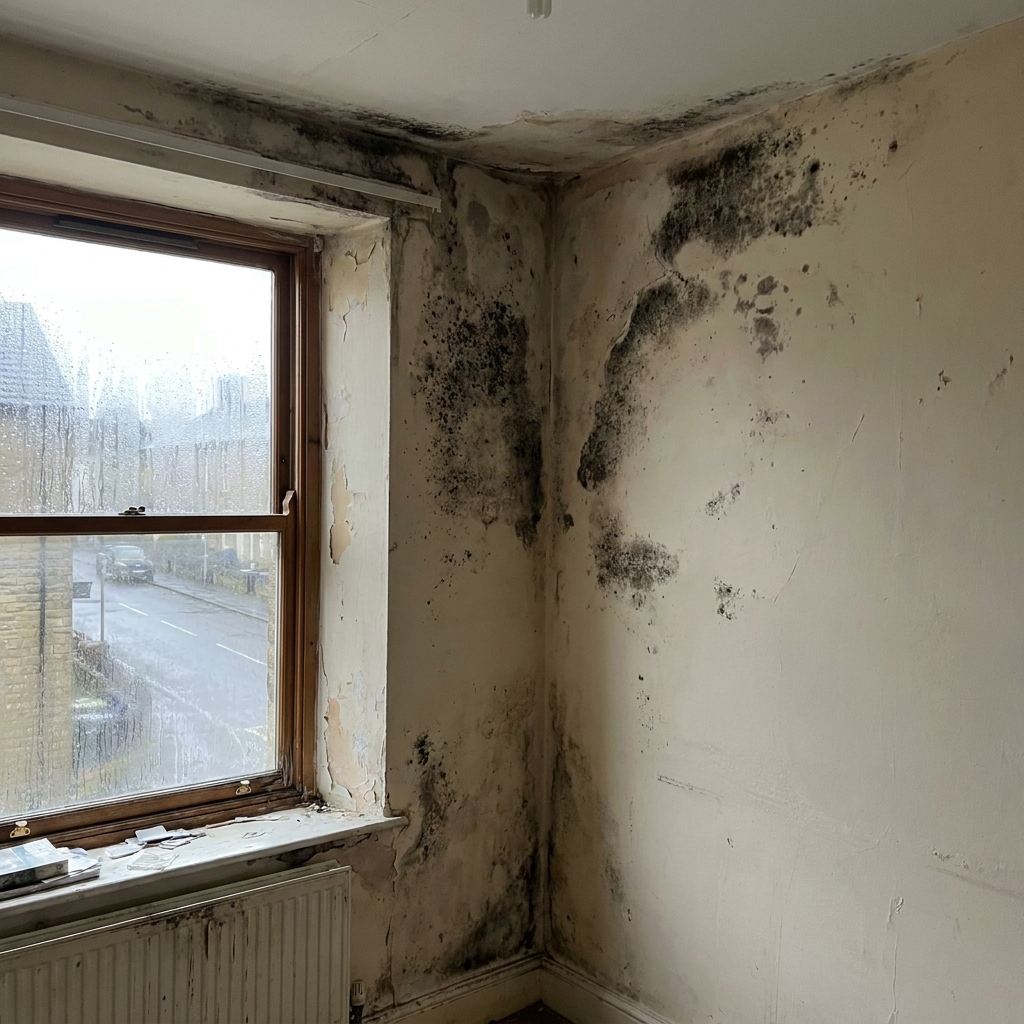
The short answer
When buying a house, damp is usually first flagged by a RICS Home Survey or the lender’s mortgage valuation, which may then recommend a specialist damp report. A focused damp survey diagnoses the cause and scale, letting you renegotiate the price, ask the seller to fix it, or budget for repairs. Lenders sometimes impose a retention until damp work is done. Always get an independent diagnosis before committing — the cure depends entirely on the cause.
Damp is one of the most common things to surface during a house purchase, and it rarely needs to derail the sale — provided you know what you are dealing with. The key is to separate the routine (manageable condensation) from the serious (penetrating damp from a failed roof, or genuine structural moisture), and to do that before you exchange. Here is how damp is found during a purchase and what to do about it.
Buying with damp at a glance
- First flagged by RICS Home Survey or mortgage valuation
- Next step A focused specialist damp report
- Specialist survey cost £150–£350
- Possible lender action Mortgage retention until work is done
- Your options Renegotiate, ask seller to fix, or budget
How damp is found during a purchase
Two inspections usually surface it. The lender’s mortgage valuation is a quick check of whether the property is adequate security for the loan; it is carried out for the lender, not for you, and if the valuer sees damp they may flag it and recommend further investigation. Separately, the RICS Home Survey — a Level 2 (HomeBuyer) or more detailed Level 3 (Building Survey) you commission yourself — assesses condition across the whole property and frequently notes elevated moisture readings at skirting level, around chimney breasts or in cold corners. Neither is a focused damp diagnosis, and both tend to hedge by recommending a specialist report. That recommendation is your cue to investigate, not to panic.
When you need a specialist damp survey
If a homebuyer or valuation report flags damp, a focused damp survey (typically £150–£350) tells you what really matters: the type, the cause and the scale. That distinction changes everything. Condensation is a ventilation-and-lifestyle issue you can usually manage; penetrating damp points to an external defect such as a gutter, roof or render that has a clear, often modest, repair; and genuine rising damp — rarer than it is sold — may mean a new damp-proof course. Commission your own surveyor rather than relying on a seller-appointed contractor, whose quote may over-state the cure.
What it means for your offer and mortgage
Once you know the cause and cost, you have leverage. Common routes are:
- Renegotiate the price to reflect the cost of the repair, backed by the written report.
- Ask the seller to carry out the work before completion, with evidence such as an invoice and guarantee.
- Proceed and budget for the repair yourself, if the figure is modest and the cause is well understood.
A lender may apply a mortgage retention — holding back part of the advance until specified damp work is completed and verified. That is the lender protecting its security rather than refusing the loan, and it is usually resolved once the work is done and signed off. Build the possibility into your budget early, because you may need to fund the repair before the retained sum is released.
| Report | Who pays | Damp detail |
|---|---|---|
| Mortgage valuation | Buyer (via lender) | Brief — may flag and refer on |
| RICS Home Survey L2/L3 | Buyer | Condition + moisture readings |
| Specialist damp survey | Buyer | Full diagnosis + cure |
Your next steps as a buyer
Using the report to negotiate
A specialist damp report is a negotiating tool as well as a diagnosis. Once you can separate cosmetic staining from genuine structural damp, you have three practical routes. You can ask the seller to carry out the remedial work before completion, with a qualified contractor and an insurance-backed guarantee, and to share the paperwork. You can ask for a price reduction equal to a properly quoted cost of works, rather than a guessed figure, so you are not over- or under-compensated. Or you can proceed at the agreed price and budget for the work yourself once you own the property. Your lender may take a view too: where damp is significant, a valuer can recommend a retention until works are done. Whichever route you take, keep the report, any quotes and the eventual guarantee together, because a future buyer’s surveyor will ask for exactly the same evidence.
If damp is flagged, instruct an independent specialist survey before exchange, read the report carefully to separate cosmetic from structural issues, and use it to decide whether to renegotiate, ask the seller to act, or proceed and budget. Keep every document, as you will need it again if you later sell or remortgage. This page is general information, not a site-specific survey, valuation or legal advice; always rely on your own surveyor’s in-person assessment and your conveyancer’s advice before committing.
Frequently asked questions
Does a mortgage survey check for damp?
A mortgage valuation is a brief check on the property as loan security and may flag visible damp, but it is not a full diagnosis. It often recommends a specialist damp report.
Should I pull out of a purchase because of damp?
Not necessarily. Most damp is manageable once diagnosed. Get an independent survey first — if it’s condensation or a minor external defect, it rarely justifies abandoning the sale.
Can I renegotiate the price over damp?
Yes. A written specialist report giving the cause and cost of repair is strong evidence to renegotiate the price or ask the seller to carry out the work before completion.
What is a mortgage retention for damp?
A retention is where the lender holds back part of the loan until specified damp work is completed and verified, protecting the value of its security. It is usually released once the work is signed off.
Sources & further reading
- RICS — Home Survey Standard (Levels 1, 2 and 3)
- gov.uk — buying a home: surveys and valuations guidance
- Property Care Association (PCA) — specialist damp and timber reports
This guide is general information, not a site-specific survey, medical advice or legal advice. Damp and mould should be assessed by a qualified surveyor, and health concerns discussed with a GP or the NHS.