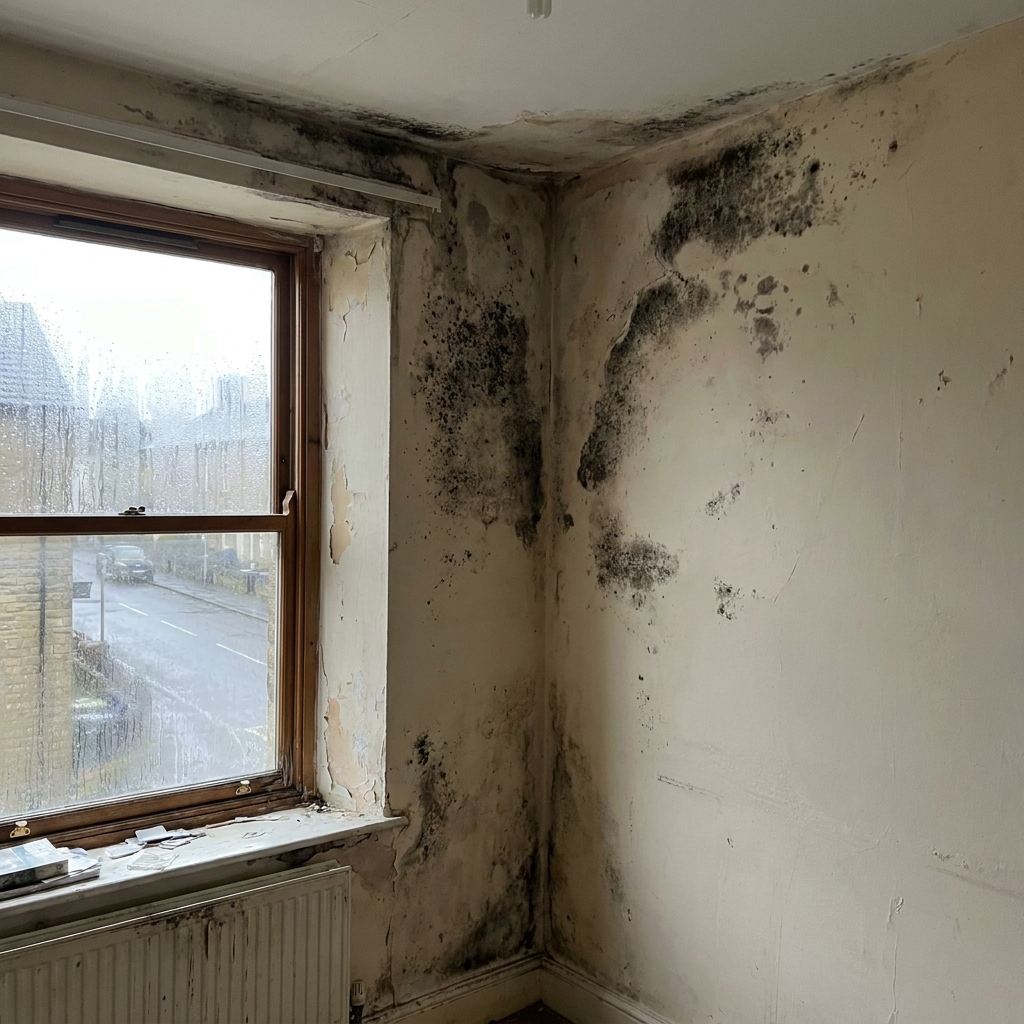
The short answer
Most household damp is condensation, caused by warm moist air meeting cold surfaces — not rising damp, which is far rarer than it is sold. The cure depends entirely on the cause, so diagnosis comes first. Black mould can affect health, especially for babies, the elderly and people with asthma, so it should be cleaned and the moisture source fixed. This page rounds up quick answers and links you to the detailed guides for each topic.
This page is a fast index to the questions we are asked most. Each answer gives you the direct, sourced position and a link to the full guide where you need more depth. For anything affecting health, value or your legal position, treat this as a starting point and get a qualified, in-person assessment.
Damp facts at a glance
- Most common cause Condensation, not rising damp
- Damp survey cost £150–£350
- Black mould A health risk — clean & fix the source
- Rented home Landlord must keep the structure fit
- Social housing Awaab’s Law duties from October 2025
Causes and types
The first question is always “what kind of damp is this?” The three common forms look alike but need different cures. Condensation — warm, moist air meeting cold surfaces — is by far the most common, and is managed with heating, ventilation and reducing moisture in the air rather than with chemicals. Penetrating damp comes through the building fabric from an external defect such as a leaking gutter, cracked render or failed flashing, and is solved by fixing that defect. True rising damp, where groundwater rises through masonry by capillary action, is genuine but much rarer than the trade implies, and only it may justify a new damp-proof course. See what causes damp and mould for the full picture, and why getting the diagnosis right comes before spending anything.
Health
The NHS advises that damp and mould can affect the respiratory system — causing or worsening breathing problems, allergies and infections — and that babies, children, older people, and those with asthma, allergies or weakened immunity are more vulnerable. Black mould is the most commonly reported, but the priority is the same regardless of colour: remove it safely and fix the moisture feeding it, because mould always returns if the source remains. If you or a family member has symptoms you are worried about, see a GP. For detail, read is black mould dangerous and mould and asthma and allergies.
Cost and surveys
Figures vary by cause and extent, but as a 2026 guide:
- An independent damp survey typically costs £150–£350.
- Damp-proofing ranges widely — a chemical damp-proof course can run to £2,000–£5,000 for a whole house.
- Mould removal is typically £200–£1,000 depending on extent.
- A PIV (positive-input ventilation) unit is around £400–£1,500 fitted; a dehumidifier £100–£300.
Renting and the law
In a rented home, the landlord is generally responsible for keeping the structure and exterior in repair under section 11 of the Landlord and Tenant Act 1985, and the home must be fit for human habitation under the Homes (Fitness for Human Habitation) Act 2018. Local councils can assess serious damp as a hazard under the Housing Health and Safety Rating System (HHSRS), and in social housing Awaab’s Law requires landlords to investigate and act on damp and mould within set timescales from October 2025. See tenant rights on damp and mould for the practical steps, including reporting in writing and contacting environmental health.
| Question | Short answer |
|---|---|
| Is most damp serious? | Usually condensation — manageable once diagnosed |
| Who fixes damp in a rental? | Generally the landlord (structure & fitness) |
| Do I need a survey? | If damp is persistent, spreading or sale-flagged |
When to act and who to call
The right first move depends on what you are seeing. An isolated patch of black mould in a cold corner, behind a wardrobe or around a window is almost always condensation, and you can usually tackle it yourself with better ventilation, gentle heating and prompt cleaning of small areas. Damp that sits low on a wall, climbs above skirting level, spreads across an elevation, follows heavy rain, or comes with a persistent musty smell is more likely to be rising or penetrating damp, and that is the point to get an impartial diagnosis from a qualified surveyor before anyone quotes for treatment. If you rent, report damp and mould to your landlord in writing and keep a record, because for social tenants in England Awaab’s Law sets strict timescales for landlords to investigate and fix damp and mould hazards. If the damp is part of buying, selling or remortgaging, treat the survey, any quotes and the eventual insurance-backed guarantee as documents to keep, because the next party’s surveyor and solicitor will ask for them.
This page is general information, not medical, legal or site-specific advice. For health concerns see a GP or the NHS; for legal questions, take advice on your own circumstances; and have damp assessed by a qualified surveyor.
Frequently asked questions
Is my damp condensation or rising damp?
Most household damp is condensation, caused by moist air meeting cold surfaces. True rising damp is far rarer. The only reliable way to tell is a proper diagnosis, because the cure depends entirely on the cause.
Is black mould dangerous?
The NHS advises that damp and mould can affect the airways, with babies, older people and those with asthma or allergies most at risk. Clean it safely, fix the moisture source, and see a GP about any symptoms.
How much does it cost to fix damp?
It varies by cause: a survey is £150–£350, mould removal £200–£1,000, and a whole-house chemical damp-proof course can be £2,000–£5,000. Diagnose first to avoid paying for the wrong cure.
Is my landlord responsible for damp?
Generally yes for disrepair affecting the structure and for keeping the home fit to live in, under the Landlord and Tenant Act 1985 and the Homes (Fitness for Human Habitation) Act 2018. Social landlords also have Awaab’s Law duties.
Sources & further reading
- NHS — can damp and mould affect my health?
- gov.uk — Awaab’s Law and the Housing Health and Safety Rating System (HHSRS)
- RICS — Investigation of moisture and its effects in traditional buildings
- Housing Ombudsman — Spotlight on damp and mould
This guide is general information, not a site-specific survey, medical advice or legal advice. Damp and mould should be assessed by a qualified surveyor, and health concerns discussed with a GP or the NHS.