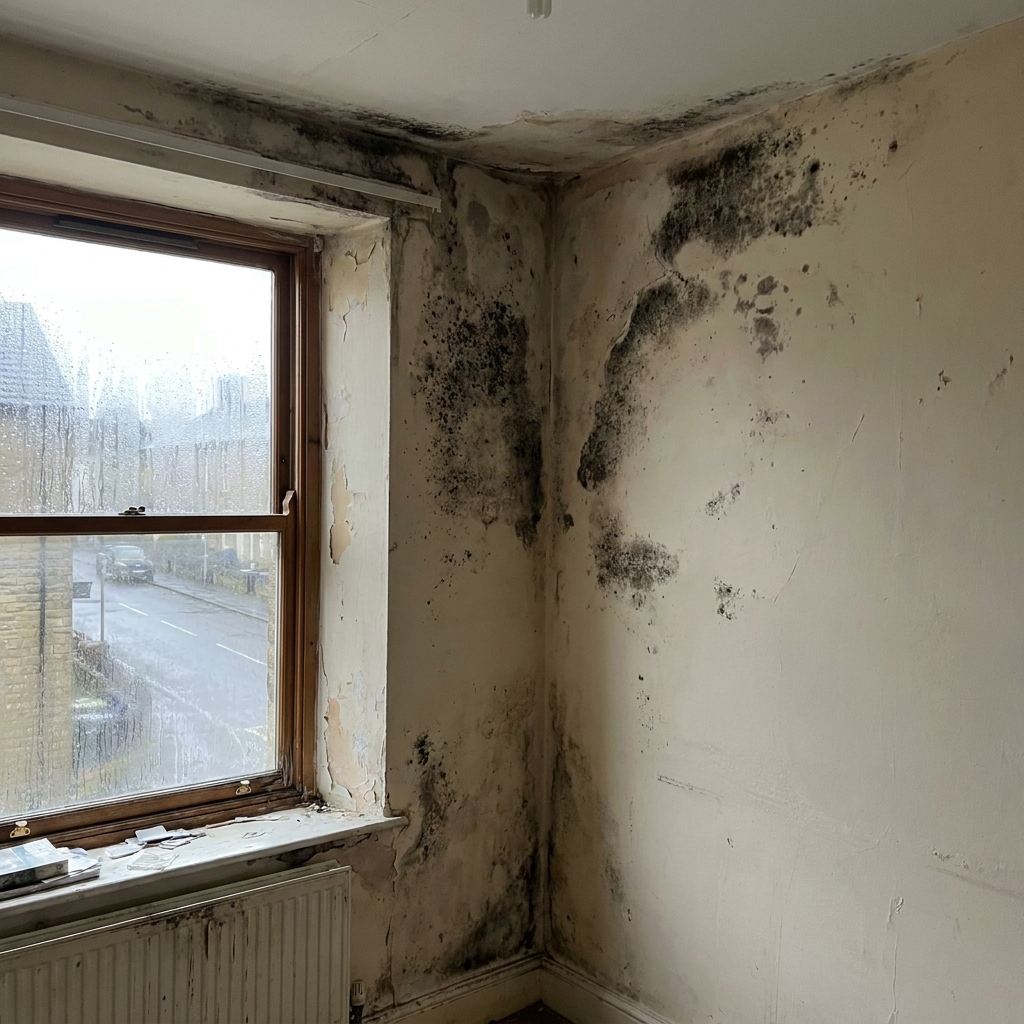
Black mould in the corner of a UK home caused by damp and condensation
Independent UK damp & mould guidance

Straight answers about damp and mould.

No scaremongering, no hard sell — just clear, accurate guidance on what’s causing damp and mould, what it means for your health, how it’s treated, and your rights if you rent. Sourced from gov.uk, the NHS, RICS and the PCA.

Free · no obligationSourced from the NHS & gov.uk
gov.uk, NHS & RICS sourced Independent, not a contractor Free, no-obligation first survey enquiry

In 40 seconds

Most damp and mould in UK homes is one of three things: condensation (by far the most common), rising damp, or penetrating damp — and the fix depends entirely on which you have. Black mould grows where surfaces stay cold and damp; it can affect breathing, and the NHS advises babies, older people and those with asthma or weak immune systems are most at risk. If you rent, your landlord is usually responsible for tackling damp and disrepair, and social landlords now face statutory timescales under Awaab’s Law. The single most useful step is an accurate, independent damp survey — not a free quote from a firm that profits from the treatment.

3
main types of damp — condensation, rising and penetrating
£150–350
typical independent damp survey
2018
Homes (Fitness for Human Habitation) Act — tenants’ key right
0
obligation — the first survey enquiry is free
The answer library

Every question a worried householder actually asks.

Organised the way you think about the problem — what it is, what it means for your health, how to treat it, where you stand if you rent, and how to get it properly diagnosed.

Damp & mould basics

What it is, what’s causing it, and how to tell condensation from a structural problem.

Pillar guide

What causes damp and mould?

The three main types of damp, why mould follows, and how to work out which one you have.

Read the guide →
Basics

Types of damp explained: rising, penetrating and condensation

The three categories of damp, how to tell them apart, and why each needs a different cure.

Read the guide →
Basics

Condensation vs damp: what’s the difference?

Condensation is a type of damp — here’s how to tell it from rising and penetrating damp.

Read the guide →
Basics

Rising damp explained: causes, signs and treatment

What rising damp really is, how to recognise it, and why it is often over-diagnosed.

Read the guide →
Basics

Penetrating damp: what it is and how to fix it

How water gets in through a building defect, and the repairs that stop it for good.

Read the guide →
Basics

Why is there black mould on my walls?

What black mould is, why it grows where it does, and how to deal with it properly.

Read the guide →
Basics

Is black mould dangerous?

What the NHS says about the health risks of black mould, and who is most at risk.

Read the guide →
Basics

Signs of damp in a house: what to look for

The visible, smellable and structural clues to damp — and which type each points to.

Read the guide →
Basics

Why does my house smell damp and musty?

What that musty odour is, where it’s coming from, and how to clear it at source.

Read the guide →
Basics

Mould vs mildew: what’s the difference?

How to tell mould from mildew, and why the difference affects how you treat it.

Read the guide →

Health & safety

What the evidence says about mould and your health — calmly, and sourced from the NHS.

Health

Is mould dangerous to your health?

What the NHS actually says about living with damp and mould — and who is most at risk.

Read the guide →
Health

Mould and children: the risks to babies and young children

Why young lungs are more vulnerable, the signs to watch for, and what the NHS advises.

Read the guide →
Health

Mould, asthma and allergies: what’s the link?

How mould spores trigger symptoms, who reacts most, and the NHS-backed steps to reduce the risk.

Read the guide →
Health

Awaab’s Law explained

The damp-and-mould duties on social landlords, named after Awaab Ishak — what changed in 2025 and what it means for tenants.

Read the guide →
Health

How much mould is dangerous?

There is no single “safe” figure — what matters is area, exposure time and who lives there.

Read the guide →
Health

Mould exposure symptoms: what to watch for

The signs the NHS links to damp and mould — and when they mean you should see a GP.

Read the guide →
Health

Mould and pregnancy: should you be worried?

Sensible, non-alarmist precautions if you are pregnant and living with damp and mould.

Read the guide →
Health

When is mould bad enough to leave your home?

How to judge a serious case, who can assess it, and what your options are as a tenant or owner.

Read the guide →
Health

How to clean mould safely

A calm, NHS-aligned method for removing small areas of mould — and knowing when to stop and call a professional.

Read the guide →
Health

Mould on clothes and belongings: how to deal with it

How to clean affected items safely, when to throw something away, and how to stop it happening again.

Read the guide →

Treatment & removal

How damp and mould are actually fixed — methods, cost and what works.

Treatment

How to get rid of damp for good

Damp comes back unless you fix its cause — here is how to diagnose the type, stop the source, and treat it so it stays gone.

Read the guide →
Treatment

How to remove black mould from walls

Cleaning mould off the wall is only half the job — here is how to remove it safely and stop it returning.

Read the guide →
Treatment

How much does damp-proofing cost?

What you can expect to pay for a damp survey and the main damp-proofing treatments in the UK, and what drives the price.

Read the guide →
Treatment

How much does mould removal cost?

What professional mould removal costs in the UK, why fixing the cause matters more, and when you can do it yourself.

Read the guide →
Treatment

Damp-proof course (DPC): what it is and when you need one

What a damp-proof course does, how to tell if yours has failed, and when a new one is — and isn’t — the answer.

Read the guide →
Treatment

How to treat rising damp

Rising damp is real but over-diagnosed — here is how to confirm it and treat it properly, in the right order.

Read the guide →
Treatment

How to stop condensation in your home

Condensation is the most common cause of household damp and mould — and the most fixable. Here is how.

Read the guide →
Treatment

Ventilation to prevent damp and mould (incl. PIV)

Good ventilation removes the moist air that feeds condensation and mould. Here are the options, from a fan to a whole-house PIV.

Read the guide →
Treatment

Do dehumidifiers help with damp and mould?

A dehumidifier can help manage condensation — but it is an aid, not a cure. Here is what it can and can’t do.

Read the guide →
Treatment

Does anti-mould paint work?

Anti-mould paint can help — but only as a finishing touch, never as a cure for the damp underneath.

Read the guide →

Renting & the law

Your rights, your landlord’s duties, Awaab’s Law and when there’s a claim.

Law

Mould in a rented property: who is responsible?

Where the line falls between a landlord’s repairing duties and a tenant’s day-to-day use — and what to do when mould appears.

Read the guide →
Law

Is the landlord responsible for damp and mould?

The legal duties that make damp and mould a landlord’s problem — repair, fitness and hazard standards explained.

Read the guide →
Law

Your rights as a tenant over damp and mould

What you are entitled to expect — a fit home, timely repairs, protection from retaliatory eviction, and routes to enforce all three.

Read the guide →
Law

How to report damp and mould to the council

When and how to bring in environmental health, what the HHSRS inspection does, and what the council can make a landlord do.

Read the guide →
Law

The Homes (Fitness for Human Habitation) Act 2018 explained

How the Fitness Act lets tenants demand a healthy home — and what ‘fit for human habitation’ actually means for damp and mould.

Read the guide →
Law

Housing disrepair claims for damp and mould

When you can claim, what you must prove, and what a court can order — repairs, compensation and costs.

Read the guide →
Law

Complaining to a social landlord about damp and mould

The complaints route for council and housing-association tenants — Awaab’s Law timescales and the Housing Ombudsman.

Read the guide →
Law

Section 11 repairing obligations explained

The repair duty at the heart of most damp claims — what it covers, what it doesn’t, and the all-important notice rule.

Read the guide →
Law

Can I withhold rent over damp and mould?

Why simply stopping your rent is dangerous — and the narrow, properly-followed legal route that does exist.

Read the guide →
Law

Compensation for damp and mould in a rental

When money is owed, how the amount is judged, and whether to use the Ombudsman or the courts.

Read the guide →

Surveys & decisions

Getting it diagnosed properly and choosing the right specialist.

Survey

What is a damp survey and do you need one?

A focused inspection that identifies the type of damp, its cause and the right repair — before any work is quoted.

Read the guide →
Survey

Get a damp survey

An independent, accredited diagnosis of your damp problem — in writing, before anyone quotes for work.

Read the guide →
Survey

How much does a damp survey cost?

What a focused damp survey costs in 2026, what changes the price and why the cheapest option can be the most expensive.

Read the guide →
Survey

Damp survey when buying a house

How damp is picked up during a purchase, when you need a specialist report and what it means for your offer and mortgage.

Read the guide →
Survey

How to choose a damp-proofing specialist

The checks that separate a competent, accredited contractor from a salesperson with a moisture meter.

Read the guide →
Survey

What is a PCA-accredited damp specialist?

What the Property Care Association is, what its accreditation guarantees and why it matters for diagnosis and guarantees.

Read the guide →
Survey

Damp meter readings explained

What an electrical moisture meter actually measures, why high readings can mislead, and how surveyors confirm true damp.

Read the guide →
Survey

Damp-proofing guarantees explained

What these guarantees really cover, why insurance backing matters and what they mean when you buy or sell.

Read the guide →
Survey

Mortgage retention for damp: what it means

Why a lender holds back part of the loan over damp, how much, and the steps to get the money released.

Read the guide →
Survey

Damp and mould FAQs

Short, sourced answers to the questions people ask most about damp and mould in UK homes.

Read the guide →
How it works

From damp patch to a clear plan, in three steps.

You don’t need to know which type of damp you have before you enquire. That’s the surveyor’s job.

  1. Tell us what you’ve found. A short, no-obligation enquiry — where the damp or mould is, how bad it is, and whether you own or rent.
  2. Get matched to a PCA-accredited surveyor. We connect you with an accredited damp specialist who inspects the property and diagnoses the real cause.
  3. Choose your plan with confidence. They set out your genuine options — the cause, the fix, the cost and the guarantee — with no obligation to proceed.

Got damp or mould you can’t get on top of?

Get it diagnosed by a PCA-accredited specialist. It’s free to enquire, there’s no obligation, and an accurate diagnosis is what stops you paying for the wrong treatment.

Enquiries are confidential. We never share your details without your say-so.